Search for eye health online and you will quickly find advertisements for eye vitamins, gummies and capsules. Many promise better vision, less strain or protection from screens. It is natural to wonder which is the best eye supplement and whether you need one at all.
This guide explains what the most common eye supplement ingredients are, what the research generally suggests about them and who may benefit. It does not recommend specific doses or claim that supplements treat any disease. Always speak to your doctor before starting a supplement, especially if you have a health condition or take other medicines.
Why Nutrition Matters for the Eyes
The eye is one of the most active tissues in the body. The retina, the light-sensitive layer at the back of the eye, uses a lot of energy and is exposed to light every waking moment. This makes it vulnerable to oxidative stress, a type of damage linked to ageing.
Certain nutrients act as antioxidants or support the structure and function of eye tissues. Most people can get these from a balanced diet, but some people may benefit from supplements under medical advice.
Read more about how nutrition supports long-term eye health.
Lutein and Zeaxanthin
What They Are
Lutein and zeaxanthin are carotenoids, natural yellow pigments found in plants. In the eye, they collect in the macula, the central part of the retina responsible for sharp, detailed vision.
What They Do
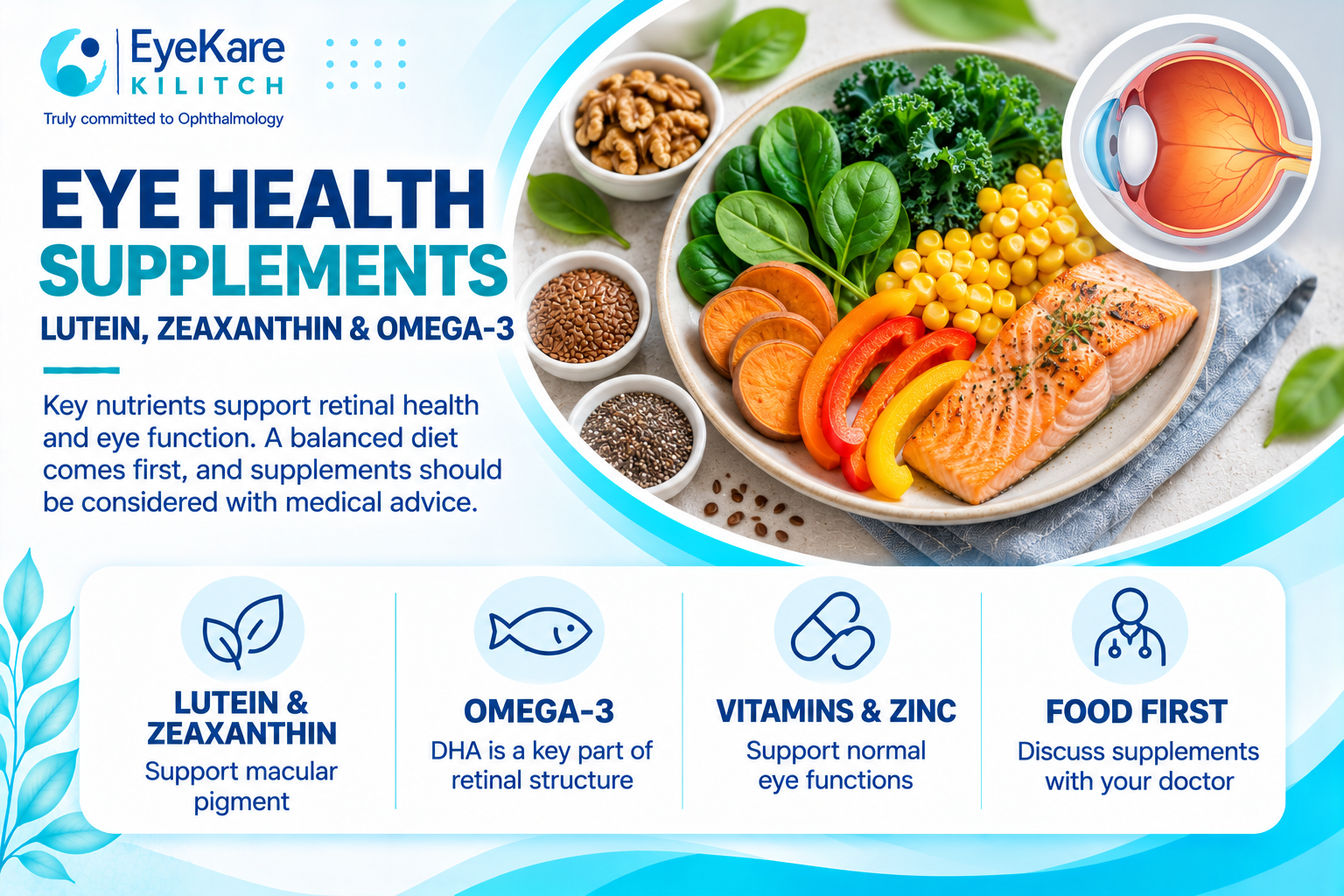
They are thought to act like internal sunglasses, filtering some high-energy blue light and working as antioxidants. Large studies of people with certain types of age-related macular degeneration have looked at formulas including lutein and zeaxanthin, and these formulas are sometimes recommended by eye doctors for specific patients.
Food Sources
- Spinach and other leafy greens
- Kale and fenugreek leaves
- Corn
- Egg yolks
- Orange and yellow peppers
Omega-3 Fatty Acids
What They Are
Omega-3 fatty acids, such as DHA and EPA, are healthy fats. DHA is a major structural component of the retina.
What They Do
Omega-3s support cell membranes and have anti-inflammatory properties. They have been studied for dry eye, with mixed results. Some people report benefit, while some large studies have not shown a clear effect. Your doctor can advise whether they are worth trying for you.
Food Sources
- Oily fish such as salmon, sardines and mackerel
- Flaxseeds and chia seeds
- Walnuts
Vitamin A
Vitamin A is essential for night vision and a healthy eye surface. Severe deficiency can cause night blindness and serious eye damage, which is still a concern in some parts of the world. However, too much vitamin A from supplements can be harmful, so it should only be supplemented under advice.
Food sources include carrots, sweet potatoes, pumpkin, dairy and eggs.
Vitamins C and E
These antioxidant vitamins help protect cells from oxidative damage. They have been included in formulas studied for age-related eye conditions.
- Vitamin C: citrus fruits, amla, guava, berries, tomatoes
- Vitamin E: nuts, seeds, vegetable oils
Zinc
Zinc helps transport vitamin A to the retina and supports enzymes in the eye. It has also been included in some formulas for age-related macular degeneration. Excess zinc can cause side effects, so dosing should be guided by a professional.
Food sources include pulses, nuts, seeds, whole grains and dairy.
Other Ingredients You May See
Supplements sometimes include bilberry, astaxanthin, saffron or other plant extracts. Evidence for many of these is more limited. It is wise to be cautious about strong claims.
Summary Table
| Nutrient | Main role | Good food sources |
| Lutein and zeaxanthin | Support macular pigment, antioxidant | Leafy greens, corn, eggs |
| Omega-3 (DHA, EPA) | Retina structure, anti-inflammatory | Oily fish, flaxseed, walnuts |
| Vitamin A | Night vision, eye surface | Carrots, sweet potato, dairy |
| Vitamin C | Antioxidant | Citrus, amla, guava |
| Vitamin E | Antioxidant | Nuts, seeds, oils |
| Zinc | Supports retinal enzymes | Pulses, nuts, whole grains |
Who Might Consider an Eye Supplement?
A doctor may suggest a supplement for:
- People with certain stages of age-related macular degeneration
- People whose diets lack key nutrients
- Some people with dry eye, as part of a wider plan
For healthy people with a balanced diet, the benefit of routine eye supplements is less clear.
What Supplements Cannot Do
- They cannot correct short or long sight. Glasses or contact lenses are needed for that.
- They do not replace prescribed eye drops or treatment for glaucoma, infection or other diseases.
- They are not a substitute for regular eye examinations.
How to Choose an Eye Supplement Safely
- Talk to your doctor first, especially if you are pregnant, breastfeeding, smoke, take blood thinners or have other health conditions.
- Choose reputable manufacturers that follow good manufacturing standards.
- Read the label carefully and do not exceed the recommended amount.
- Be cautious of exaggerated claims such as “restores vision”.
- Remember diet comes first. A colourful plate is the foundation of eye nutrition.
Lifestyle Habits That Matter as Much as Nutrients
- Wear UV-protective sunglasses outdoors
- Do not smoke
- Manage blood sugar and blood pressure
- Take breaks from screens
- Get regular eye checkups
See why regular eye exams are essential.
Eye Nutrition at Different Ages
Children
Children need a varied diet with vegetables, fruit, dairy and protein for healthy eye development. Supplements are rarely needed unless a doctor identifies a deficiency.
Working Adults
Busy schedules can lead to irregular meals. Planning simple, colourful meals and healthy snacks such as nuts, fruit and yoghurt helps maintain good nutrition for the eyes.
Older Adults
As we age, the risk of conditions such as cataract and macular degeneration rises. Older adults should have regular eye examinations and discuss with their doctor whether any supplement is appropriate for them.
Building an Eye-Friendly Plate
A simple way to support eye health is to aim for colour on your plate. Combine leafy greens, orange and yellow vegetables, fruit, pulses, nuts and, where your diet allows, fish or eggs. This naturally provides many of the nutrients found in eye supplements, along with fibre and other benefits for overall health.
Frequently Asked Questions
What is the best eye supplement?
There is no single best supplement for everyone. The right choice depends on your health, diet and your doctor’s advice.
Do lutein and zeaxanthin improve eyesight?
They support the macula, but they do not correct refractive errors such as short sight.
Can omega-3 help dry eyes?
Some people find it helpful, but research results are mixed. Ask your doctor whether it suits you.
Can I get enough eye nutrients from food?
Many people can, through a varied diet rich in vegetables, fruits, nuts and fish.
Are eye supplements safe?
Most are safe when used as directed, but some ingredients can cause problems in excess or interact with medicines. Consult a doctor first.
Supporting Your Eye Health
Eyekare Kilitch is committed to complete eye care. Explore our products or contact us to learn more.
This article is for general information only. Dietary supplements are not intended to diagnose, treat, cure or prevent any disease. Consult your doctor before use.