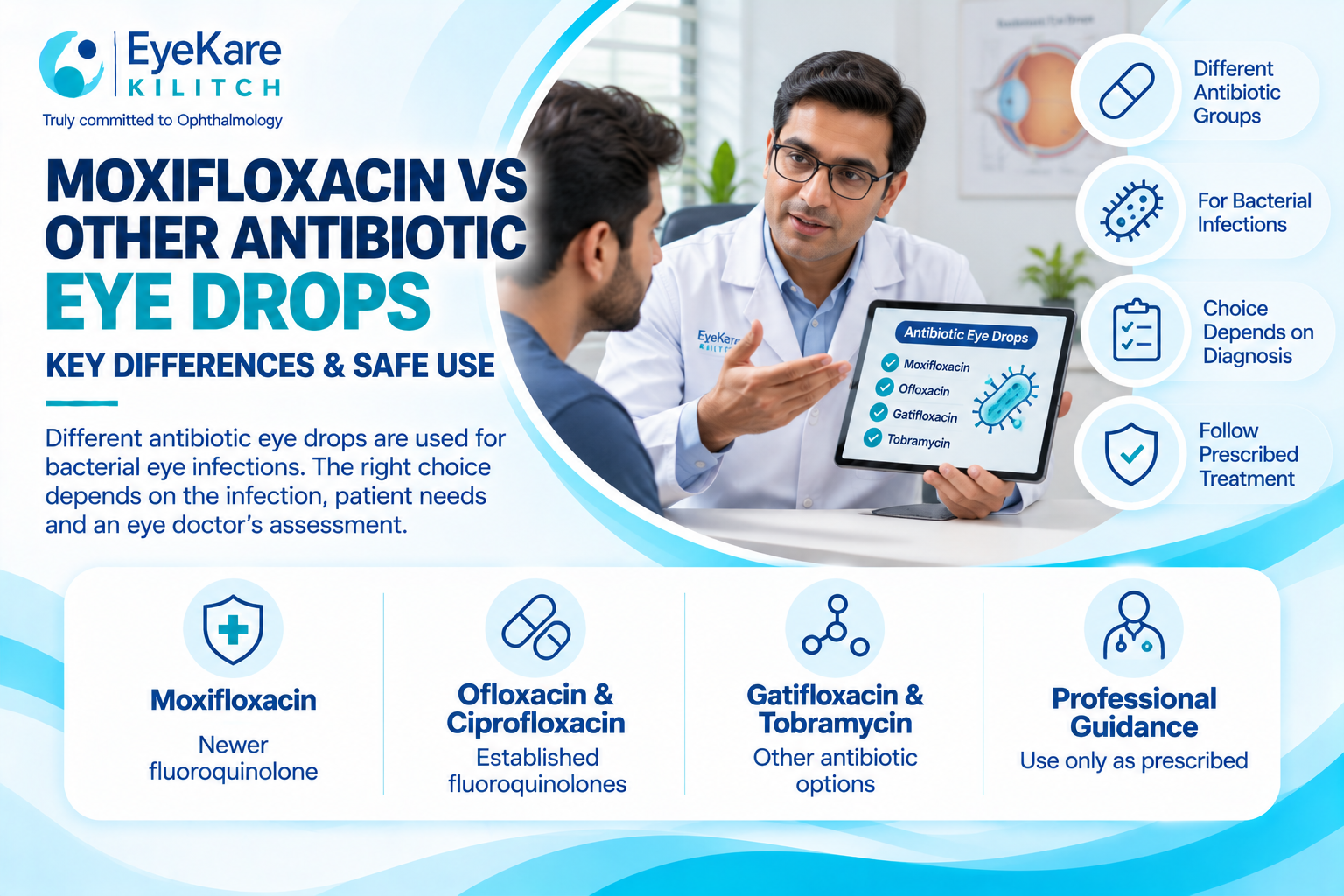
When an eye infection is caused by bacteria, eye doctors often prescribe antibiotic eye drops. Moxifloxacin is one of the most frequently prescribed, but it sits within a wider family of antibiotics, and several other options are also used in everyday practice.
If you have been prescribed moxifloxacin eye drops, or you are curious why your doctor chose one antibiotic over another, this guide explains the key differences in simple terms. It is for general information only. Antibiotic eye drops should always be used exactly as prescribed.
What Are Antibiotic Eye Drops?
Antibiotic eye drops are sterile solutions containing medicine that kills bacteria or stops them multiplying. They are used to treat bacterial infections on the surface of the eye and are also commonly prescribed to help prevent infection after eye surgery.
They do not work against viruses or allergies. This is why a correct diagnosis is so important before starting treatment.
What Is Moxifloxacin?
Moxifloxacin belongs to a group of antibiotics called fluoroquinolones. Fluoroquinolones work by blocking enzymes that bacteria need to copy their DNA, which stops them multiplying.
Moxifloxacin is described as a newer-generation fluoroquinolone. It is active against a broad range of bacteria commonly involved in eye infections. Read more in our moxifloxacin eye drops uses and safety guide.
Other Common Antibiotic Eye Drops
Ofloxacin and Ciprofloxacin
These are older fluoroquinolones. They have been used for many years and remain effective for many common infections. Doctors may choose them for straightforward cases or based on local resistance patterns.
Gatifloxacin
Gatifloxacin is another newer-generation fluoroquinolone, similar in many ways to moxifloxacin. It is often used for bacterial conjunctivitis and around eye surgery.
Tobramycin
Tobramycin belongs to a different group called aminoglycosides. It is particularly useful against certain types of bacteria and is sometimes combined with a steroid in a single drop to treat both infection and inflammation.
Chloramphenicol
Chloramphenicol is a broad-spectrum antibiotic used in eye drops and ointments in many countries for common bacterial conjunctivitis.
Antibiotic Ointments
Some antibiotics are also available as ointments, which stay on the eye longer and are often used at night or for children.
Comparison Table
| Antibiotic | Group | Typical uses | Notes |
| Moxifloxacin | Fluoroquinolone (newer) | Bacterial conjunctivitis, around eye surgery | Broad spectrum, good eye penetration |
| Gatifloxacin | Fluoroquinolone (newer) | Bacterial conjunctivitis, around surgery | Similar profile to moxifloxacin |
| Ofloxacin | Fluoroquinolone (older) | Common bacterial infections | Long track record |
| Ciprofloxacin | Fluoroquinolone (older) | Common bacterial infections, some ulcers | Widely available |
| Tobramycin | Aminoglycoside | Specific bacteria, combination products | Often paired with steroids |
| Chloramphenicol | Broad-spectrum | Common conjunctivitis | Drops and ointment forms |
Why Doctors Often Choose Moxifloxacin
- Broad activity against many bacteria involved in eye infections
- Good penetration into eye tissues
- Use around surgery, where many doctors rely on newer fluoroquinolones to help reduce infection risk
- Generally well tolerated by most patients
However, “newer” does not always mean “better” for every case. Doctors also think about resistance, cost, availability and the specific infection.
Factors That Influence the Choice
- The type of infection. Simple conjunctivitis may need a different approach from a corneal ulcer.
- Severity. Serious infections may need laboratory tests to identify the bacteria.
- Surgery. Before and after cataract or other eye surgery, doctors follow their own protocols.
- Age. Some antibiotics are preferred for babies and young children.
- Allergies. Previous reactions to an antibiotic group will rule it out.
- Local resistance patterns, which vary between regions.
Using Antibiotic Eye Drops Correctly
- Wash your hands before and after use.
- Do not let the dropper tip touch your eye or anything else.
- Use the drops at the times and frequency prescribed.
- Complete the full course, even if your eye feels better sooner. Stopping early can allow bacteria to return and may contribute to resistance.
- If you use more than one type of drop, leave several minutes between them.
- Avoid wearing contact lenses during an eye infection unless your doctor says otherwise.
Why Antibiotic Resistance Matters
Using antibiotics when they are not needed, or not finishing a course, can help bacteria become resistant. This makes future infections harder to treat. That is why antibiotic eye drops should only be used for confirmed or strongly suspected bacterial infections, and never for viral or allergic red eyes.
Possible Side Effects
Antibiotic eye drops are usually well tolerated, but some people may notice:
- Mild stinging or burning
- Temporary blurred vision
- Eye irritation or redness
- Itching
Seek medical advice if symptoms worsen, you develop swelling or a rash, or your eye does not improve within the time your doctor expects.
Antibiotic Eye Drops After Cataract Surgery
Cataract surgery is one of the most common operations in India. After surgery, patients are usually given a combination of drops, often including an antibiotic and an anti-inflammatory. Each drop has a specific role, and the schedule can feel complicated at first. Writing a simple chart, setting phone reminders and keeping a gap of several minutes between different drops all help. Never stop or change drops without speaking to your surgeon. Read more in our guide to cataract surgery aftercare and recovery.
Drops or Ointment?
Some antibiotics are available as both drops and ointment. Drops are convenient during the day and cause little blurring. Ointments last longer on the eye and are often used at bedtime or for young children who find drops difficult. Your doctor may prescribe both, using drops during the day and ointment at night.
Storing Antibiotic Eye Drops
Store antibiotic drops as stated on the label, keep the cap closed and never use leftover antibiotic drops for a new eye problem. Discard the bottle once the course is finished or the discard period has passed.
Antibiotic Eye Drops for Children
Children commonly get bacterial conjunctivitis, especially in schools and nurseries. Doctors choose antibiotics that are suitable for the child’s age and often prefer formats that are easy to use, such as ointments at night. Parents should never use adult or leftover antibiotic drops for a child without medical advice, and should keep the child’s towel and pillowcase separate until the infection clears.
Frequently Asked Questions
Is moxifloxacin stronger than ofloxacin?
Moxifloxacin is a newer fluoroquinolone with broad activity, but the best choice depends on the infection and your doctor’s assessment.
Can I use moxifloxacin eye drops for pink eye?
Only if your doctor confirms that the pink eye is bacterial. Viral and allergic conjunctivitis do not respond to antibiotics.
Why do I need antibiotic drops after cataract surgery?
They are often prescribed to help reduce the risk of infection while the eye heals.
What happens if I miss a dose?
Use it as soon as you remember, unless it is nearly time for the next dose. Do not double up. Ask your doctor or pharmacist if unsure.
Can I stop the drops when my eye looks better?
No. Complete the full course as prescribed unless your doctor tells you otherwise.
Sterile Antibiotic Eye Care from Eyekare
Eyekare Kilitch manufactures sterile ophthalmic antibiotics under strict quality standards. Learn more about managing bacterial eye infections or contact us.
This article is for general information only. Antibiotic eye drops must be used only as prescribed by a qualified doctor.