Introduction
Cataracts are a common eye condition in which the natural lens becomes cloudy, making vision appear blurred, dim, or less clear. When cataracts begin to interfere with everyday activities, an ophthalmologist may recommend surgery to remove the cloudy lens and replace it with an artificial intraocular lens.
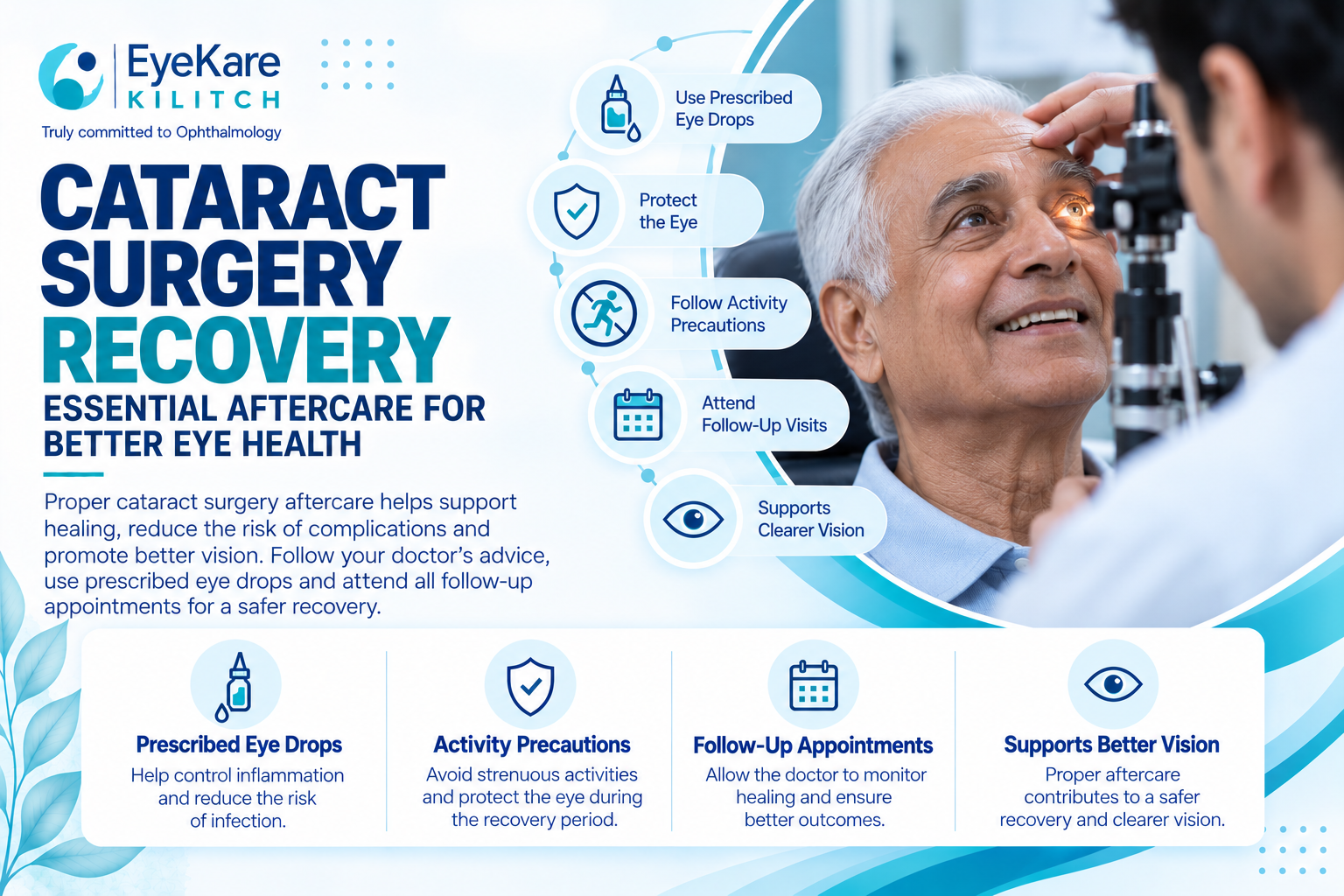
Although cataract surgery is generally considered safe and effective, proper aftercare is important for supporting healing and identifying potential complications. Following the surgeon’s instructions, using prescribed medicines correctly, and attending follow-up appointments can help patients recover safely.
Understanding cataract surgery aftercare allows patients and caregivers to prepare for recovery and recognise when professional medical advice is needed.
What Happens After Cataract Surgery?
During cataract surgery, the cloudy natural lens is removed and replaced with an artificial lens. The procedure is commonly performed as day surgery, meaning many patients return home on the same day.
Vision may begin to improve within the first few days, although recovery varies from person to person. Some patients experience temporary mild irritation, watering, light sensitivity, or slightly blurred vision.
These symptoms should gradually improve according to the expected recovery pattern explained by the surgeon. Patients should follow their individual discharge instructions because recovery can differ depending on the procedure, existing eye conditions, and any complications.
Sudden or worsening symptoms should never be dismissed as a normal part of healing.
Essential Cataract Surgery Aftercare Tips
Following a consistent recovery routine helps patients protect the operated eye while it heals.
1. Use Prescribed Eye Drops Correctly
Eye drops are commonly prescribed after cataract surgery to help control inflammation and reduce the risk of infection. The exact medicines and duration of treatment depend on the surgeon’s instructions.
Patients should:
- Use each prescribed medicine according to the recommended schedule.
- Wash their hands before applying eye drops.
- Avoid allowing the dropper tip to touch the eye, eyelashes, or other surfaces.
- Follow instructions about the time interval between different eye drops.
- Avoid stopping or changing treatment without medical advice.
If a dose is missed or a medicine causes an unexpected reaction, contact the treating clinic for guidance.
2. Protect the Operated Eye
The eye may be more vulnerable to irritation or accidental injury during the early recovery period.
Patients may be advised to wear a protective eye shield while sleeping or during other specified periods. The shield should be used according to the surgeon’s instructions.
Avoid rubbing, pressing, or touching the operated eye. If the eye feels itchy or uncomfortable, seek advice rather than rubbing it.
Protective eyewear may also be appropriate in environments where dust, debris, or accidental impact is possible.
3. Maintain Good Hand Hygiene
Clean hands help reduce the risk of introducing germs when applying eye drops or handling a protective shield.
Wash hands thoroughly before performing any eye care. Keep the dropper, prescribed medicines, and protective equipment clean, and follow the clinic’s instructions for cleaning or replacing them.
Avoid sharing eye medicines or using old prescriptions intended for another person.
4. Avoid Strenuous Activities Until Cleared
The surgeon may recommend temporarily avoiding heavy lifting, strenuous exercise, or activities that place pressure on the operated eye.
The duration of these restrictions varies according to the procedure and individual recovery. Patients should ask when it is appropriate to resume exercise, work, driving, and other daily activities.
Avoid activities that risk accidental impact or contamination of the eye until the treating professional confirms they are safe.
5. Follow Instructions for Bathing and Washing
Patients can usually continue many normal hygiene activities, but precautions may be necessary to prevent contaminated water, soap, shampoo, or other substances from entering the operated eye.
Follow the surgeon’s specific instructions about bathing, washing hair, and face cleaning. Avoid swimming or using hot tubs until the eye care professional confirms that these activities can be resumed safely.
6. Attend All Follow-Up Appointments
Follow-up examinations allow the ophthalmologist to assess healing, check for inflammation or infection, and evaluate vision.
Even if eyesight improves quickly, patients should not skip appointments. Some complications may develop without obvious early symptoms.
During follow-up visits, patients should report discomfort, changes in vision, difficulties using prescribed eye drops, or any concerns about recovery.
Common Symptoms During Cataract Surgery Recovery
Some temporary symptoms can occur after surgery, although their severity and duration vary.
These may include:
- Mild irritation or a gritty sensation.
- Slight watering.
- Temporary light sensitivity.
- Mild redness.
- Vision that takes time to become clear.
Symptoms should generally improve according to the recovery guidance provided by the surgeon. Patients should contact their clinic if symptoms persist, worsen, or differ from the expected recovery pattern.
Warning Signs That Require Urgent Medical Attention
Certain symptoms may indicate a serious complication and require immediate assessment.
Seek urgent eye care if you experience:
- Sudden or significant loss of vision.
- Severe or increasing eye pain.
- Marked or worsening redness.
- Increasing swelling or discharge.
- New flashes of light or a sudden increase in floaters.
- A curtain-like shadow across the field of vision.
Do not wait for a scheduled follow-up appointment if these symptoms develop. Prompt assessment can be important for protecting vision.
The Role of Eye Drops in Post-Operative Care
Prescribed eye drops after cataract surgery are an important part of many recovery plans.
Different medicines have different purposes. Antibiotic drops may be prescribed to help prevent or treat infection, while anti-inflammatory drops help control inflammation. The choice, combination, and duration of treatment depend on the surgeon’s assessment and local clinical practice.
Patients should use only the medicines prescribed for their procedure. Over-the-counter products, herbal preparations, or someone else’s eye drops should not be substituted without professional advice.
If the patient has difficulty applying drops, a caregiver may be able to help after receiving appropriate instructions.
Nutrition and General Wellbeing During Recovery
A balanced diet supports general health and normal tissue repair. Patients recovering from cataract surgery can follow their usual dietary requirements unless their healthcare professional recommends otherwise.
Meals containing vegetables, fruits, whole grains, protein sources, and healthy fats can contribute to overall wellbeing.
People with diabetes or other chronic health conditions should continue following their prescribed management plans and discuss any concerns with their healthcare team.
There is no single food or supplement that guarantees faster cataract surgery recovery. Patients should check with their healthcare professional before starting supplements, particularly if they take other medicines.
When Can Patients Return to Normal Activities?
The timing for resuming normal activities depends on healing, the nature of the patient’s work, the type of surgery, and the surgeon’s recommendations.
Light daily activities may be possible relatively soon, while driving, strenuous exercise, heavy lifting, and activities involving dust or potential eye injury may require additional precautions.
Patients should not drive until their vision meets the relevant requirements and their surgeon confirms it is safe. They should also ask when to return to work, especially if their job involves machinery, hazardous materials, or physically demanding tasks.
Following individual recovery instructions is more reliable than comparing progress with another patient’s experience.
Conclusion
Proper cataract surgery aftercare plays an important role in supporting healing and reducing the risk of avoidable complications. Using prescribed eye drops correctly, protecting the operated eye, maintaining hand hygiene, following activity restrictions, and attending follow-up examinations all contribute to safer recovery.
Patients should understand the warning signs that require urgent medical attention and contact their eye care professional whenever recovery does not follow the expected pattern.
EyeKare Kilitch encourages informed eye care and the importance of following professional medical advice throughout treatment and recovery.
A successful recovery depends not only on the surgical procedure but also on careful aftercare, regular monitoring, and timely attention to warning signs.