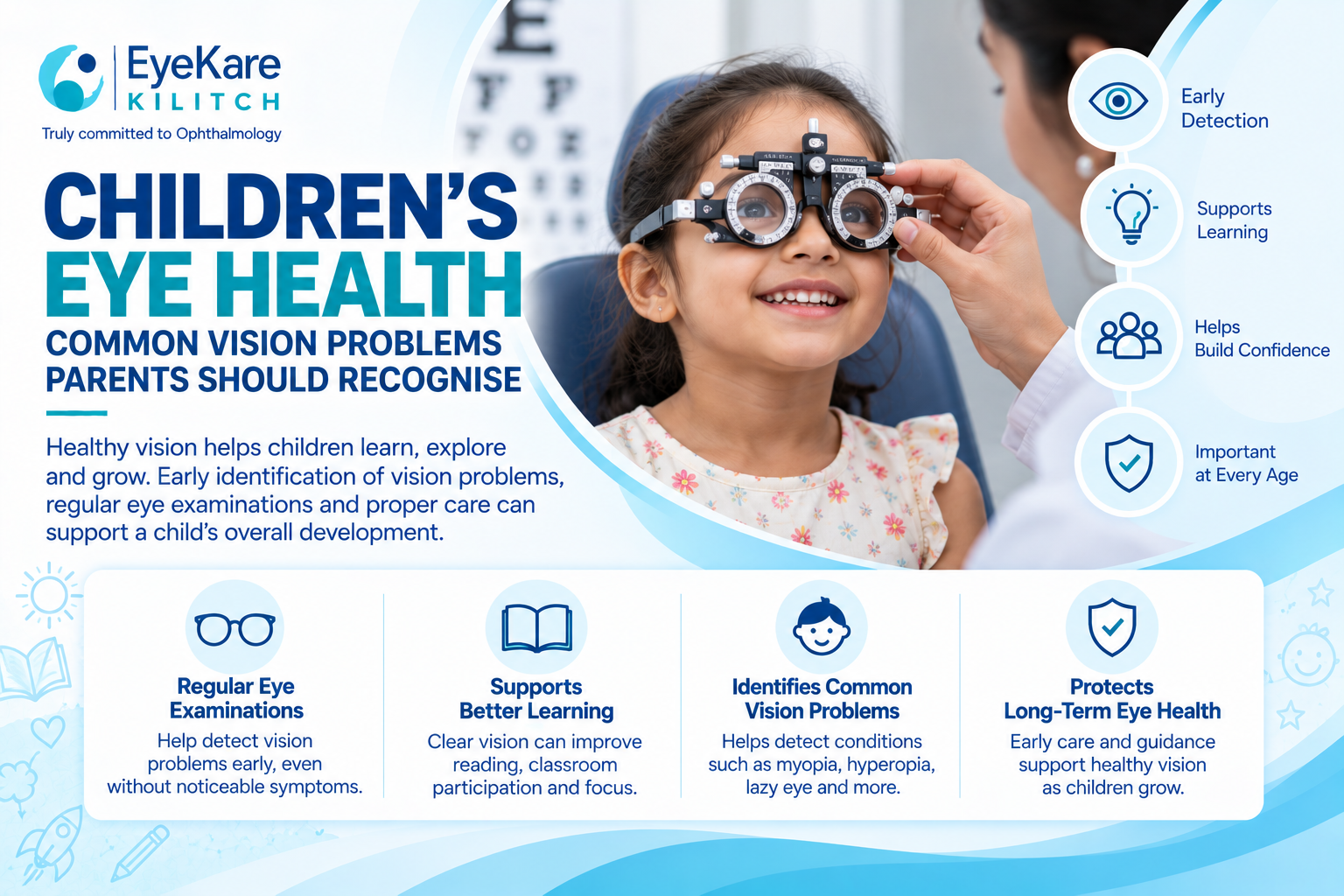
Children’s Eye Health: Common Vision Problems Parents Should Recognise
Children rely on their eyesight to explore the world, recognise faces, read books, participate in classroom activities, and develop essential skills. Healthy vision plays an important role in learning and everyday activities. However, some children may experience vision problems without being able to explain what they are seeing or feeling.
Understanding children’s eye health helps parents recognise possible warning signs and seek professional advice when needed. Regular eye examinations, timely identification of vision changes, and appropriate care can help support a child’s visual development.
Why Is Children’s Eye Health Important?
Vision develops throughout childhood, making early identification of potential eye problems particularly important. Children may assume that everyone sees the world the same way they do, so they might not report blurred vision, difficulty focusing, or other visual changes.
Untreated vision problems can sometimes affect reading, classroom participation, coordination, and confidence. Parents, teachers, and healthcare professionals can work together to identify concerns and arrange appropriate assessments.
Parents can support healthy vision by paying attention to their child’s behaviour, arranging recommended eye examinations, and discussing any concerns with an eye care professional.
Common Vision Problems in Children
Several eye conditions can affect children. Some may be present from an early age, while others develop as children grow.
1. Myopia (Nearsightedness)
Myopia, commonly known as nearsightedness, makes distant objects appear blurry while nearby objects may remain clear. Children with myopia might struggle to read information displayed on a classroom board or recognise objects at a distance.
Possible signs include:
- Squinting to see distant objects.
- Sitting very close to the television.
- Holding books or screens close to the face.
- Complaining that distant objects look blurry.
An eye examination for children can help determine whether myopia is present and whether glasses or other management options are appropriate. Parents should seek professional advice if they notice changes in their child’s distance vision.
2. Hyperopia (Farsightedness)
Hyperopia, or farsightedness, can make nearby objects harder to focus on. Mild hyperopia is common in young children and does not always require treatment, but significant hyperopia may cause visual discomfort or focusing difficulties.
Possible symptoms include headaches, eye strain, difficulty with close-up tasks, or blurred vision. Some children may not show obvious symptoms.
An eye care professional can assess the child’s vision and determine whether correction or monitoring is needed.
3. Amblyopia (Lazy Eye)
Amblyopia, often called lazy eye, occurs when vision in one eye does not develop normally during childhood. It can be associated with conditions such as a significant difference in prescription between the eyes, strabismus, or an obstruction that interferes with vision.
Children may not realise that one eye sees less clearly than the other. This makes early paediatric eye care important.
Treatment depends on the underlying cause and may include glasses, patching the stronger eye, or other approaches recommended by an eye specialist. Early assessment can improve the opportunity for effective treatment.
4. Strabismus (Misaligned Eyes)
Strabismus occurs when the eyes do not consistently point in the same direction. One eye may turn inward, outward, upward, or downward.
Parents might notice that the eyes appear misaligned, particularly when the child is tired or looking at a particular object. Some children may tilt their head or close one eye to see more comfortably.
Persistent or suspected eye misalignment should be assessed by an eye care professional. Prompt evaluation is especially important when the misalignment develops suddenly or occurs alongside other symptoms.
5. Digital Eye Strain
Children increasingly use tablets, computers, smartphones, and other digital devices for education and entertainment. Extended screen use without breaks may contribute to temporary symptoms such as tired eyes, dryness, headaches, and difficulty refocusing.
Parents can encourage healthier screen habits by:
- Scheduling regular breaks during screen activities.
- Encouraging children to look away from the screen periodically.
- Keeping screens at a comfortable viewing distance.
- Supporting outdoor play and other non-screen activities.
- Ensuring appropriate lighting during reading and screen use.
These habits may reduce discomfort, but persistent symptoms should not automatically be attributed to screen use. An eye examination can help identify other possible causes.
Warning Signs Parents Should Not Ignore
Children may express vision difficulties through their behaviour rather than directly describing a problem. Parents should pay attention to recurring changes such as:
- Frequent squinting or eye rubbing.
- Sitting unusually close to screens.
- Difficulty reading or seeing the classroom board.
- Frequent headaches during reading or other close-up activities.
- Losing their place while reading or avoiding visual tasks.
- Repeatedly tilting the head or closing one eye.
- One eye appearing misaligned.
- Unusual sensitivity to light or persistent eye discomfort.
These signs do not always indicate an eye condition, but recurring symptoms are worth discussing with a healthcare professional.
Seek urgent medical assessment if a child experiences sudden vision loss, a sudden change in eye alignment, severe eye pain, a serious eye injury, or other sudden and concerning eye symptoms.
How Often Should Children Have Their Eyes Examined?
The appropriate timing of eye examinations depends on the child’s age, development, medical history, symptoms, and previous results. Vision screening can help identify children who may need further assessment, but it is not the same as a comprehensive eye examination.
Parents should follow age-appropriate screening recommendations and arrange a professional assessment whenever concerns arise. Children with existing eye conditions, a family history of certain eye disorders, or specific developmental needs may require more individualised follow-up.
A comprehensive assessment may evaluate visual clarity, eye alignment, focusing ability, eye movement, and other aspects of eye health, depending on the child’s needs.
Practical Ways to Support Healthy Vision at Home
Parents can build simple habits that encourage good eye health throughout childhood.
Encourage Outdoor Activities
Outdoor play supports general health and may help reduce the risk of developing myopia. Encourage children to spend time outside regularly while following appropriate sun protection and safety practices.
Maintain Balanced Nutrition
A varied diet containing vegetables, fruits, whole grains, and other nutrient-rich foods supports overall health, including eye health. No single food can prevent or cure every vision problem, so nutrition should complement—not replace—professional eye care.
Promote Healthy Reading Habits
Ensure children have comfortable lighting and a suitable reading position. Encourage regular breaks during prolonged close-up activities, particularly when children experience discomfort.
Keep Up With Recommended Eye Examinations
Routine assessments can help identify vision changes that may not be obvious at home or school. Parents should share concerns about symptoms, family history, and changes in school performance with the eye care professional.
When Should Parents Consult an Eye Care Professional?
Parents should arrange an assessment if a child shows recurring signs of vision difficulty, experiences persistent headaches associated with visual tasks, or has suspected eye misalignment. Even without obvious symptoms, recommended childhood vision screening remains important.
Children who already wear glasses should follow their prescribed review schedule and report changes in comfort or visual clarity. Parents should avoid using another person’s glasses or starting eye treatments without professional guidance.
Early assessment does not mean that every child will need treatment. It helps determine whether a problem exists and what steps, if any, are appropriate.
Conclusion
Children’s eyesight plays an important role in learning, development, and everyday life. Recognising common conditions such as myopia, hyperopia, amblyopia, and strabismus can help parents understand when professional advice may be needed.
By encouraging healthy daily habits, following recommended screening schedules, and responding to warning signs, families can take practical steps to support children’s eye health.
For concerns about a child’s vision, consult a qualified eye care professional for an individual assessment and appropriate guidance.