Most of us have a half-used bottle of eye drops somewhere at home, in a bag, a drawer or the bathroom cabinet. When your eyes feel dry or itchy again, it is tempting to reach for it. But is it still safe to use?
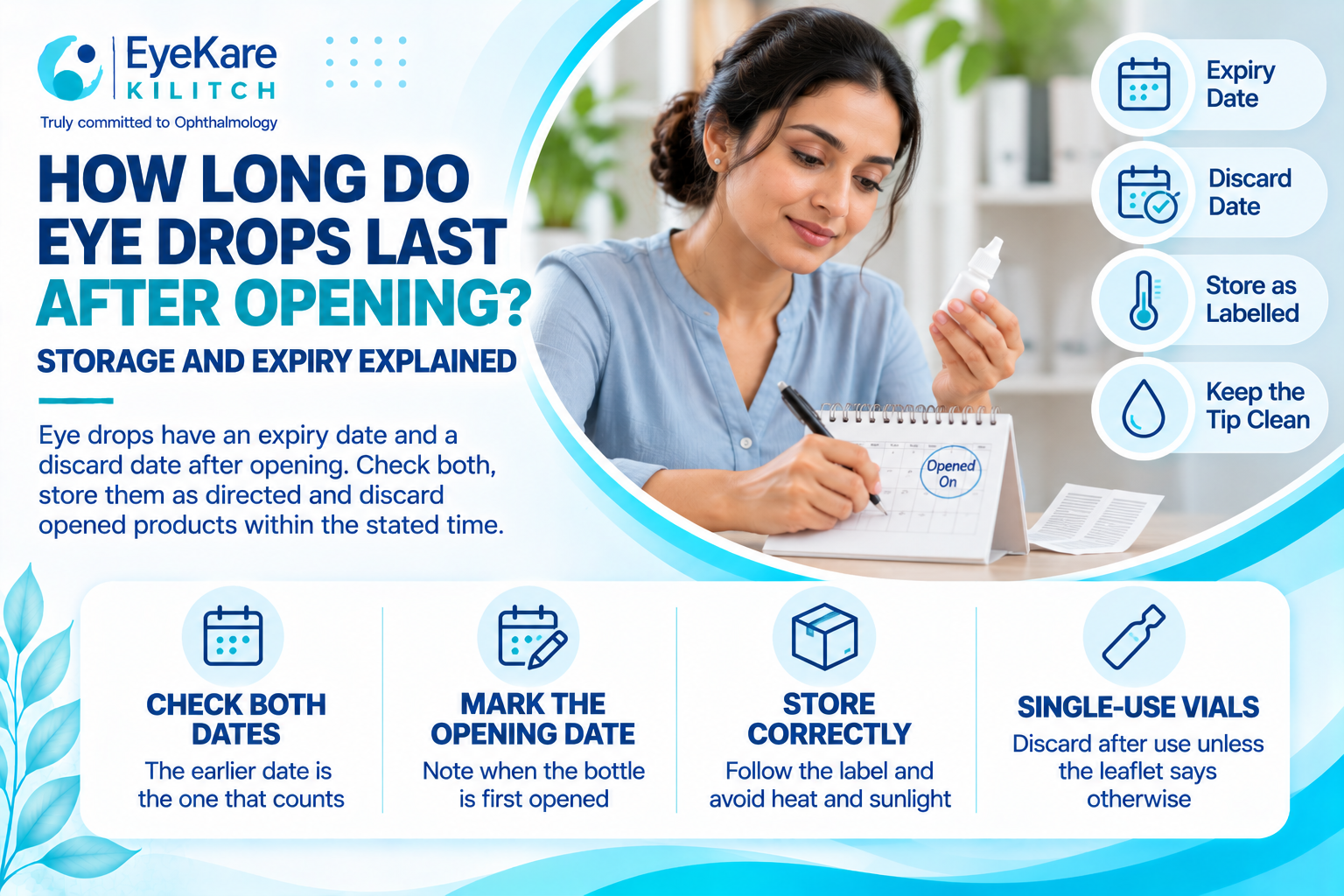
Eye drops have two important dates: the expiry date printed on the pack and the discard date after opening. Many people know about the first but not the second. This guide explains both, how preservatives affect them and how to store eye drops correctly.
Why Eye Drops Have a Limited Life After Opening
Eye drops are manufactured to be sterile. That means they are free from bacteria, fungi and other microorganisms when they leave the factory. Once you open the bottle, however, air and contact with surroundings introduce the risk of contamination.
Because eye drops go directly onto a sensitive surface, using a contaminated bottle can cause irritation or even a serious eye infection. This is why opened bottles must be discarded after a certain time.
Expiry Date vs Discard Date
Expiry Date
The expiry date is printed on the carton and bottle. It tells you how long the unopened product stays stable and effective when stored correctly. After this date, the medicine may lose strength or change.
Discard Date After Opening
The discard date, sometimes written as “use within X days of opening”, tells you how long you can use the product once the seal has been broken. This is often much shorter than the expiry date.
Whichever date comes first is the one that counts.
A useful habit is to write the date you opened the bottle on the label or carton.
How Long Do Different Eye Drops Last After Opening?
The exact time depends on the product, so always follow the label. As a general guide:
| Type of product | Typical use after opening |
| Multi-dose bottle with preservative | Often around four weeks, as stated on the label |
| Preservative-free multi-dose bottle | Varies by bottle design, check the label |
| Single-use preservative-free vials | Usually discard after one use, or within the time stated on the leaflet |
| Eye ointments | Often around four weeks, as stated on the label |
These are typical ranges only. Some products have different instructions, so the leaflet always comes first.
How Preservatives Affect Shelf Life
Preserved Eye Drops
Preservatives stop microorganisms from growing in the bottle after opening. This allows multi-dose bottles to be used for several weeks. However, frequent use of some preservatives can irritate sensitive eyes.
Preservative-Free Eye Drops
Preservative-free drops avoid this irritation. To stay sterile without preservatives, they come either in single-use vials or in specially designed multi-dose bottles with filters or valves that help keep contamination out.
Learn more in our guide to ophthalmic preservative-free technology.
Why Single-Use Vials Should Not Be Reused
Single-use vials contain no preservative. Once opened, there is nothing to stop bacteria growing. Some leaflets allow a vial to be reclosed and used again within a short time, but many say to discard immediately. Never keep an opened vial for the next day unless the instructions clearly allow it.
How to Store Eye Drops Correctly
- Follow the label. Most drops are kept at room temperature, while some must be refrigerated.
- Avoid heat and sunlight. Do not leave drops in a hot car, on a sunny windowsill or near a stove.
- Keep the cap tightly closed.
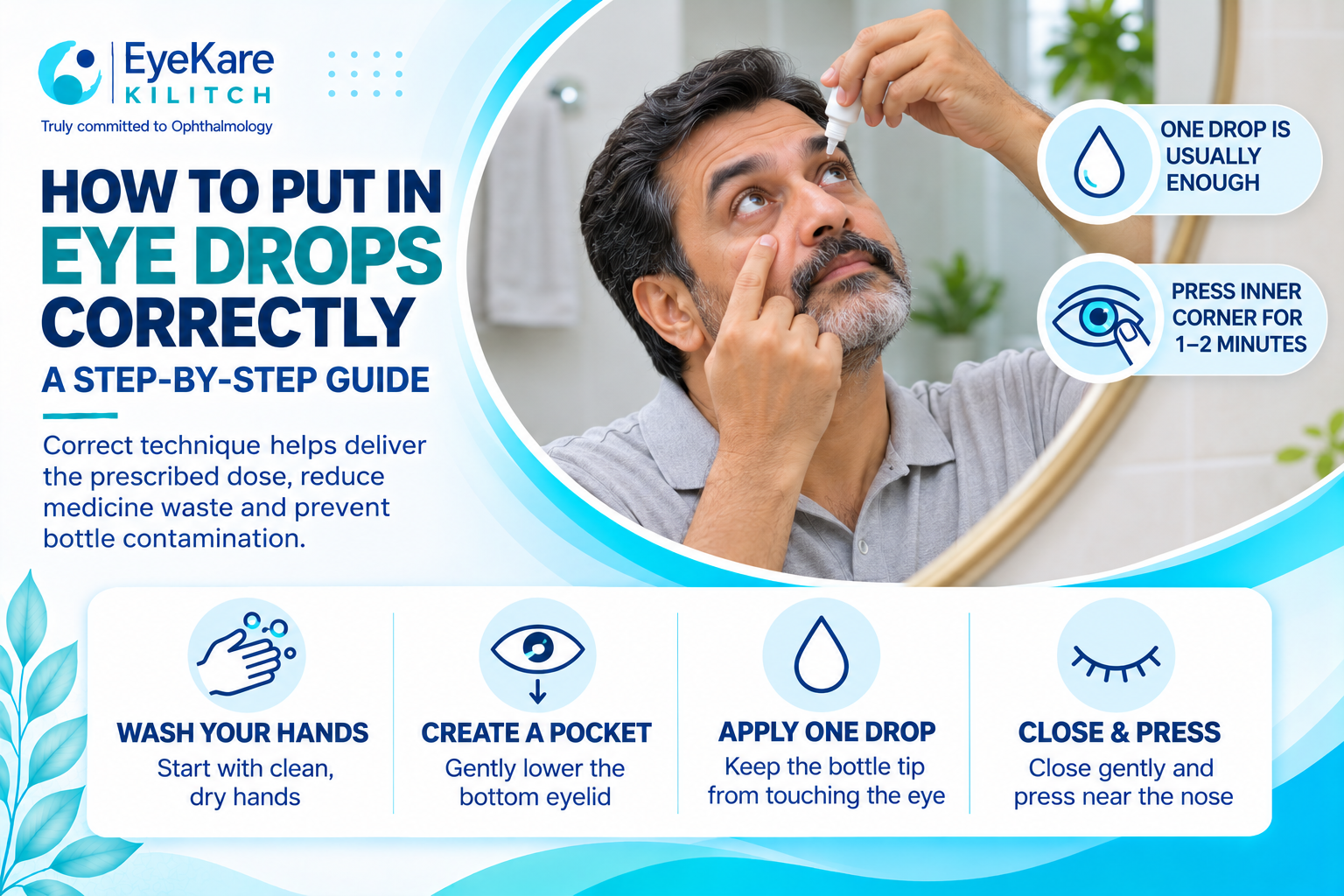
- Keep the tip clean. Never let it touch your eye, fingers or any surface.
- Store out of reach of children.
- Do not transfer drops into another container.
Should Eye Drops Be Refrigerated?
Only if the label says so. Some people like cool drops because they feel soothing, but refrigeration is not suitable for every product. Check before putting drops in the fridge.
Signs Your Eye Drops Should Be Thrown Away
- The discard or expiry date has passed
- The solution looks cloudy, discoloured or has particles, unless it is meant to be a suspension
- The bottle is damaged or the tip has been touched
- The drops sting much more than usual
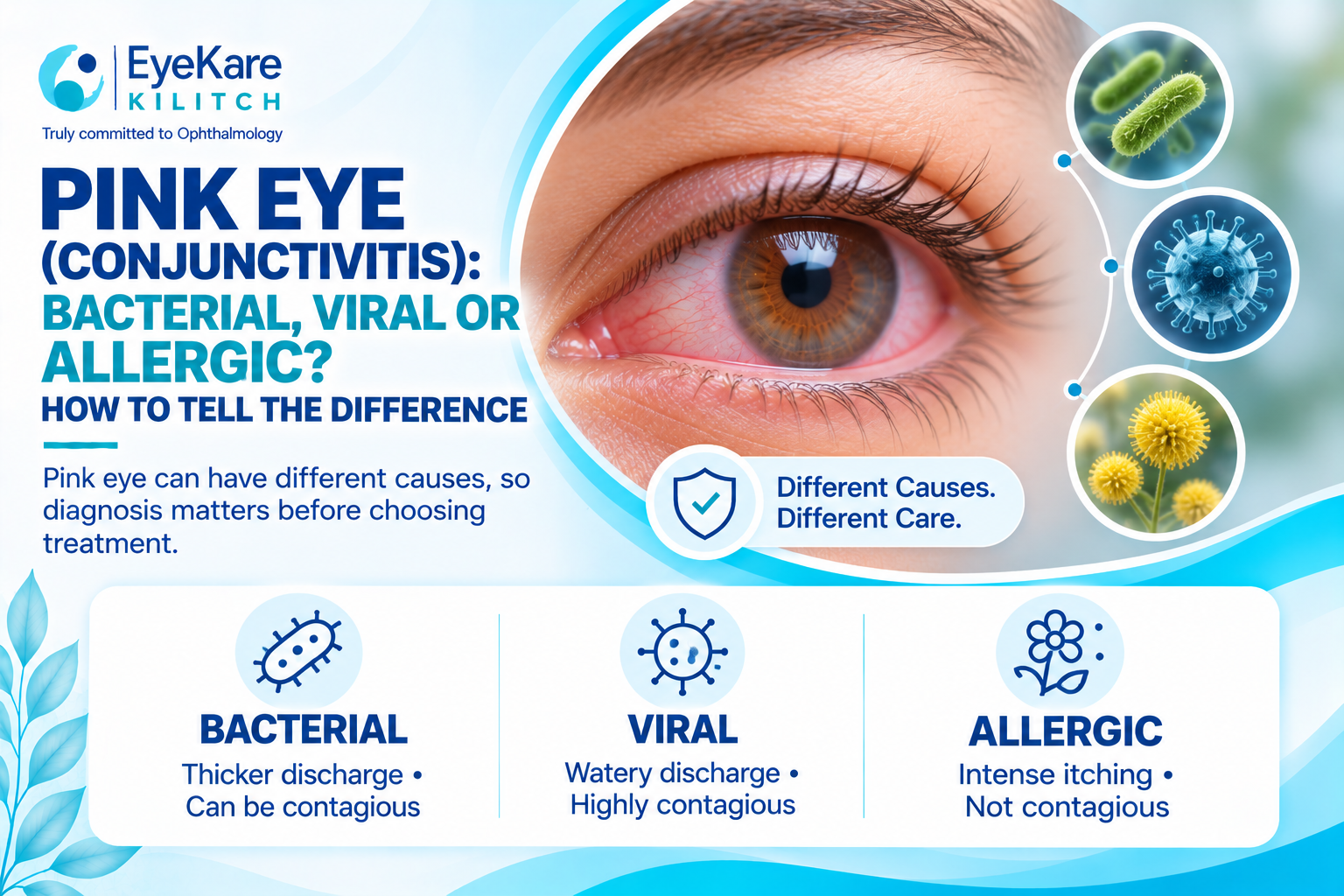
- You used them during an eye infection that has now cleared
Never Share Eye Drops
Sharing drops, even with family members, can spread infection. Each person should have their own bottle.
Travelling with Eye Drops
- Carry drops in your hand luggage so they are not exposed to extreme temperatures.
- Single-use vials are convenient and hygienic for travel.
- Keep a note of the opening date.
Read more about how travel and outdoor activities affect your eyes.
Special Care After Eye Surgery
After eye surgery, the eye is more vulnerable to infection. Always use a fresh bottle as instructed by your surgeon, follow storage instructions carefully and never use old drops from before surgery. See our guide on eye drops after eye surgery.
Eye Drops in Hot Climates
In many parts of India, summer temperatures can rise well above typical room temperature. High heat can affect some medicines. Keep eye drops in a cool, shaded place indoors, away from direct sunlight, and avoid leaving them in vehicles or bags exposed to the sun. If the label says to store below a certain temperature, follow it carefully, especially for glaucoma and other prescription drops.
Keeping Track of Opening Dates
A simple habit can prevent many problems: write the opening date on the bottle label or carton with a marker as soon as you open it. You can also set a reminder on your phone for the discard date. If you use several drops, keep them together in a clean box with their dates clearly visible.
Disposing of Old Eye Drops
Do not pour old eye drops down the sink. Follow local guidance for medicine disposal, and ask your pharmacist if a return scheme is available.
Frequently Asked Questions
Can I use eye drops after the expiry date?
No. Expired drops may be less effective and could be unsafe.
How long are eye drops good for after opening?
Many preserved multi-dose bottles are used for around four weeks after opening, but always follow the time stated on your product’s label.
Can I reuse single-use eye drop vials?
Generally no. Discard them after use unless the leaflet specifically allows short-term reuse.
Do preservative-free eye drops expire faster?
Once opened, preservative-free products often need to be used more quickly unless they come in a specially designed bottle.
What happens if I use contaminated eye drops?
Contaminated drops can cause irritation or infection. Stop using them and see a doctor if your eye becomes red, painful or your vision changes.
Safe, Sterile Eye Drops from Eyekare
Eyekare Kilitch manufactures sterile eye drops, including preservative-free options. Explore our products or contact us.
This article is for general information. Always follow the storage and usage instructions on your product.