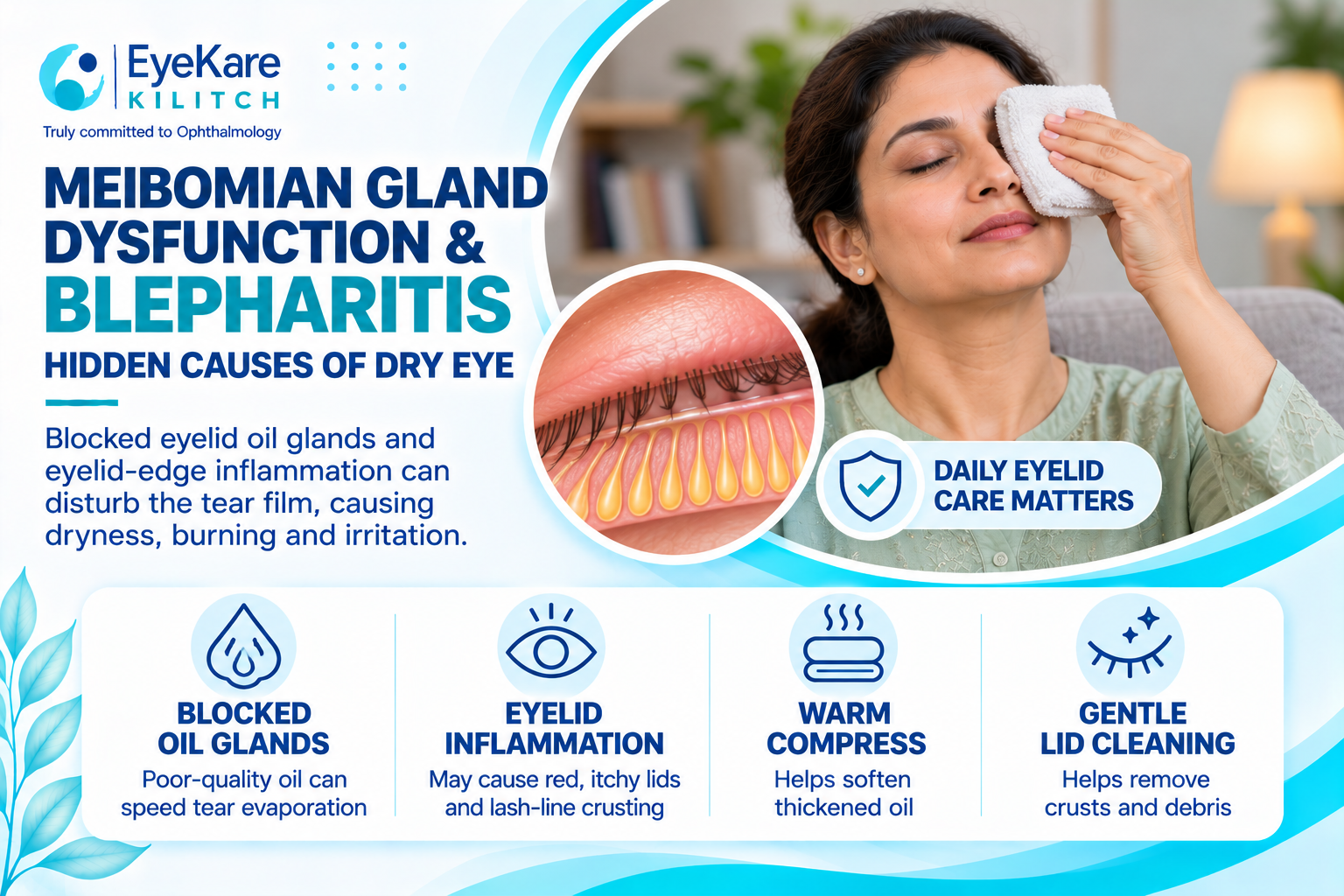
Many people with dry eyes use lubricating drops several times a day and still feel burning, grittiness and tiredness. If that sounds familiar, the cause may not be a lack of tears at all. It may be a problem with the oil glands in your eyelids or inflammation along the eyelid edge.
Meibomian gland dysfunction (MGD) and blepharitis are two of the most common, and most overlooked, causes of dry eye. This guide explains what they are, how they affect the eyes and what you can do about them. It is for general information only. An eye doctor should diagnose and guide treatment.
A Quick Look at the Tear Film
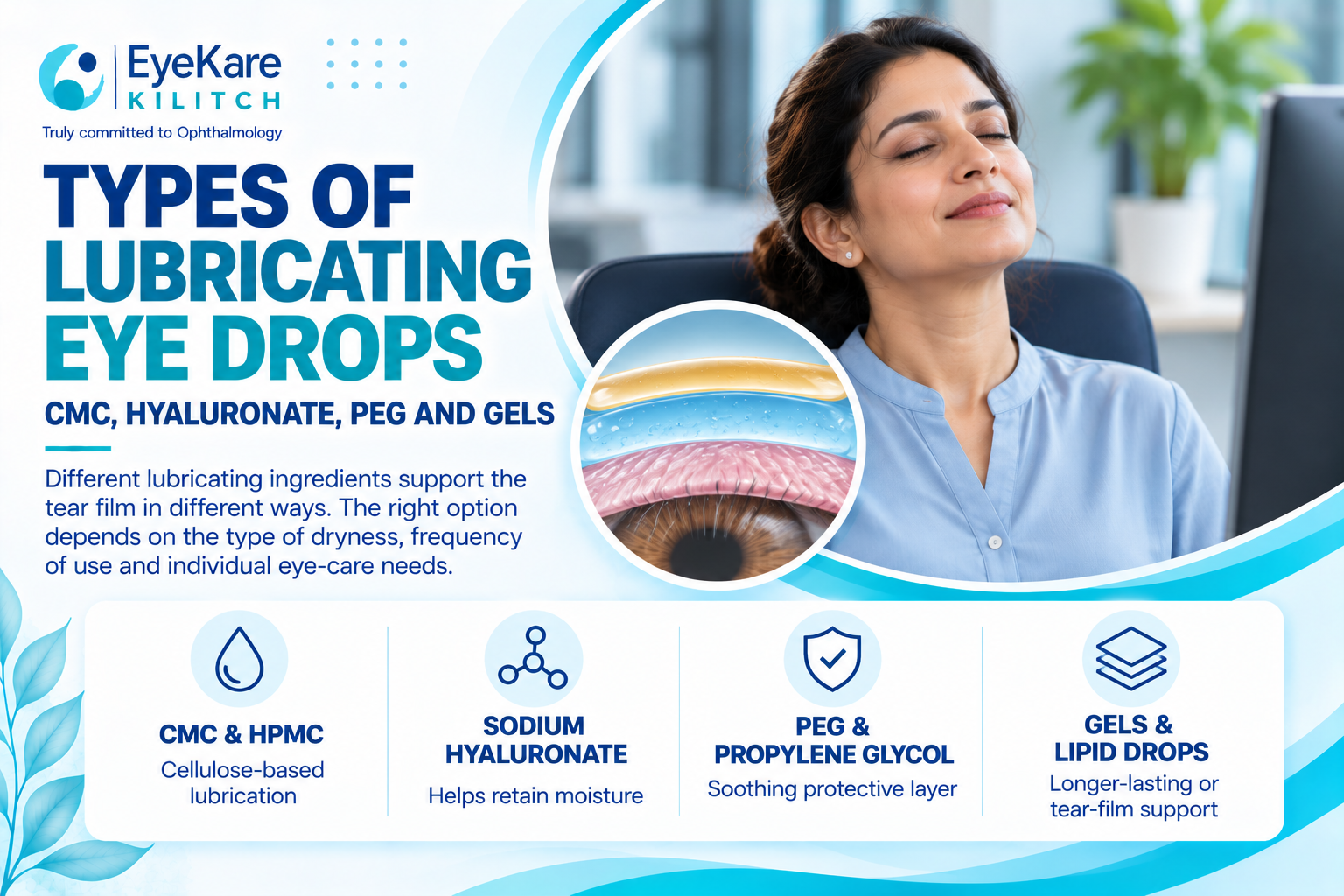
Tears are not just water. They have three layers:
- An oily layer on the surface that slows evaporation
- A watery layer that hydrates the eye
- A mucus layer that helps tears stick to the eye
The oily layer is produced by tiny glands in the eyelids called meibomian glands. There are dozens of them along the edge of each upper and lower lid.
What Is Meibomian Gland Dysfunction?
In meibomian gland dysfunction, the glands become blocked or produce oil that is too thick or poor in quality. Without a healthy oily layer, tears evaporate too quickly. This is called evaporative dry eye, and it is one of the most common forms of dry eye.
Common Symptoms
- Burning or stinging
- A gritty, sandy feeling
- Red or swollen eyelid edges
- Blurred vision that improves with blinking
- Watery eyes, as the eye tries to compensate
- Tired eyes, especially after screen use
Risk Factors
- Increasing age
- Long hours of screen use with reduced blinking
- Contact lens wear
- Certain skin conditions such as rosacea
- Hormonal changes
- Air conditioning and dry environments
What Is Blepharitis?
Blepharitis means inflammation of the eyelids. It often affects the eyelid edge where the lashes grow. It is very common and tends to be long-lasting, with flare-ups and quieter periods.
Types of Blepharitis
- Anterior blepharitis affects the front of the eyelid where the lashes attach. It is often linked to bacteria or dandruff-like flaking.
- Posterior blepharitis affects the inner eyelid edge and is closely linked to meibomian gland dysfunction.
Common Symptoms
- Itchy, red eyelids
- Crusting or flakes at the base of the lashes
- Sticky eyelids in the morning
- A burning or gritty feeling
- Sensitivity to light
- In some cases, lashes falling out or growing in the wrong direction
How MGD and Blepharitis Lead to Dry Eye
Both conditions disturb the tear film. Blocked glands mean less healthy oil, so tears dry quickly. Inflammation along the eyelid edge adds irritation. The result is a cycle of dryness and discomfort that lubricating drops alone may not fully break.
Daily Eyelid Care: The Foundation of Treatment
The most important step for many people is a simple routine of eyelid hygiene, often recommended by eye doctors.
1. Warm Compresses
Apply a clean, warm (not hot) compress to closed eyelids for several minutes. Warmth helps soften thickened oil in the glands.
2. Gentle Massage
After warming, gently massage the eyelids towards the lashes to help express the softened oil.
3. Lid Cleaning
Clean the eyelid edges with a gentle lid cleanser or wipe recommended by your doctor or pharmacist to remove crusts and debris.
Doing this regularly, often daily, can make a significant difference over time. It is usually a long-term routine rather than a quick fix.
The Role of Lubricating Eye Drops
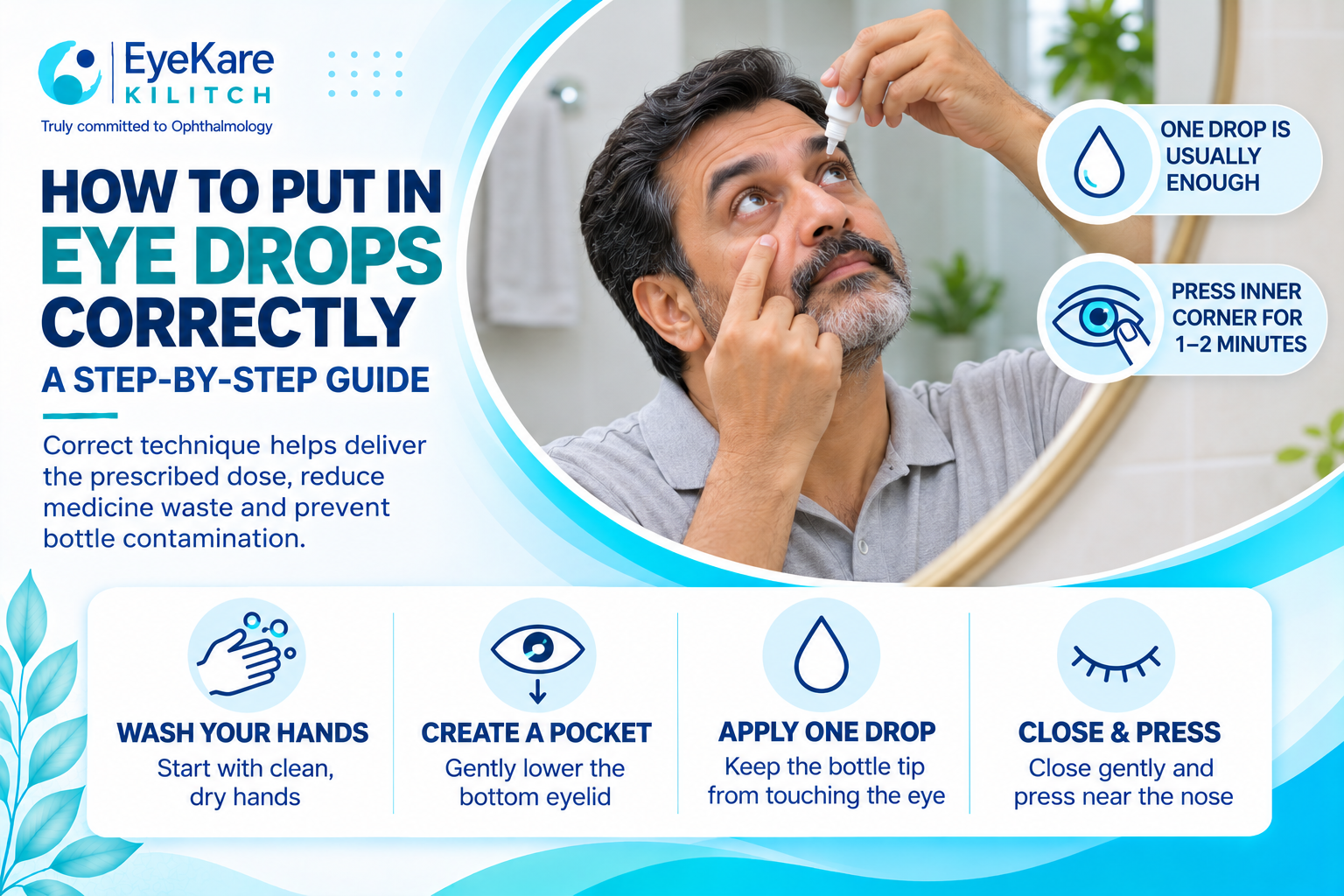
Lubricating drops help relieve symptoms while eyelid care works on the cause. For people who use drops often, preservative-free versions are usually preferred, because they are gentler on an already irritated surface. Some drops contain lipids designed to support the oily layer of the tear film.
Learn more about preservative-free eye drops for dry eyes.
Other Treatments Your Doctor May Suggest
Depending on severity, an eye doctor may recommend:
- Prescription eye drops or ointments to reduce inflammation or treat bacteria
- Oral medicines in some cases
- In-clinic treatments to clear blocked glands
- Treatment of related skin conditions
Always follow your doctor’s advice and do not use leftover prescription drops without guidance.
Lifestyle Tips That Help
- Blink fully and often, especially during screen use.
- Follow the 20-20-20 rule: every 20 minutes, look at something 20 feet away for 20 seconds.
- Remove eye make-up thoroughly every night.
- Avoid sleeping in contact lenses.
- Stay hydrated and maintain a balanced diet.
- Reduce direct airflow from fans and air conditioners onto your face.
Read more about how working long hours on computers affects your eyes.
When to See an Eye Doctor
See an eye doctor if:
- Dry eye symptoms continue despite regular lubricating drops
- Your eyelids are persistently red, swollen or crusted
- You develop styes or lumps on the eyelids
- Your vision changes or the eye becomes painful
Comparison Table
| Feature | Meibomian gland dysfunction | Blepharitis |
| Main problem | Blocked or poor-quality oil glands | Eyelid inflammation |
| Key symptom | Evaporative dryness, burning | Crusting, itchy red lids |
| Core care | Warm compresses, massage | Lid cleaning, hygiene |
| Link to dry eye | Strong | Strong, especially posterior type |
Screen Time and Blinking
When we focus on screens, we blink far less often than usual, and many blinks are incomplete. Every full blink helps squeeze a little oil from the meibomian glands onto the tear film. Reduced blinking means less oil, faster evaporation and more dryness. Making a conscious effort to blink fully, especially during long work sessions, supports gland health. Some people find it helpful to set reminders or place a small note on their monitor.
Eye Make-Up and Eyelid Health
Eye make-up, especially eyeliner applied to the inner eyelid edge, can block meibomian glands. Old or shared products can also carry bacteria. Remove make-up gently every night, replace eye products regularly and avoid applying liner on the inner rim of the eyelid if you are prone to blepharitis or dry eye.
Stye and Chalazion
People with blepharitis and MGD are more likely to develop styes, painful red lumps caused by infection, and chalazia, firm lumps caused by a blocked gland. Warm compresses often help. See a doctor if a lump is very painful, grows quickly or does not improve.
Living Well with Dry Eye
MGD and blepharitis can feel frustrating, but most people improve with patience and a steady routine. Small daily habits add up over weeks and months.
Frequently Asked Questions
Can meibomian gland dysfunction be cured?
It is often a long-term condition, but regular eyelid care and treatment can control symptoms well.
Is blepharitis contagious?
No. Blepharitis is not considered contagious.
Do lubricating eye drops treat MGD?
They relieve symptoms, but eyelid care and doctor-guided treatment address the underlying problem.
How long before warm compresses help?
Many people notice improvement after a few weeks of consistent daily use.
Gentle Eye Care from Eyekare Kilitch
Eyekare Kilitch offers lubricating and preservative-free eye care solutions. Explore our products or contact us.
This article is for general information only. Consult your eye doctor for diagnosis and treatment.