Eye drops are one of the most common medicines in the world, yet many people use them incorrectly. Studies of patients using eye drops have repeatedly found that a large share miss the eye, touch the bottle tip to the eye or use more drops than needed. When drops are not applied correctly, the medicine may not work as well, bottles run out sooner and the risk of contamination rises.
The good news is that putting in eye drops is a simple skill that anyone can learn. This step-by-step guide explains how to do it properly, with tips for children, older adults and people using more than one type of drop.
Why Technique Matters
Good technique helps you:
- Get the full dose of medicine into the eye
- Avoid wasting expensive drops
- Prevent contamination of the bottle
- Reduce side effects caused by medicine draining into the nose and throat
- Get better results from treatments such as glaucoma, allergy or antibiotic drops
Before You Start
- Read the label and leaflet. Check the dose, how often to use the drops and whether to shake the bottle.
- Check the expiry and discard date. Many bottles must be thrown away a set time after opening.
- Remove contact lenses if the instructions say so.
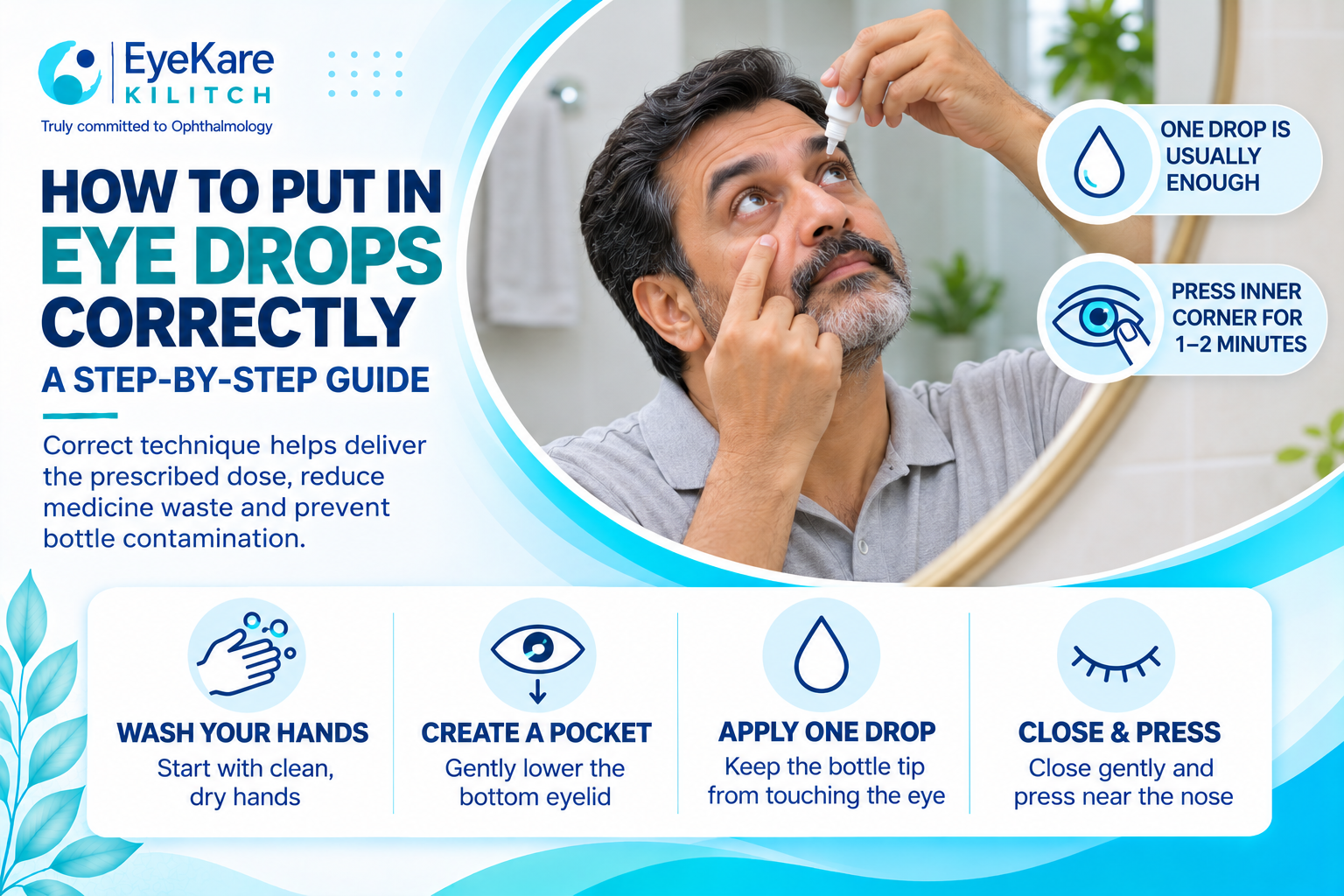
- Wash your hands with soap and water and dry them.
Step-by-Step: How to Put In Eye Drops
Step 1: Prepare the Bottle
Remove the cap and place it on a clean surface, facing upwards. If the label says to shake the bottle, do so gently. Do not touch the dropper tip.
Step 2: Get Into Position
Sit or lie down, or stand in front of a mirror. Tilt your head back and look up at the ceiling.
Step 3: Create a Pocket
Use one finger to gently pull down your lower eyelid. This creates a small pocket between the eyelid and the eye.
Step 4: Position the Bottle
Hold the bottle upside down above your eye, close but not touching. Some people find it helpful to rest the hand holding the bottle on their forehead for steadiness.
Step 5: Squeeze One Drop
Gently squeeze the bottle so one drop falls into the pocket. One drop is usually enough, because the eye can only hold a small amount of liquid.
Step 6: Close Your Eye
Let go of your eyelid and close your eye gently. Do not blink hard or squeeze your eye shut, as this can push the drop out.
Step 7: Press the Inner Corner
With your eye closed, press gently on the inner corner of the eye, next to the nose, for one to two minutes. This is called punctal occlusion. It helps keep the medicine in the eye and reduces how much drains into the nose and throat.
Step 8: Wipe Away Excess
Use a clean tissue to dab away any liquid on your eyelid or cheek.
Step 9: Replace the Cap
Put the cap back on straight away to keep the bottle clean.
Step 10: Wash Your Hands Again
Especially important if you are treating an infection.
Using More Than One Type of Eye Drop
If your doctor has prescribed several drops:
- Wait at least five minutes between different drops so the first one is not washed out.
- Use thinner solutions first, then suspensions, then gels or ointments last.
- Follow your doctor’s order if they have given specific instructions.
Tips If You Find It Hard
If You Keep Blinking
Try looking up and to the side, or place the drop in the inner corner of the closed eye, then open your eye slightly so it rolls in.
If You Have Shaky Hands
Rest your hand on your forehead or the bridge of your nose. Lying down can also help. Eye drop guides, available in some pharmacies, can make positioning easier.
If You Cannot Feel the Drop
Keeping the bottle in the fridge, if the label allows, can make the drop easier to feel. Always check storage instructions first.
Putting Eye Drops in a Child’s Eyes
- Lay the child down and stay calm.
- Ask them to close their eyes.
- Place the drop in the inner corner of the eye.
- When they open their eyes, the drop will flow in.
- Make it a game or give praise to reduce fear.
Read more about children’s eye health.
Common Mistakes to Avoid
| Mistake | Why it matters |
| Touching the tip to the eye | Contaminates the bottle |
| Using several drops at once | Wastes medicine, no extra benefit |
| Blinking hard straight away | Pushes the drop out |
| Not waiting between drops | Washes out the first medicine |
| Sharing drops | Spreads infection |
| Using drops past the discard date | Risk of contamination |
Ointments and Gels
For ointments, pull down the lower lid and squeeze a thin ribbon along the pocket, without touching the eye. Close your eye and move it around gently to spread the ointment. Expect some temporary blurring. Learn more about ophthalmic gels and when they are prescribed.
Single-Use Vials
Preservative-free single-use vials are easy to use. Twist off the top, apply the drop in the same way and discard the vial after use, unless the leaflet says it can be reclosed for a short time.
Eye Drops for Glaucoma: Why Technique Is Especially Important
People with glaucoma often use drops every day for many years. Missing the eye or using drops at irregular times can reduce how well eye pressure is controlled. Good technique, regular timing and keeping follow-up appointments all help protect vision. If you have trouble putting in your glaucoma drops, tell your doctor, who may be able to suggest aids or alternative treatments. Read more about eye drops for eye pressure.
Building a Routine
If you use eye drops regularly, link them to an existing daily habit, such as brushing your teeth or having breakfast. Keep the bottle in the same place, set reminders on your phone and use a simple chart if you have several drops. A routine helps you remember every dose.
Frequently Asked Questions
How many drops should I put in my eye?
Usually one drop is enough unless your doctor has prescribed more.
How long should I wait between two different eye drops?
Generally at least five minutes, unless your doctor gives different advice.
What if I miss my eye?
You can simply try again with another drop.
Should I keep my eye drops in the fridge?
Only if the label says it is safe or required. Some drops should be kept at room temperature.
Why do I taste eye drops in my mouth?
The eye drains into the nose and throat. Pressing on the inner corner of the eye after applying drops reduces this.
Quality Eye Drops from Eyekare Kilitch
Eyekare Kilitch manufactures a wide range of sterile eye drops. Explore our products or contact us.
This article is for general information. Always follow the instructions from your doctor and the product leaflet.