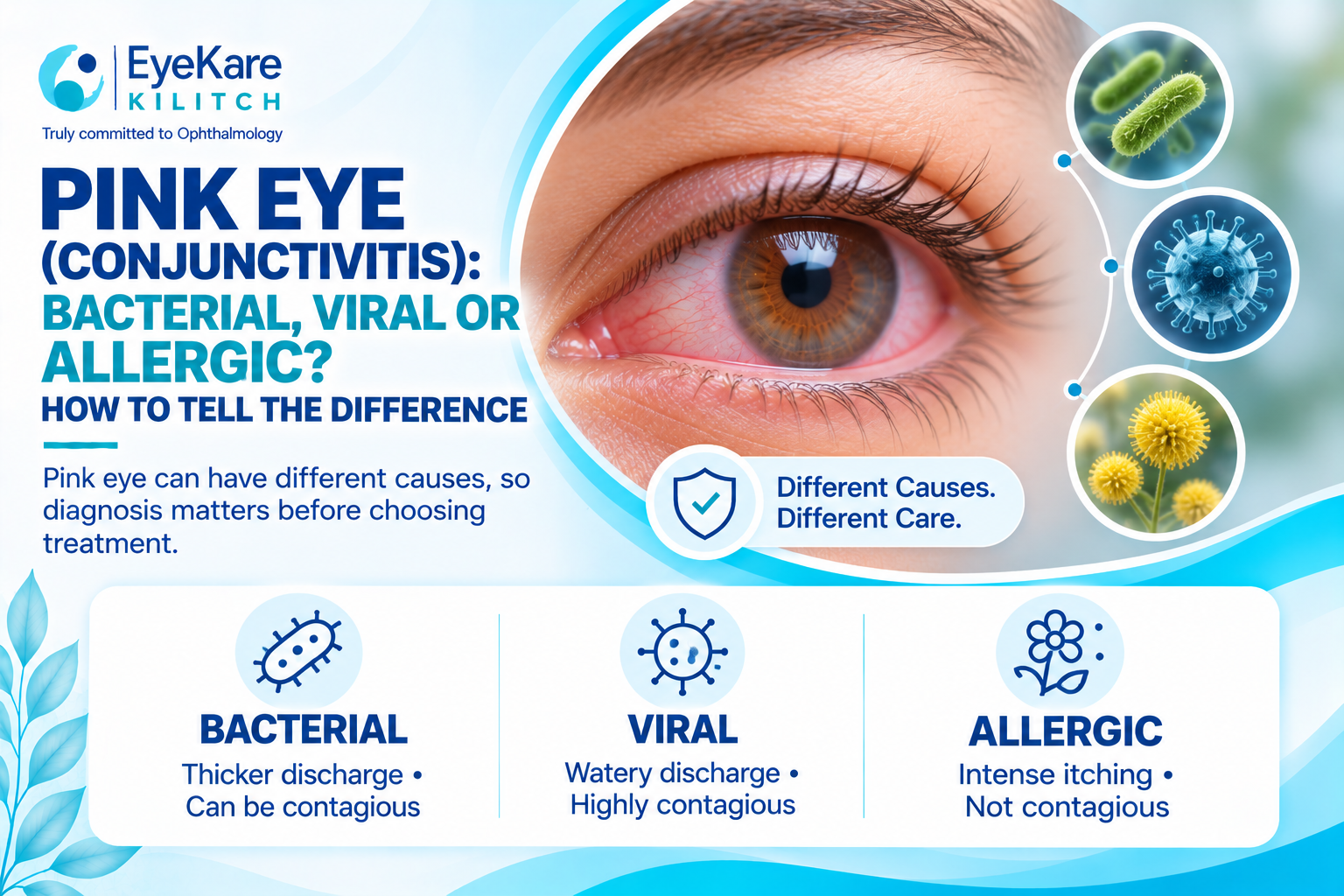
Pink eye is one of the most common eye problems in the world. It spreads quickly through schools, offices and households, and outbreaks are often reported in India, especially during the monsoon. But “pink eye” is not a single condition. The medical name is conjunctivitis, which simply means inflammation of the conjunctiva, the thin clear layer covering the white of the eye and the inside of the eyelids.
Conjunctivitis has three main causes: bacteria, viruses and allergies. They can look similar, but they spread differently and need different treatment. This guide helps you understand the differences. It is for general information only, and an eye doctor should always confirm the diagnosis.
What Is Conjunctivitis?
When the conjunctiva becomes inflamed, the tiny blood vessels within it swell, making the eye look pink or red. Other common symptoms include:
- Watering or discharge
- Itching, burning or a gritty feeling
- Swollen eyelids
- Crusting of the eyelashes, especially in the morning
The type of discharge, the main symptom and how it started give important clues about the cause.
Bacterial Conjunctivitis
Causes
Bacterial conjunctivitis is caused by bacteria that infect the eye surface. It can spread through touching the eyes with unwashed hands, sharing towels or cosmetics, or close contact with an infected person.
Typical Symptoms
- Thick yellow or green discharge
- Eyelids stuck together on waking
- Redness and irritation
- Often starts in one eye and may spread to the other
Treatment
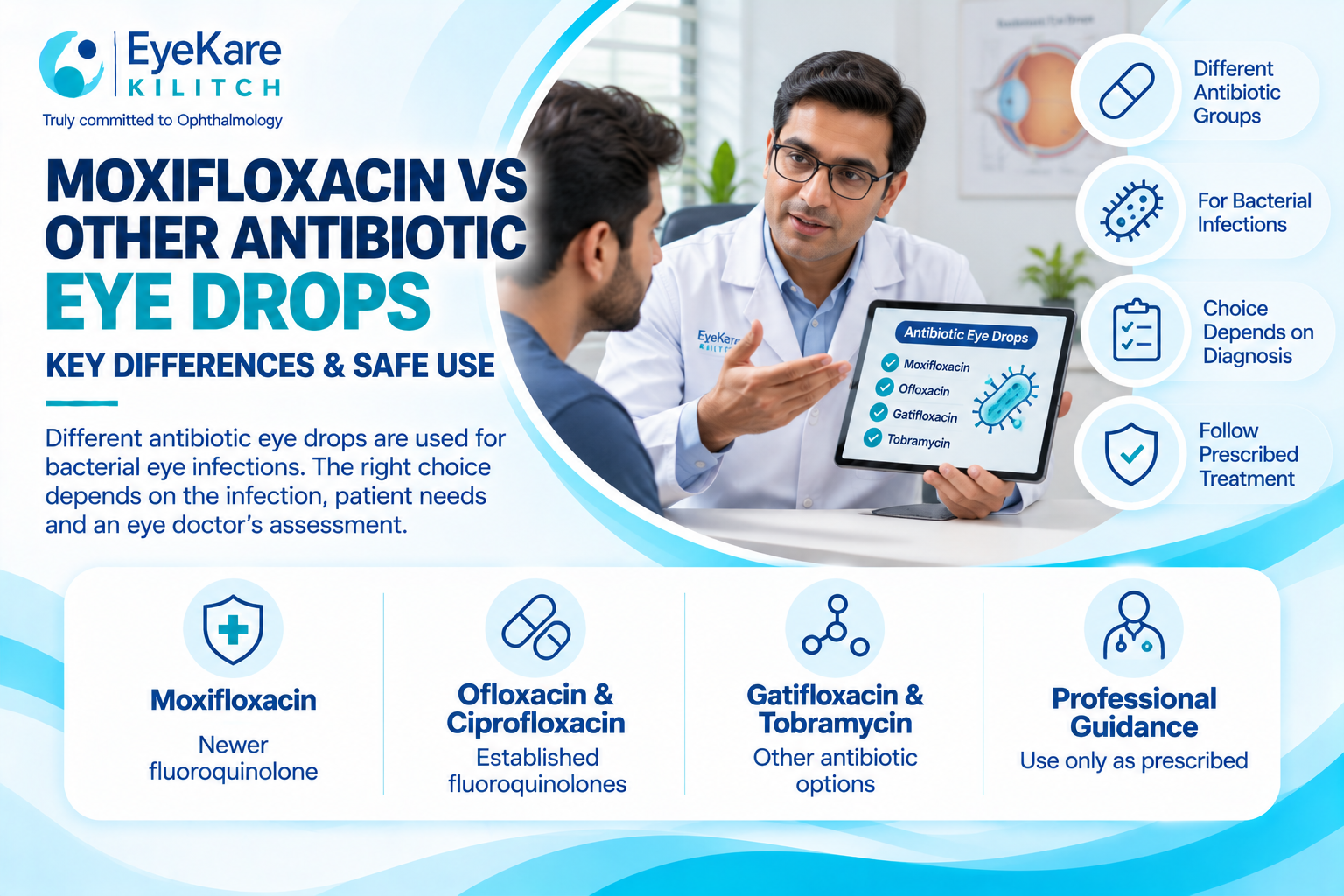
Doctors often prescribe antibiotic eye drops or ointments, such as moxifloxacin. Read more in our moxifloxacin eye drops guide and eye drops for eye infections.
Viral Conjunctivitis
Causes
Viral conjunctivitis is most often caused by adenoviruses, the same family of viruses that cause common colds. It is the type behind many large outbreaks.
Typical Symptoms
- Watery discharge rather than thick pus
- Redness, burning and a gritty feeling
- Often starts in one eye and spreads to the other within days
- May come with a cold, sore throat or swollen glands near the ear
- Sensitivity to light in some cases
Treatment
Antibiotics do not work against viruses. Most viral conjunctivitis improves on its own over one to three weeks. Doctors may recommend cool compresses and lubricating eye drops for comfort. Some severe cases need specialist care.
How Contagious Is It?
Viral conjunctivitis is highly contagious. People are usually advised to avoid school or work while symptoms are active, according to their doctor’s advice.
Allergic Conjunctivitis
Causes
Allergic conjunctivitis happens when the eyes react to allergens such as pollen, dust mites, mould or pet dander. It is not an infection and is not contagious.
Typical Symptoms
- Intense itching, the key sign
- Watery eyes
- Redness and swollen eyelids
- Usually affects both eyes at the same time
- Often accompanied by sneezing or a runny nose
Treatment
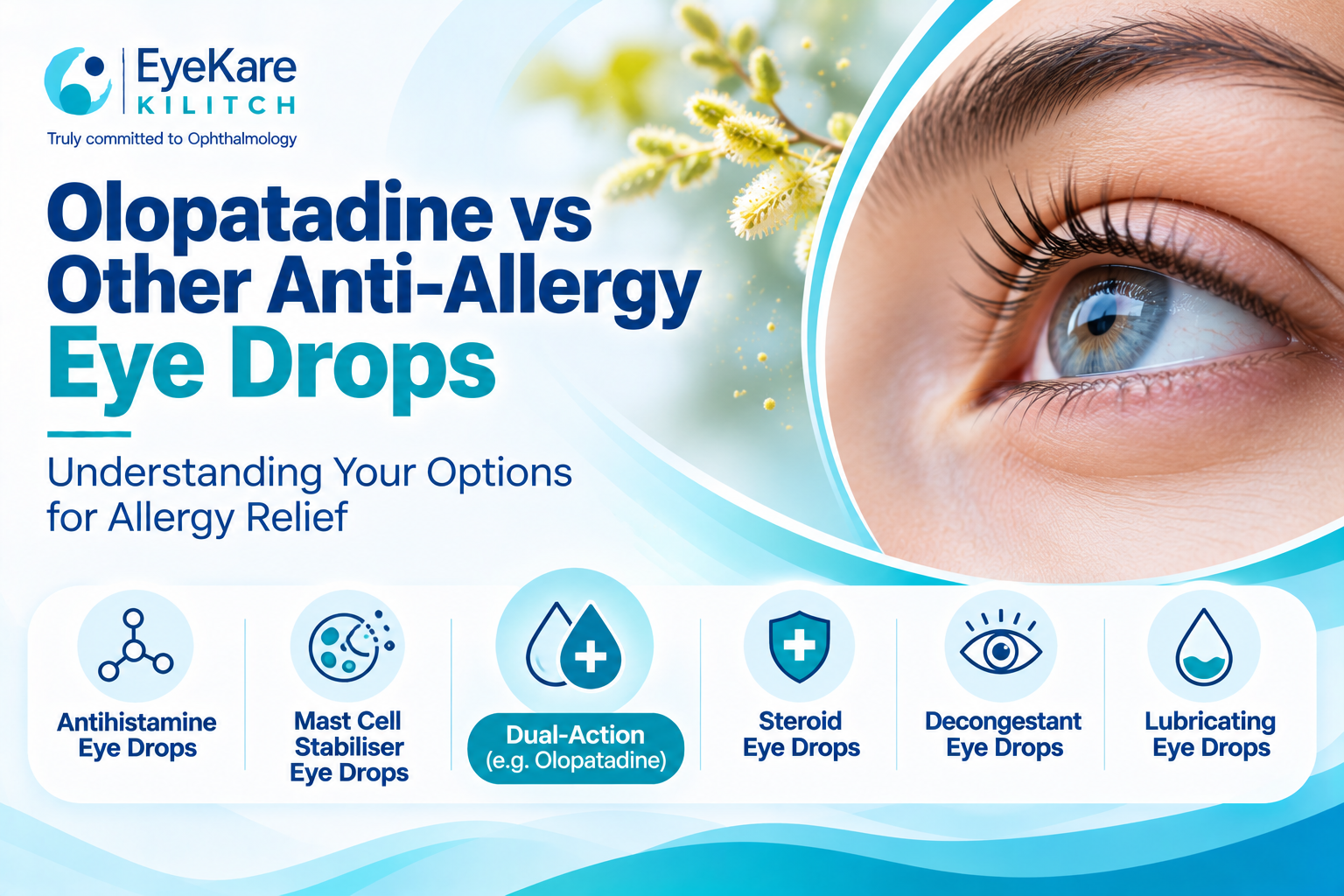
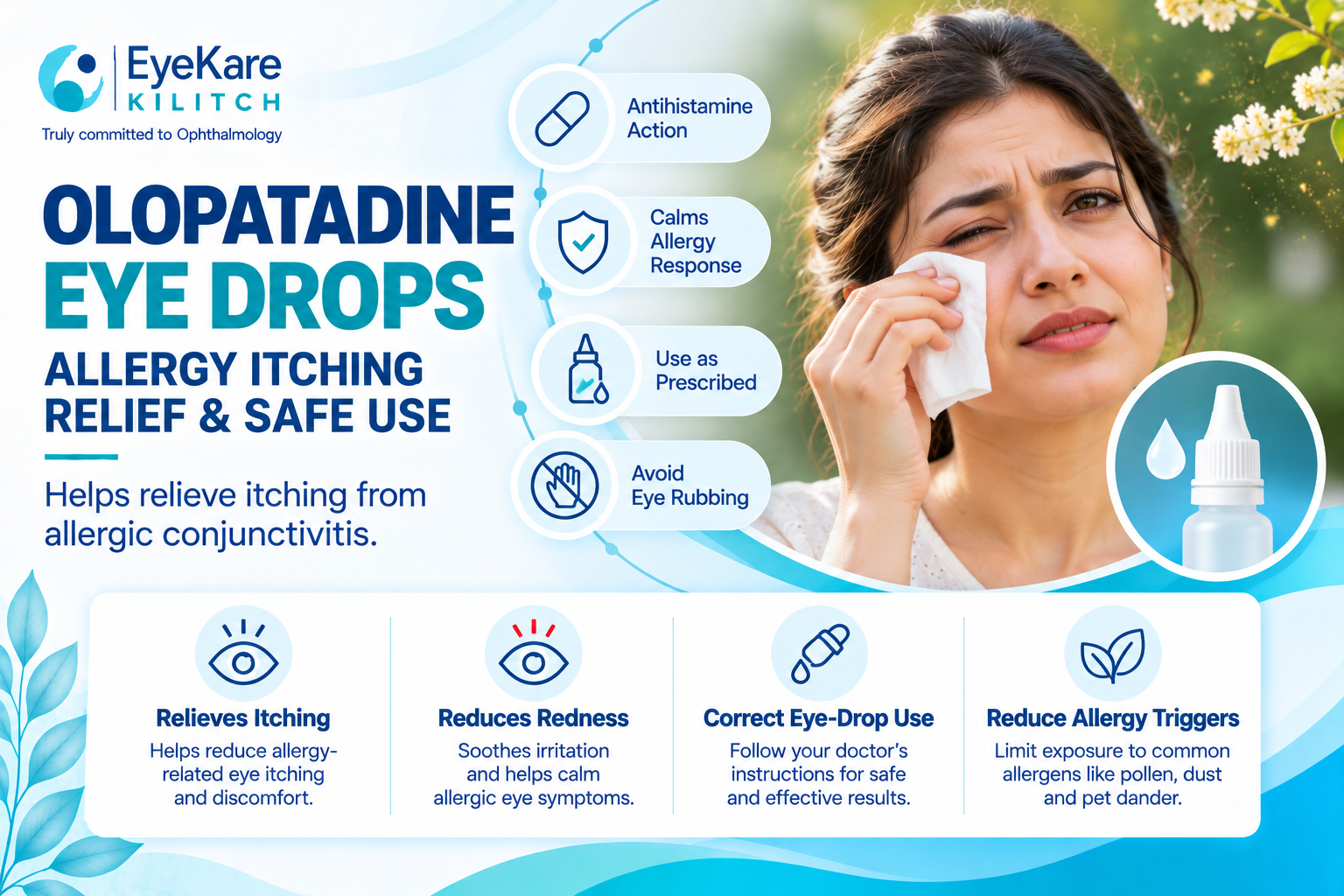
Avoiding triggers helps, along with anti-allergy eye drops such as olopatadine. Read how to choose and use anti-allergy eye drops.
Quick Comparison Table
| Feature | Bacterial | Viral | Allergic |
| Discharge | Thick, yellow or green | Watery | Watery or stringy |
| Main symptom | Sticky eyes | Gritty, burning | Itching |
| Eyes affected | Often one, then both | Often one, then both | Usually both together |
| Other signs | Crusting on waking | Cold symptoms, swollen glands | Sneezing, runny nose |
| Contagious? | Yes | Yes, highly | No |
| Typical treatment | Antibiotic drops | Supportive care | Anti-allergy drops, trigger avoidance |
When to See a Doctor Urgently
Some red eyes are not simple conjunctivitis. Seek prompt medical attention if you have:
- Moderate or severe eye pain
- Blurred vision that does not clear with blinking
- Strong sensitivity to light
- A newborn baby with red eyes or discharge
- A contact lens wearer with a painful red eye
- Symptoms that worsen despite treatment
- A recent eye injury
These can be signs of more serious problems that need urgent care.
Preventing the Spread of Pink Eye
- Wash hands frequently with soap and water.
- Avoid touching or rubbing your eyes.
- Do not share towels, pillows, eye make-up or eye drops.
- Clean surfaces such as door handles and phones.
- Replace eye make-up used during an infection.
- Stop wearing contact lenses until your doctor says it is safe, and discard lenses and cases used during the infection.
Learn more in why eye hygiene matters for preventing infections.
Pink Eye in Children
Children catch conjunctivitis easily at school. Teach them to wash hands, avoid rubbing their eyes and use their own towel. Always see a doctor before using any medicated drops on a child, and follow school guidance on returning to class.
Home Comfort Measures
While waiting to see a doctor or during recovery:
- Use clean, cool compresses for itching and swelling.
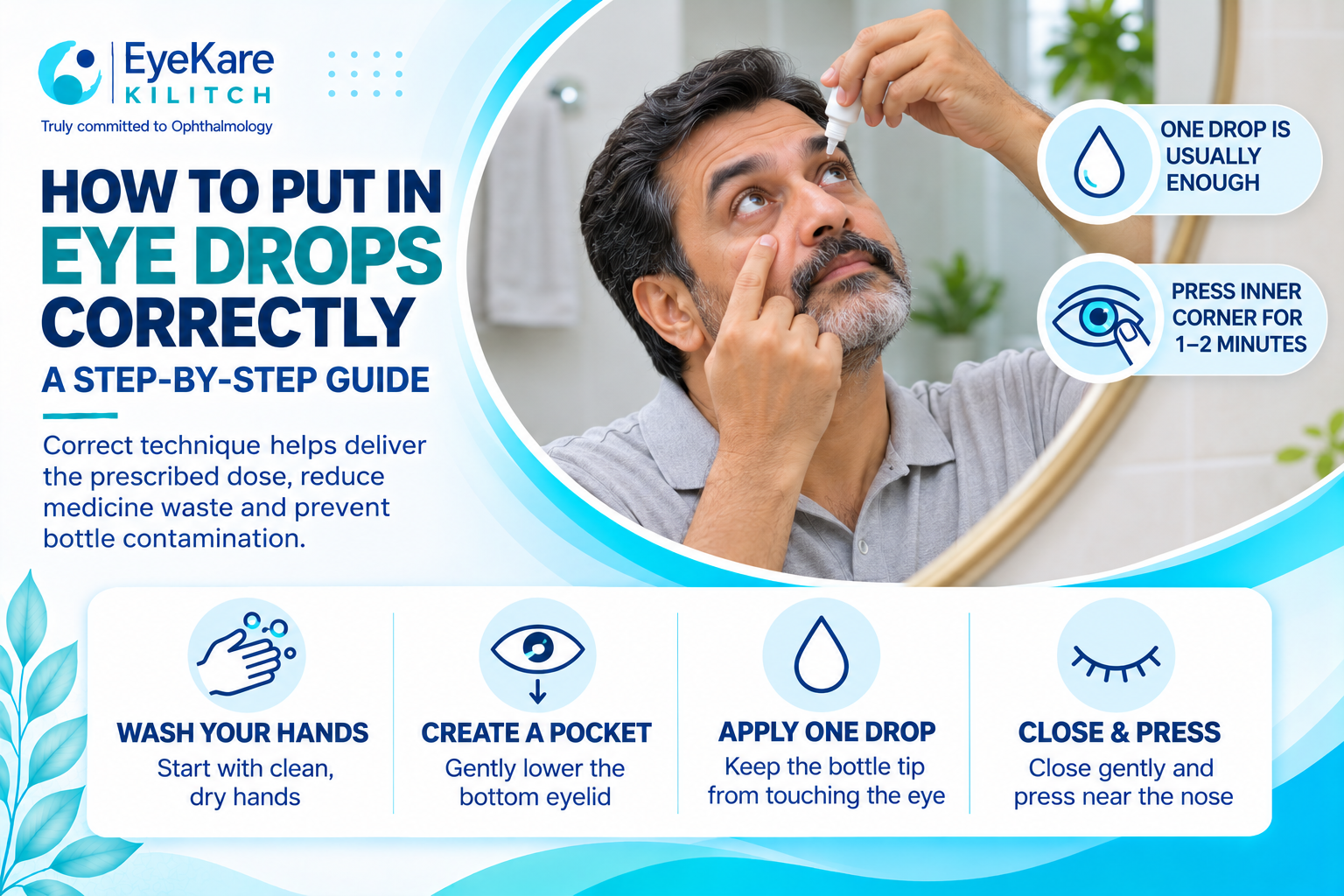
- Gently clean discharge from the eyelids with a fresh, clean cloth or cotton pad for each eye.
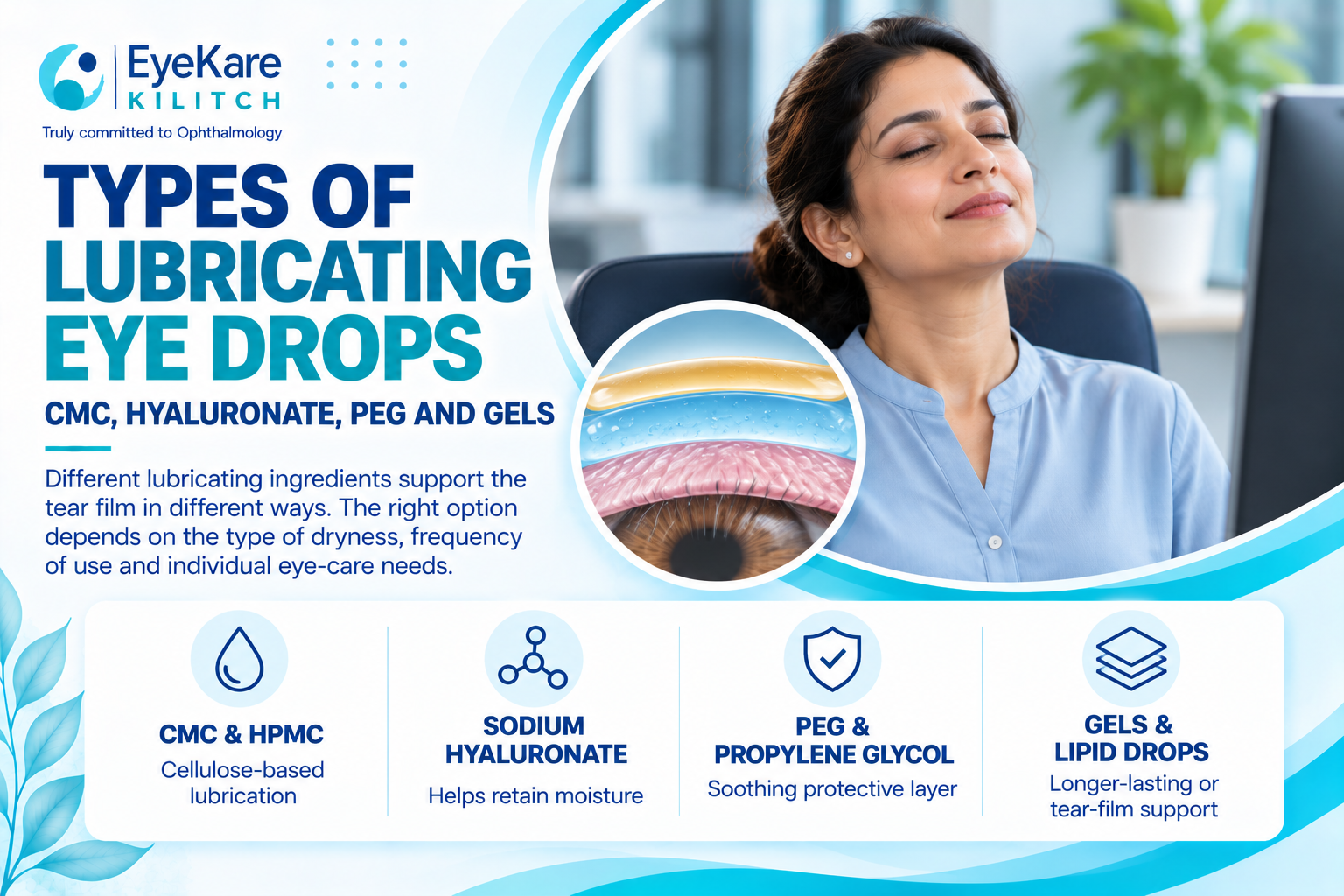
- Use preservative-free lubricating drops for comfort, if suitable.
- Avoid using leftover eye drops from previous infections.
Conjunctivitis and Contact Lenses
Contact lens wearers need to take extra care with red eyes. A painful red eye in a lens wearer can sometimes be a sign of a corneal infection rather than simple conjunctivitis, and this needs urgent attention. Remove your lenses, do not put them back in and see an eye doctor promptly. Replace lenses and the lens case once the infection has cleared.
Conjunctivitis During the Monsoon
In India, cases of infectious conjunctivitis often rise during the monsoon, when humidity is high and people spend more time indoors together. Good hand hygiene, avoiding touching the eyes and not sharing personal items are especially important during this season. Schools and workplaces may issue guidance during outbreaks, so stay informed and follow local health advice.
Recovering Well
Most people with conjunctivitis recover fully. While your eyes heal, rest them from screens when you can, avoid swimming pools and dusty environments, and keep using any prescribed drops for the full time advised. Once symptoms clear, replace eye make-up, wash bedding and clean your glasses to avoid reinfection.
Frequently Asked Questions
How can I tell if pink eye is bacterial or viral?
Thick yellow or green discharge suggests bacteria, while watery discharge with cold symptoms suggests a virus. A doctor can confirm the cause.
Do I need antibiotics for pink eye?
Only bacterial conjunctivitis responds to antibiotics. Viral and allergic types need different care.
Is allergic conjunctivitis contagious?
No. It is an allergic reaction, not an infection.
How long does viral conjunctivitis last?
It often improves within one to three weeks, though recovery time varies.
Can I go to work with pink eye?
For infectious types, follow your doctor’s advice about staying home to avoid spreading it.
Trusted Eye Care Solutions
Eyekare Kilitch manufactures sterile ophthalmic products for infection, allergy and dry eye care. Explore our products or contact us.
This article is for general information only and does not replace medical advice. See an eye doctor for diagnosis and treatment.