Introduction
Eye infections can cause redness, watering, irritation, discharge, swelling, discomfort, and changes in vision. They may result from bacteria, viruses, fungi, or other causes affecting the eye and surrounding tissues. Because different conditions require different treatment approaches, identifying the underlying cause is important before choosing a medicine. Eye drops for eye infection may be prescribed when an ophthalmic medicine is appropriate for the diagnosed condition.
What Is an Eye Infection?
An eye infection occurs when microorganisms affect one or more parts of the eye or surrounding tissues. The conjunctiva, cornea, eyelids, and other ocular structures can be affected. The severity can range from mild irritation to significant discomfort and visual symptoms.
Symptoms can overlap with allergies, dry eye, inflammation, or environmental irritation. Therefore, redness or discharge alone cannot always establish whether an infection is present. Professional assessment may be needed to identify the cause and determine suitable treatment.
Common Symptoms of an Eye Infection
Depending on the cause and affected area, an eye infection may be associated with:
- Eye redness
- Excessive watering
- Eye discharge
- Swelling around the eye
- Burning or irritation
- Eye discomfort
- Light sensitivity
- Crusting around the eyelids
- Foreign-body sensation
- Blurred or altered vision
Symptoms can vary between individuals and between different types of infection. Symptoms that persist, worsen, or affect vision should be evaluated by an eye-care professional.
What Causes Eye Infections?
Bacterial Infections
Bacteria can cause infections of the ocular surface, including some forms of bacterial conjunctivitis. Redness, irritation, and discharge may occur. When a bacterial infection is diagnosed, an ophthalmologist may prescribe an appropriate antibacterial ophthalmic medicine.
Viral Infections
Viruses can cause eye infections that may involve redness, watering, irritation, and discomfort. Antibiotic medicines do not treat viral infections, making accurate identification of the cause important.
Fungal and Other Infections
Fungal and less common infections may occur in particular circumstances, including certain injuries or underlying conditions. These infections can require specialised treatment and professional monitoring.
How Do Eye Drops Help Treat Eye Infections?
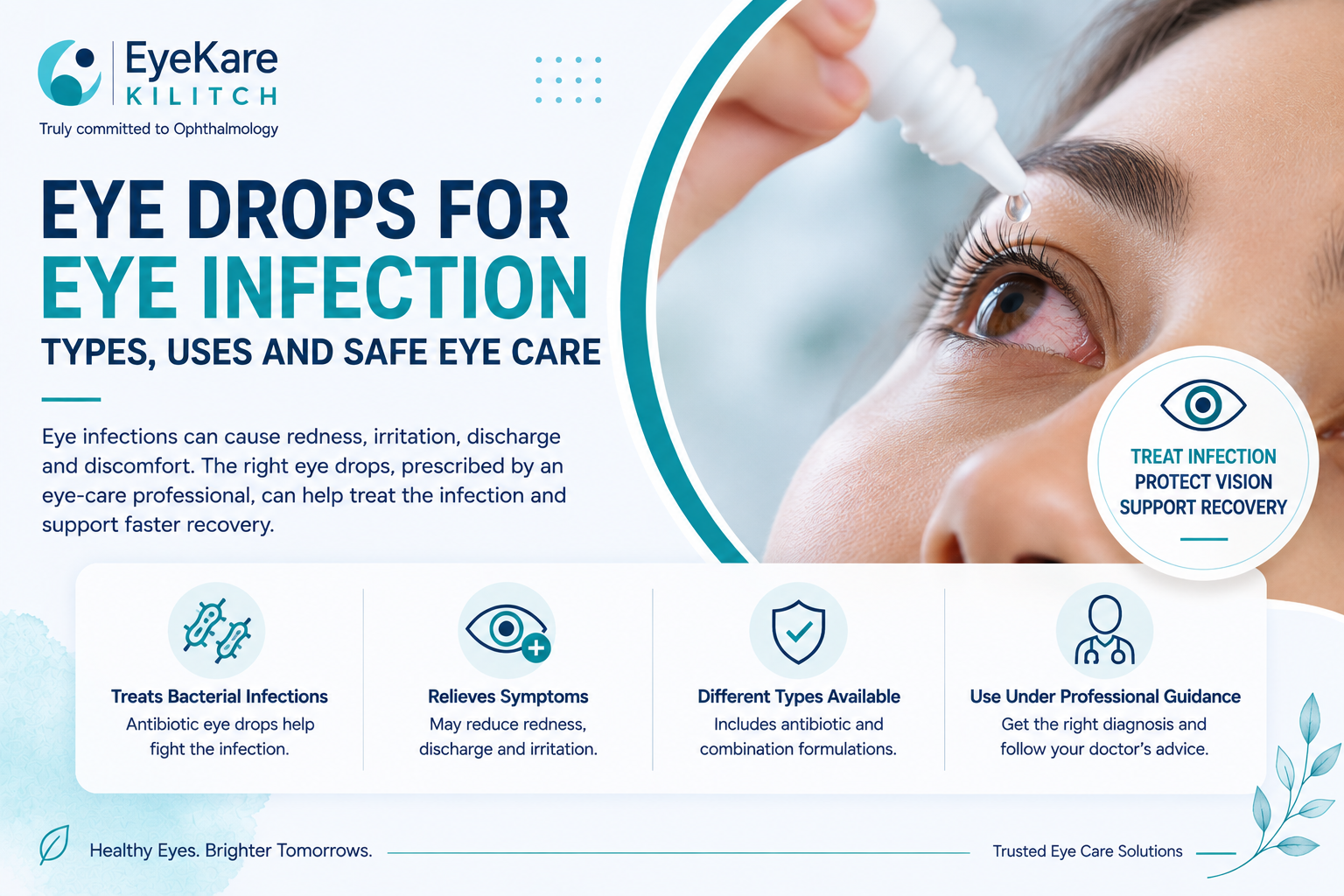
The purpose of an eye drop depends on its active ingredient and the condition being treated. Antibiotic ophthalmic formulations may be used when a bacterial infection has been diagnosed and the prescribed medicine is appropriate.
EyeKare Kilitch’s portfolio includes antibiotic eye drops and combination ophthalmic products intended for different therapeutic requirements.
Not every red or irritated eye requires an antibiotic. Using an unsuitable medicine may fail to address the underlying problem and can delay appropriate care. Medication should therefore be selected according to professional assessment.
Types of Eye Drops Used for Eye Infections
Antibiotic Eye Drops
Antibiotic eye drops deliver antibacterial medicine directly to the eye and may be prescribed for susceptible bacterial infections. The particular medicine, dose, frequency, and treatment duration depend on the diagnosis and prescribing professional.
Antibiotic Combination Eye Drops
Some formulations combine an antibiotic with another therapeutic agent. Such combinations may be considered when infection is accompanied by inflammation and the ophthalmologist determines that both therapeutic actions are appropriate. They should only be used for the conditions for which they are prescribed.
Preservative-Free Antibiotic Formulations
Some ophthalmic medicines are available in preservative-free formats. EyeKare’s portfolio includes Moxieye-PFS, listed as a moxifloxacin ophthalmic solution, alongside other Moxieye formulations. The appropriate formulation depends on the medicine, treatment requirement, packaging, and clinical recommendation.
How to Use Eye Drops for Eye Infection Safely
Wash Your Hands
Wash and dry your hands before applying eye drops. Clean handling can help reduce the chance of transferring contaminants to the eye or bottle.
Avoid Touching the Dropper Tip
Do not allow the bottle tip to touch the eye, eyelashes, eyelids, fingers, or other surfaces. Contact can contaminate the container.
Follow the Prescribed Dose
Use the medicine at the recommended dose and frequency. Do not increase or reduce the dose without professional advice.
Complete the Recommended Treatment
If an antibiotic has been prescribed, follow the treatment schedule provided by the ophthalmologist. Do not change or stop the course without discussing it with the prescriber.
Avoid Sharing Eye Drops
Eye drops should not be shared between people because causes and treatment requirements differ and sharing can increase contamination risk.
Can You Use Eye Drops Without Knowing the Cause?
It is better to determine the cause of an eye problem before using a medicated eye drop. Redness, discharge, irritation, and watering can occur with infection, allergy, dry eye, inflammation, or irritation.
A professional examination can help determine whether an infection is present and whether ophthalmic treatment is appropriate.
When Should You See an Eye Doctor?
Seek professional eye care if you experience significant eye pain, sudden or worsening changes in vision, pronounced light sensitivity, substantial swelling, serious injury, or symptoms that continue to worsen. Prompt evaluation is particularly important when the cornea may be involved.
How to Prevent the Spread of Eye Infection
Good hygiene can help reduce the spread of some contagious eye infections. Avoid touching or rubbing the eyes, wash hands regularly, and avoid sharing towels, cosmetics, pillows, or eye-care products.
Contact lens users should follow appropriate cleaning, replacement, and wearing instructions. If significant redness or discomfort develops while wearing lenses, they should be removed and professional advice should be obtained before use is resumed.
Cosmetic products that have come into contact with an infected eye may need to be replaced or discarded according to appropriate hygiene practices.
Why Proper Eye Infection Treatment Matters
An untreated or incorrectly managed eye infection can sometimes become more serious, particularly when sensitive structures are involved. The possible consequences depend on the cause, location, and severity of the infection.
This is why selecting a medicine based only on a symptom such as redness may not be appropriate. Correct diagnosis and targeted treatment can help ensure that the selected medicine matches the underlying condition.
For ophthalmic products, formulation quality, sterility, packaging, stability, and appropriate storage are important considerations because these medicines are applied directly to the eye.
Why Choose EyeKare Kilitch?
EyeKare Kilitch focuses on ophthalmology and develops products across multiple therapeutic categories, including antibiotics, antibiotic combinations, NSAIDs, anti-glaucoma medicines, lubricants, anti-allergic products, and other specialised ophthalmic formulations.
The company also highlights its focus on in-house development and manufacturing, with qualified scientists working across research and development and quality control. Its ophthalmic portfolio supports different therapeutic requirements within eye care.
Its range includes several moxifloxacin-based formulations, including standalone and combination products.
Conclusion
Eye infections can have different causes, and the appropriate treatment depends on identifying the underlying condition. Eye drops for eye infection may be an important part of treatment when an ophthalmic medicine is appropriate, particularly when a bacterial infection has been professionally diagnosed.
Antibiotic, combination, and preservative-free formulations may serve different purposes, so patients should not choose a medicated eye drop simply because the eye is red or irritated. Following the prescribed dosage, maintaining clean application practices, and completing the recommended treatment can support safer eye care.
If symptoms include significant pain, vision changes, severe swelling, pronounced light sensitivity, or worsening discomfort, professional eye evaluation should not be delayed. EyeKare Kilitch’s focus on ophthalmic development supports its role in providing products for diverse therapeutic requirements.