Introduction
Vision plays an essential role in everyday activities, from reading and driving to recognising faces and navigating familiar surroundings. However, some eye conditions can develop gradually without noticeable symptoms during their early stages. Glaucoma is one such condition that requires attention because it can damage the optic nerve and lead to permanent vision loss if left untreated.
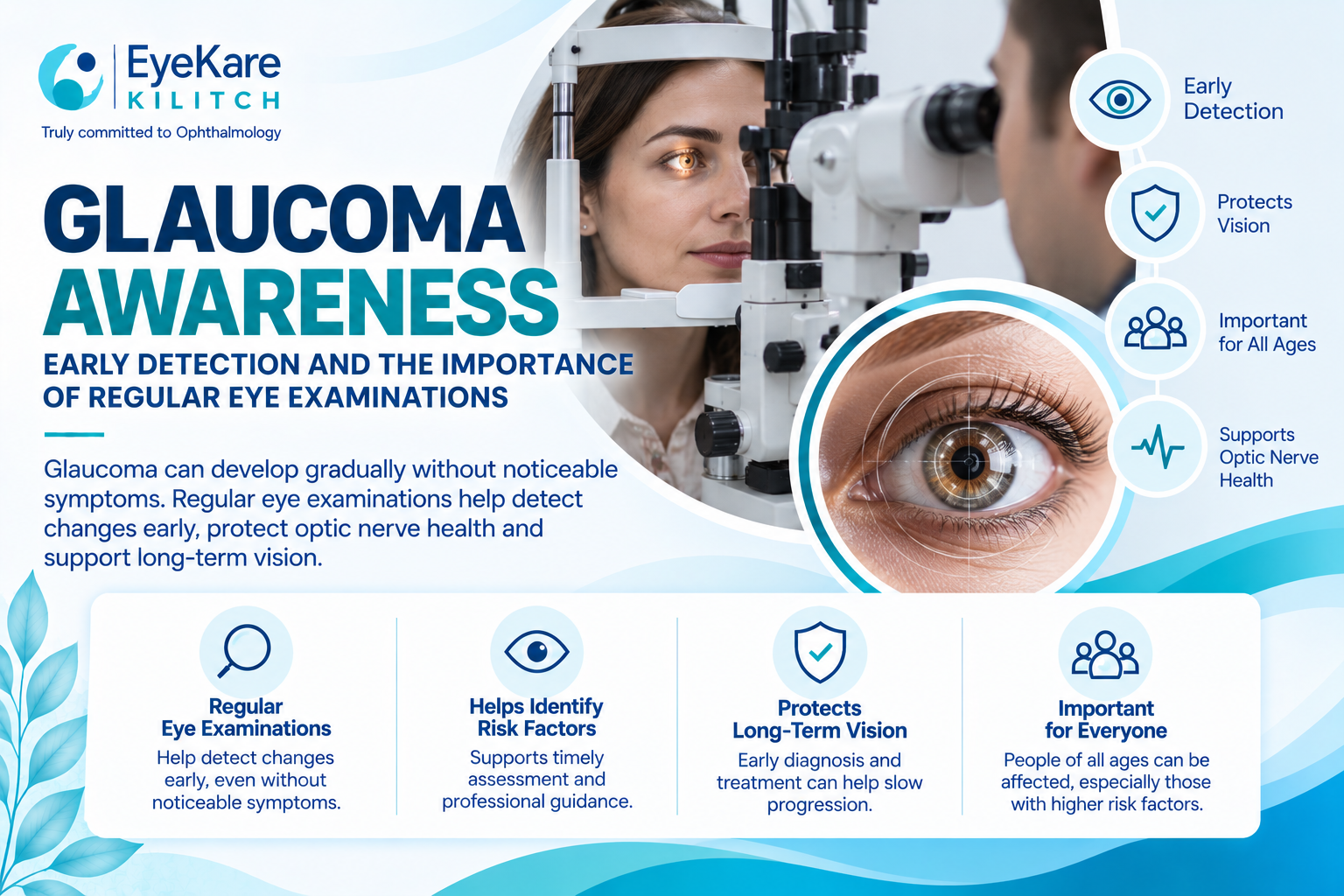
Glaucoma awareness helps people understand the importance of regular eye examinations, recognise potential risk factors, and seek professional advice before significant vision damage occurs. Although glaucoma cannot always be prevented, early diagnosis and appropriate treatment can help slow its progression and protect remaining vision.
Understanding this condition is an important step towards maintaining long-term eye health.
What Is Glaucoma?
Glaucoma refers to a group of eye conditions that damage the optic nerve, which carries visual information from the eye to the brain. This damage is often associated with elevated intraocular pressure, although glaucoma can also develop when eye pressure falls within the usual range.
The eye continuously produces a clear fluid called aqueous humour. This fluid normally drains through pathways inside the eye. When fluid drainage is impaired, pressure may increase and contribute to optic nerve damage. However, glaucoma is complex, and eye pressure alone cannot determine whether a person has the condition.
Glaucoma-related vision loss usually begins with peripheral vision, which is the ability to see objects outside the centre of your direct gaze. Without appropriate treatment, the damage can progress and affect central vision.
Because lost vision from glaucoma generally cannot be restored, timely diagnosis is particularly important.
Different Types of Glaucoma
Understanding the main types of glaucoma helps explain why professional assessment is necessary.
1. Primary Open-Angle Glaucoma
Primary open-angle glaucoma is one of the most common forms of the condition. It usually progresses slowly, and noticeable symptoms may not appear until significant optic nerve damage has occurred.
The drainage angle remains open, but fluid does not drain as effectively as it should. Regular comprehensive eye examinations are important because people may not realise that their peripheral vision is changing.
2. Angle-Closure Glaucoma
Angle-closure glaucoma occurs when the drainage angle becomes blocked or severely restricted. In some cases, pressure can rise rapidly, creating a medical emergency.
Warning signs may include sudden severe eye pain, a red eye, blurred vision, halos around lights, headache, nausea, or vomiting. Anyone experiencing these symptoms should seek emergency medical care immediately.
3. Normal-Tension Glaucoma
Normal-tension glaucoma involves optic nerve damage even when measured eye pressure is within the usual statistical range.
Its exact causes are not fully understood, and factors other than pressure may contribute to optic nerve vulnerability. This type demonstrates why normal eye pressure does not automatically rule out glaucoma.
4. Secondary Glaucoma
Secondary glaucoma develops because of another condition or contributing factor, such as eye injury, inflammation, certain medications, or other eye disorders.
Long-term use of corticosteroid medicines can increase eye pressure in some individuals. Such medicines should only be changed or stopped under guidance from the prescribing healthcare professional.
Common Glaucoma Symptoms to Recognise
One of the main challenges with glaucoma is that early disease often causes no obvious symptoms.
As the condition progresses, some people may notice:
- Gradual loss of peripheral vision.
- Difficulty noticing objects to the side.
- Increasing difficulty navigating unfamiliar surroundings.
- Vision changes in advanced stages.
These changes can be subtle, and many people do not notice them until damage has progressed.
Acute angle-closure glaucoma is different because symptoms may develop suddenly and severely. Sudden eye pain, redness, blurred vision, halos around lights, or nausea require immediate emergency assessment.
It is important not to wait for symptoms before arranging an eye examination, particularly if you have known risk factors.
Who Is at Greater Risk of Glaucoma?
Several factors can increase the likelihood of developing glaucoma. Understanding these risks helps individuals and healthcare professionals determine appropriate examination schedules.
Age
The risk of many forms of glaucoma increases with age, particularly after 40. However, glaucoma can also affect younger adults, children, and infants in less common forms.
Family History
People with a close relative who has glaucoma may have a higher risk of developing the condition. Sharing family eye health history with an eye care professional can help guide screening recommendations.
Elevated Eye Pressure
Higher-than-normal intraocular pressure is an important risk factor for glaucoma. However, not everyone with elevated pressure develops glaucoma, and some people develop optic nerve damage despite normal pressure measurements.
Certain Medical and Eye Conditions
Some systemic health conditions and pre-existing eye problems may influence glaucoma risk. Previous eye injuries, certain inflammatory conditions, and prolonged corticosteroid exposure can also be relevant.
An ophthalmologist can assess individual risk and recommend suitable monitoring.
The Importance of Regular Eye Examinations
Regular eye examinations are one of the most effective ways to identify glaucoma before substantial vision loss occurs.
A comprehensive glaucoma screening or diagnostic assessment may include several tests, depending on the individual’s risk factors and clinical findings.
Measuring Intraocular Pressure
Tonometry measures the pressure inside the eye. Elevated pressure can indicate increased risk, but a pressure measurement alone cannot confirm or exclude glaucoma.
Examining the Optic Nerve
An eye care professional examines the optic nerve for structural changes associated with glaucoma. Photographs or specialised imaging may be used to document its appearance and monitor changes over time.
Testing the Visual Field
A visual field test evaluates peripheral vision and can identify patterns of vision loss associated with optic nerve damage.
Assessing the Drainage Angle
Gonioscopy allows an ophthalmologist to examine the drainage angle and determine whether it is open, narrow, or blocked.
Measuring Corneal Thickness
Corneal thickness can influence the interpretation of eye pressure measurements and contribute to an overall assessment of glaucoma risk.
No single test provides a complete picture in every case. The results are considered together to determine whether additional testing, monitoring, or treatment is required.
How Is Glaucoma Managed?
Although existing optic nerve damage generally cannot be reversed, treatment can often slow or help prevent further progression.
The appropriate approach depends on the type of glaucoma, the extent of damage, eye pressure, and the individual’s overall health.
Prescription Eye Drops
Glaucoma eye drops are commonly used to lower intraocular pressure. Different medicines work by reducing fluid production or improving fluid drainage.
Patients should follow their ophthalmologist’s instructions carefully and attend recommended follow-up appointments. Treatment should not be stopped or changed without medical advice.
Laser Treatment
Certain laser procedures can improve fluid drainage or help manage particular forms of glaucoma. The suitability of laser treatment depends on the diagnosis and individual clinical circumstances.
Surgery
When medication or laser treatment does not provide adequate control, an ophthalmologist may recommend surgery to improve fluid drainage or lower eye pressure.
The goal of treatment is to protect remaining vision and reduce the risk of further optic nerve damage.
Practical Steps to Support Long-Term Eye Health
While glaucoma cannot always be prevented, individuals can take practical steps to support early diagnosis and appropriate management.
- Schedule comprehensive eye examinations according to professional advice.
- Inform your eye care professional about any family history of glaucoma.
- Follow prescribed treatment instructions consistently.
- Attend follow-up appointments to monitor eye pressure, optic nerve health, and visual fields.
- Inform healthcare professionals about corticosteroid medicines you use.
- Seek urgent medical attention for sudden eye pain or rapid vision changes.
People already diagnosed with glaucoma should understand that treatment and monitoring are usually ongoing. Even when vision appears normal, regular follow-up is important.
Conclusion
Glaucoma is a serious eye condition that can cause irreversible vision loss, often without noticeable early symptoms. Understanding its types, risk factors, warning signs, and diagnostic methods can help people make informed decisions about their eye health.
Through glaucoma awareness, regular comprehensive eye examinations, and timely professional care, individuals can improve the chances of detecting the condition early and managing its progression effectively.
EyeKare Kilitch encourages awareness of eye health and the importance of seeking professional guidance for vision-related concerns. Individuals experiencing possible glaucoma symptoms or having recognised risk factors should consult a qualified eye care professional for an appropriate assessment.
Protecting your vision starts with awareness, regular examinations, and timely medical care.