Why Preservative-Free Technology Matters in Ophthalmic Manufacturing
Ophthalmic products are applied directly to the eye, making product quality, sterility and packaging integrity important considerations during development and manufacturing. ophthalmic manufacturing therefore requires careful evaluation of formulation design, packaging and contamination-control processes. Preservative-free technology focuses on producing suitable ophthalmic products without relying on conventional antimicrobial preservatives in the formulation.
The approach is particularly relevant when product design calls for preservative-free formulations and convenient unit-dose packaging. However, removing preservatives also places greater importance on appropriate sterile manufacturing, container design and validated controls.
What Is Ophthalmic Preservative-Free Technology?
Ophthalmic preservative-free technology refers to formulation, manufacturing and packaging approaches used to produce suitable ophthalmic products without adding conventional preservatives intended to control microbial growth after opening. The technology is not a single ingredient or machine; it is a combination of product development and manufacturing decisions.
A preservative-free product must be designed with its complete packaging system in mind. Depending on the product, this may include a single-dose container or another appropriately designed delivery system that helps protect the formulation during its intended use.
The selected formulation, container material, dispensing format and sterile manufacturing process must work together. Product-specific development and validation are therefore essential before a preservative-free ophthalmic product is manufactured commercially.
Why Preservatives Are Not Used in Some Ophthalmic Products
Formulation Requirements
Some ophthalmic formulations are developed without conventional preservatives because the intended product profile and formulation strategy call for a preservative-free presentation. The decision should be based on product development and applicable quality requirements.
Patient and Product Considerations
Preservative-free products may be considered where repeated exposure to certain preservatives is undesirable. Product suitability, intended dosing frequency and patient requirements should be evaluated by the responsible healthcare and product-development teams.
Packaging-Dependent Protection
When a formulation does not contain a conventional preservative system, the packaging format becomes an important part of maintaining product quality throughout the intended use period. The package must be selected and validated for the specific product.
How Preservative-Free Ophthalmic Products Are Manufactured
Formulation Development
The formulation is developed and evaluated for stability, compatibility, performance and other defined quality characteristics. The absence of preservatives does not remove the need for robust formulation controls.
Sterile Manufacturing
Suitable sterile manufacturing controls are applied according to the product and validated process. Environmental controls, equipment controls, personnel practices and documented procedures contribute to consistent production.
Packaging Selection
The packaging system is selected according to formulation compatibility, dosing format, container integrity and intended use. Single-dose formats may be considered for appropriate products.
Filling and Sealing
The filling and sealing process must maintain the required product and container quality. For suitable products, integrated technologies can help limit unnecessary handling during packaging.
Testing and Validation
Finished products undergo defined quality testing, while the manufacturing and packaging processes require appropriate qualification and validation before routine production.
Role of Single-Dose Packaging in Preservative-Free Products
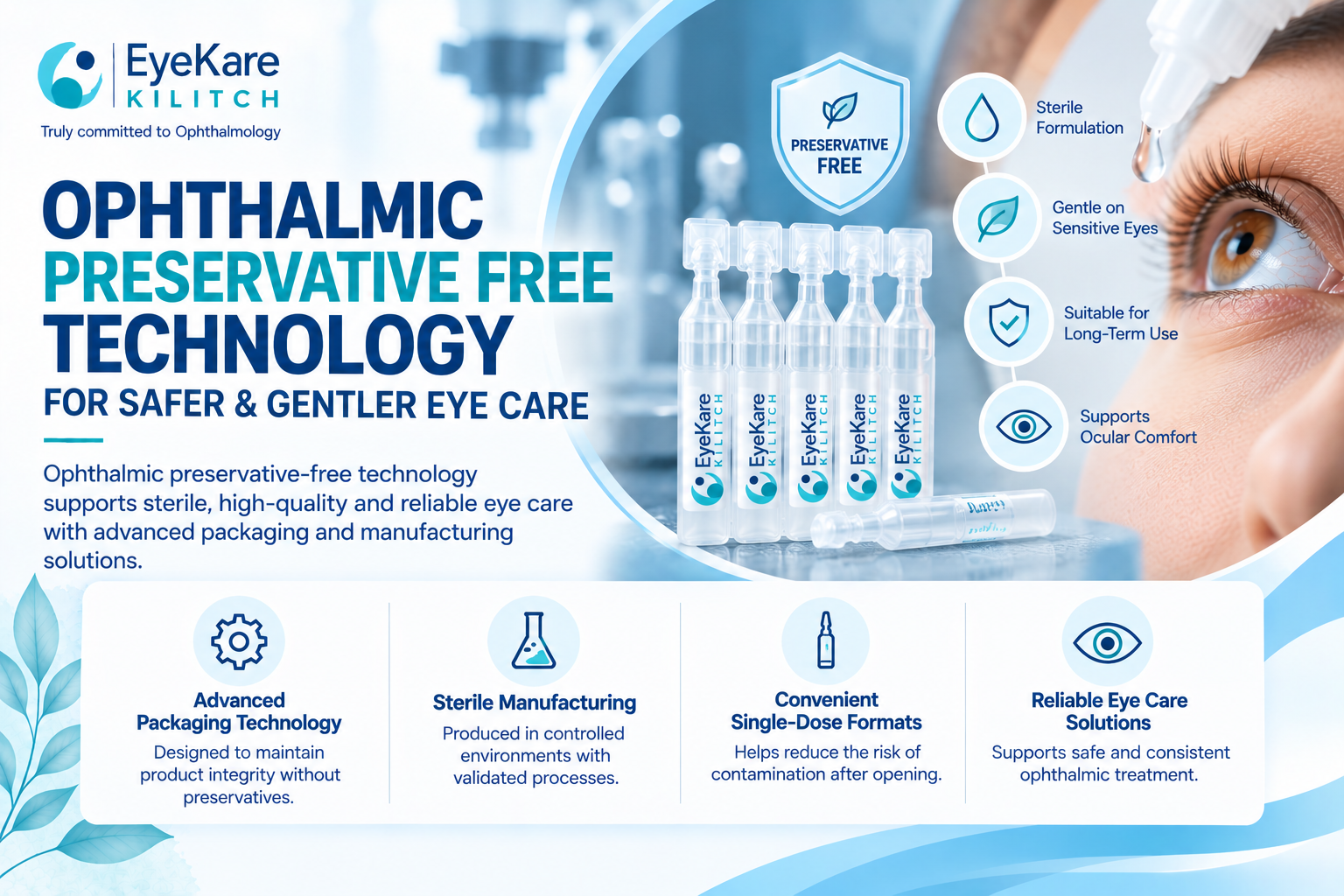
Single-dose packaging can be an important format for suitable preservative-free ophthalmic products. Because the quantity intended for one application is packaged as an individual unit, the container can be designed around a defined use period rather than relying on repeated opening of a multidose container.
The package must still provide the required protection against contamination, maintain product integrity and remain compatible with the formulation. Container design, material selection, seal integrity and dispensing performance should therefore be evaluated during product development.
Single-dose packaging can also support portability and convenient dosing. Its suitability depends on the product, required dose, stability profile and intended market.
Technology Supporting Preservative-Free Ophthalmic Manufacturing
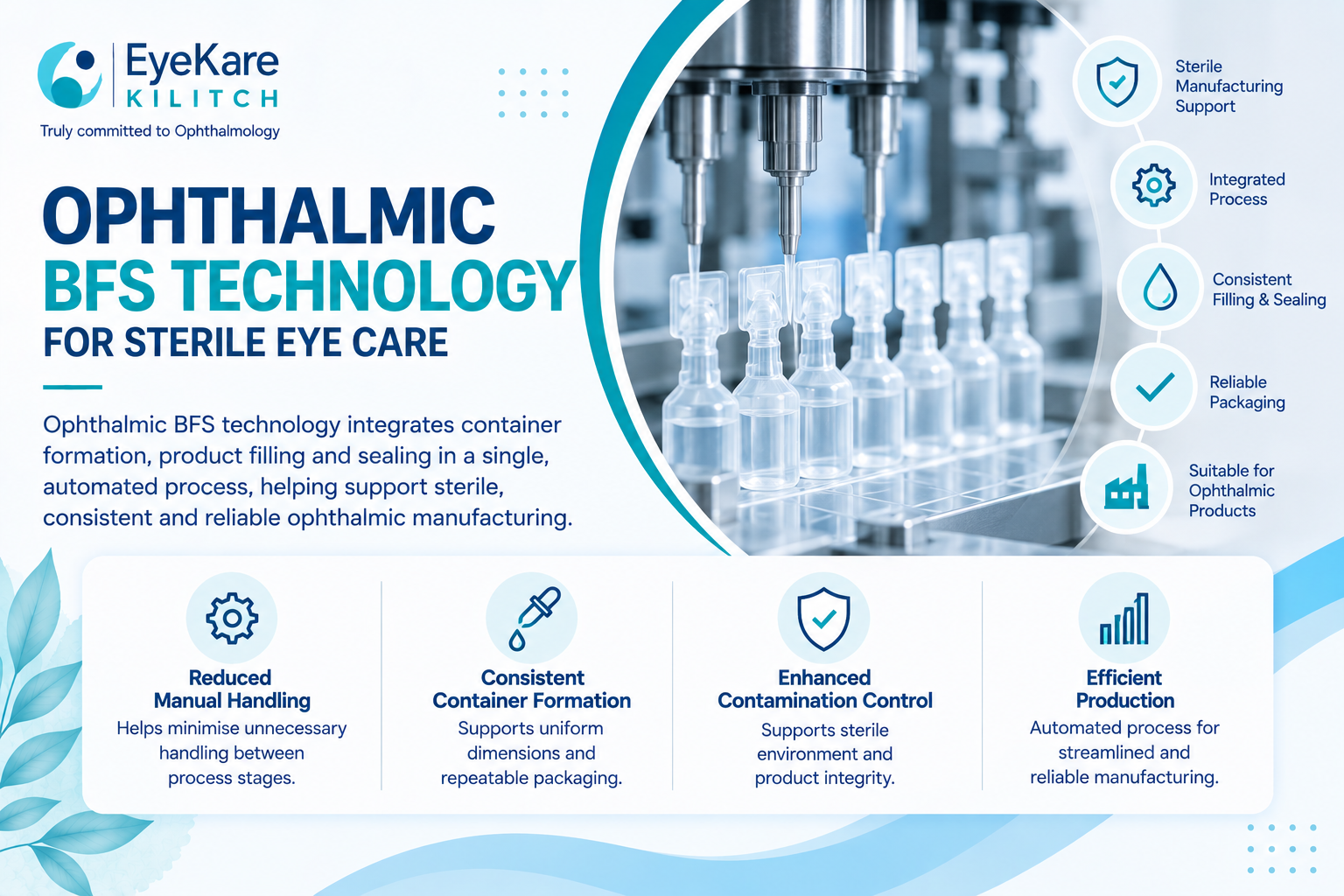
Manufacturers may use specialized sterile filling and packaging technologies for suitable preservative-free products. ophthalmic manufacturing technology can integrate controlled filling, container formation or sealing processes to support consistent production and reduce unnecessary handling.
Blow-Fill-Seal (BFS) technology is one example of an integrated packaging approach that can be considered for suitable sterile liquid ophthalmic products. BFS forms the container, fills it and seals it within an integrated process, subject to product, equipment and validation requirements.
Technology selection should always follow product development rather than replace it. The formulation, packaging material, fill volume, container design and validated process must be compatible with one another.
Key Quality Considerations
Sterility Assurance
Preservative-free does not mean that sterile controls are optional. Appropriate manufacturing, environmental monitoring, process controls and quality testing remain important for products that require sterility.
Container-Closure Integrity
The packaging system should maintain the required integrity throughout manufacturing, storage and the intended use period. Appropriate integrity assessment and validation should be part of the product-development strategy.
Formulation Stability
The formulation should remain within its defined quality specifications throughout its intended shelf life. Stability studies should evaluate the product in its final packaging system.
Material Compatibility
The formulation and container materials must be evaluated for compatibility. Product-package interactions, including relevant extractables, leachables or adsorption considerations, may require assessment.
Process Validation
Critical manufacturing and packaging processes should be qualified and validated according to the applicable quality system and product requirements.
Applications of Preservative-Free Ophthalmic Technology
Lubricating Ophthalmic Products
Preservative-free formats may be used for suitable lubricating products where the formulation and packaging system have been appropriately developed and validated.
Single-Dose Sterile Eye Drops
Unit-dose packaging can be considered for suitable sterile ophthalmic liquid products where individual-use packaging supports the intended product design.
Specialized Ophthalmic Formulations
Other formulations may also be developed as preservative-free products when their formulation, stability, packaging and manufacturing requirements can be appropriately addressed.
Choosing the Right Ophthalmic Manufacturing Partner
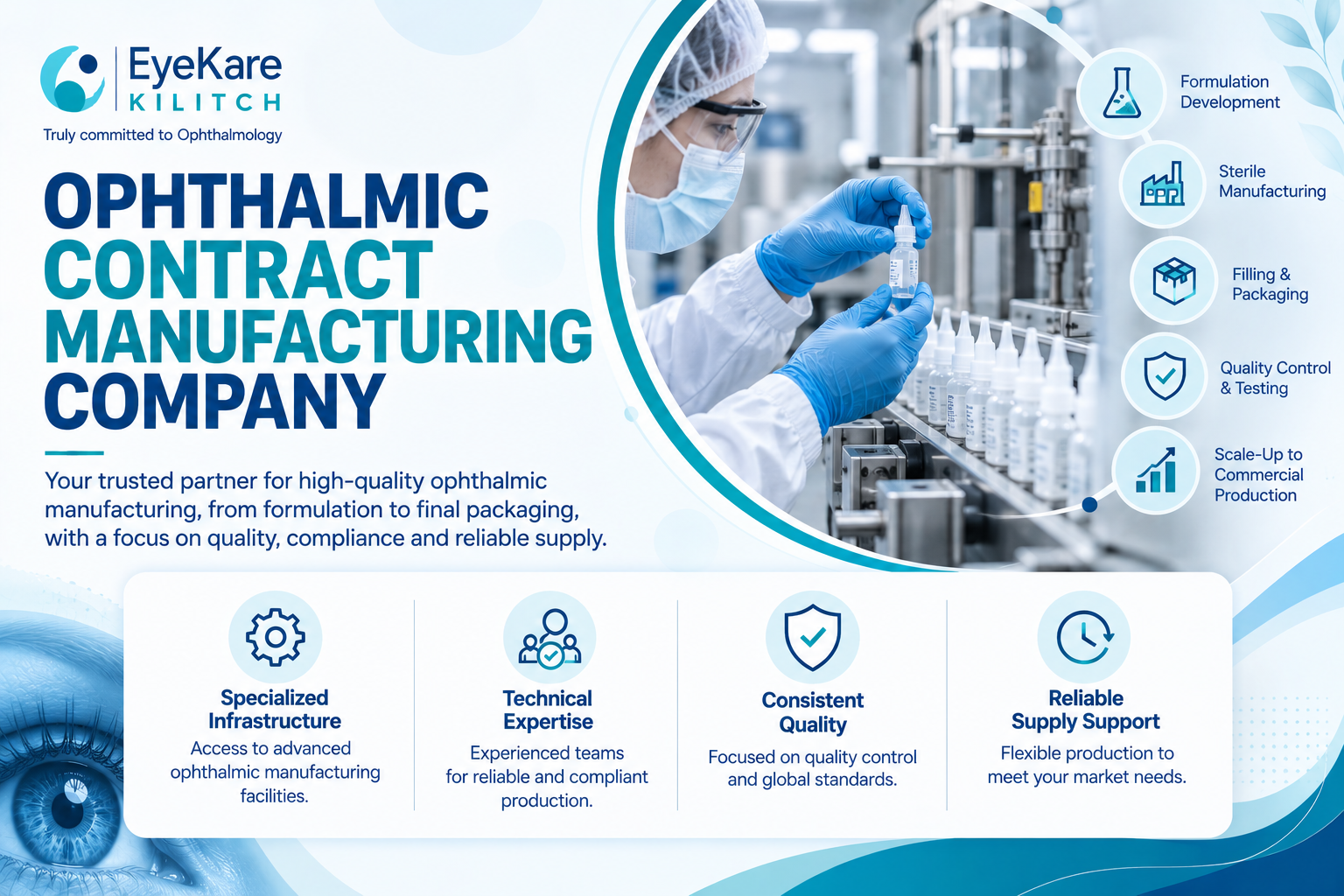
Developing a preservative-free ophthalmic product requires coordination between formulation development, sterile manufacturing, packaging, quality control and validation. The manufacturing partner should understand how these elements interact rather than treating formulation and packaging as separate activities.
For companies evaluating a partner, it is useful to review formulation capabilities, sterile processing infrastructure, packaging technologies, quality systems and development experience. An experienced ophthalmic manufacturing partner can help align these requirements with the intended product and its manufacturing process.
Conclusion
Ophthalmic preservative-free technology combines formulation strategy, sterile manufacturing and suitable packaging to produce products without conventional preservatives. Its successful implementation depends on maintaining product quality and contamination control through every stage of development and production.
Single-dose packaging and suitable sterile filling technologies can support this approach for appropriate products, but each formulation and container system requires product-specific evaluation and validation. Selecting an experienced ophthalmic pharmaceutical company with appropriate formulation, manufacturing, packaging and quality capabilities can help support the development of reliable preservative-free ophthalmic products.