
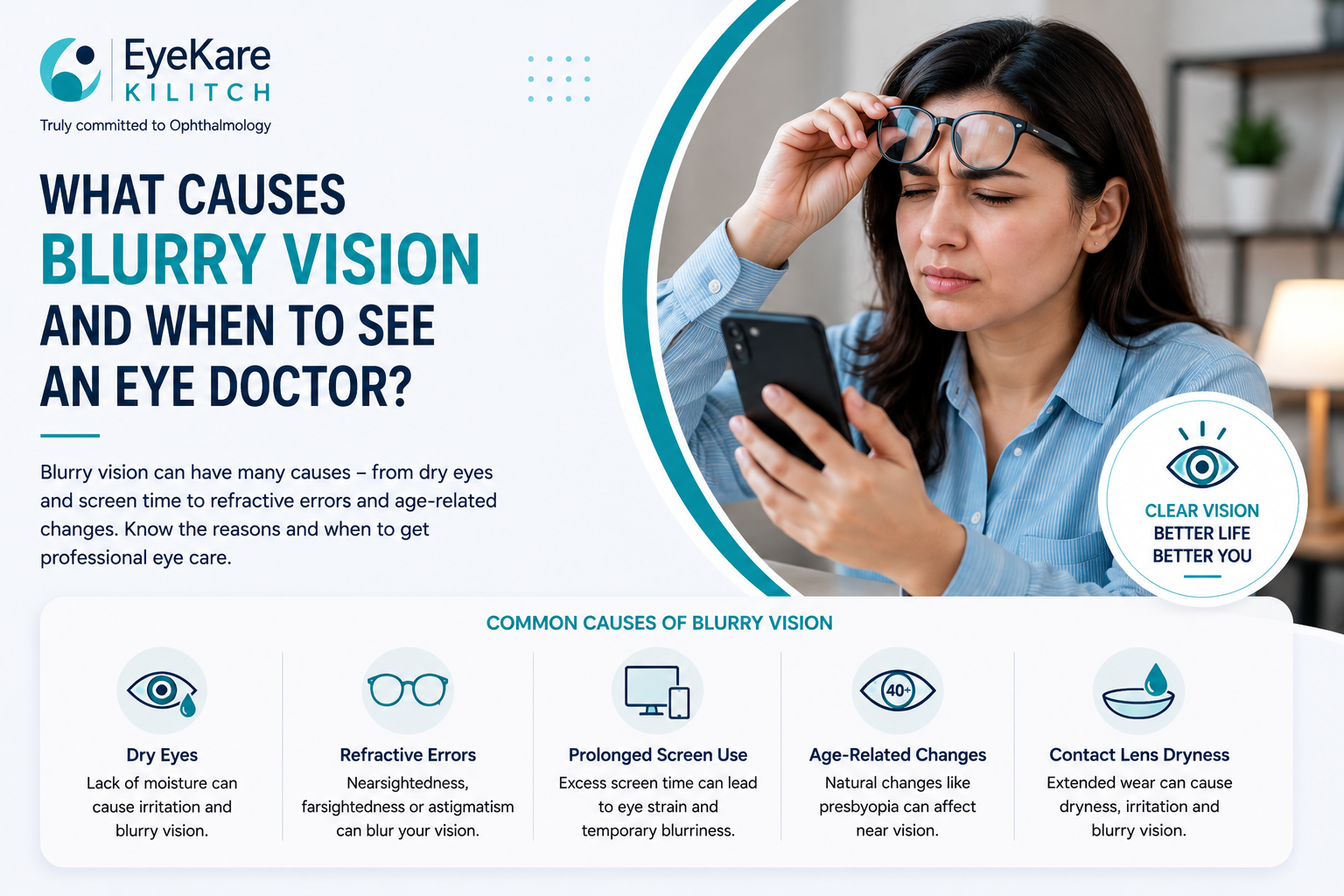
What Causes Blurry Vision and When to See an Eye Doctor?
Clear vision allows us to read, work, drive and carry out everyday activities comfortably. When objects suddenly appear hazy, out of focus or difficult to see clearly, it can be concerning. Blurry vision is a common symptom, but it can have many possible causes, ranging from temporary eye dryness and prolonged screen use to refractive errors and age-related changes.
Understanding What Causes Blurry Vision and When to See an Eye Doctor can help you recognise when the symptom may require professional attention. While occasional blurriness may be linked to tired or dry eyes, persistent, worsening or sudden changes in vision should not be ignored.
EyeKare Kilitch focuses on ophthalmic care and offers a broad portfolio of products covering areas such as lubricants, anti-allergy treatments, glaucoma care and other ophthalmic conditions.
What Is Blurry Vision?
Blurry vision means that objects do not appear as sharp or clear as they normally should. It may affect near vision, distance vision or both eyes. Some people experience intermittent blurriness, while others may notice a gradual change over time.
The location and pattern of the blurriness can provide useful information. For example, difficulty seeing distant objects may be associated with myopia, while difficulty focusing on nearby objects can occur with age-related changes such as presbyopia.
Because blurry vision can have different causes, identifying the underlying reason is important before deciding on treatment.
Common Causes of Blurry Vision
1. Dry Eyes
Dryness is a common reason for temporary blurry vision. When the tear film does not adequately lubricate the eye’s surface, vision can become intermittently hazy along with symptoms such as burning, irritation, redness or a gritty sensation.
EyeKare Kilitch highlights dryness, prolonged screen exposure, air conditioning and environmental factors as contributors to eye discomfort. Its portfolio includes several lubricating formulations, including sodium hyaluronate and other artificial tear preparations.
2. Refractive Errors
Refractive errors occur when the eye does not focus light correctly onto the retina. Myopia, for example, can cause distant objects to appear blurry, while other refractive errors can affect near or overall vision.
An eye examination can determine whether a change in prescription is responsible for the blurred vision. Depending on the condition, vision may be corrected using spectacles, contact lenses or other appropriate options.
3. Prolonged Screen Use
Spending long periods looking at smartphones, computers and other digital screens may contribute to eye fatigue and dryness. EyeKare Kilitch’s educational content identifies digital exposure as a factor associated with symptoms including dryness, redness and blurred vision.
Taking regular breaks, blinking frequently and maintaining a comfortable viewing distance can support everyday eye comfort.
4. Age-Related Changes
Vision can naturally change with age. Presbyopia, for example, is an age-related reduction in the eye’s ability to focus on nearby objects and commonly begins after age 40. It can make reading and other close-up activities more difficult.
Regular eye examinations can help identify changes in vision and determine whether corrective measures are required.
5. Contact Lens-Related Dryness
People who wear contact lenses may experience dryness, irritation and blurry vision, particularly when lenses are worn for extended periods. EyeKare Kilitch notes that contact-lens-related dryness can occur alongside symptoms such as redness, grittiness and blurry vision.
If blurry vision repeatedly occurs while wearing contact lenses, an eye-care professional can assess whether the lenses, wearing schedule or ocular surface require attention.
When Is Blurry Vision a Sign to See an Eye Doctor?
Not every episode of blurry vision indicates a serious problem. However, you should arrange an eye examination when vision changes persist, recur frequently or begin affecting everyday activities such as reading, working or driving.
An eye specialist can evaluate visual acuity, eye health and other factors to determine the possible cause. Regular examinations are also valuable because some eye conditions may develop gradually without obvious early symptoms. EyeKare Kilitch notes that regular eye exams can help monitor vision changes, eye pressure, tear production and overall eye health.
When Is Blurry Vision an Emergency?
Sudden changes in vision require prompt medical attention. Seek urgent professional care if blurry vision occurs suddenly or is accompanied by severe eye pain, significant vision loss, double vision, flashes of light, a sudden increase in floaters, halos around lights, severe headache, nausea or vomiting.
A sudden appearance of many floaters, flashes or a curtain-like shadow across part of the visual field can be associated with retinal detachment and requires immediate assessment.
These symptoms should not be managed by simply trying different eye drops at home.
Can Eye Drops Help With Blurry Vision?
The answer depends on the cause. If blurry vision is related to dry eyes, lubricating eye drops may help improve moisture and comfort. EyeKare Kilitch offers lubricating products such as Haloeye Hydra PF, Haloeye Ultra, Haloeye-S, Haloeye PG and other formulations in its ophthalmic portfolio.
However, eye drops are not a universal solution for blurry vision. Refractive errors, retinal conditions, glaucoma and other underlying problems require appropriate evaluation and treatment.
This is why Blurred Vision Treatment should begin with identifying the reason behind the change rather than selecting an eye drop solely based on the symptom.
How Can You Support Clear and Comfortable Vision?
Simple daily habits can support general eye comfort. Take regular breaks during prolonged screen use and consciously blink more often when concentrating on a screen. Avoid excessive exposure to dust, smoke and other irritants.
If you use contact lenses, follow the recommended cleaning, replacement and wearing instructions. Avoid rubbing your eyes when they feel irritated and seek professional advice if discomfort or blurry vision continues.
Regular examinations are also important, particularly when you notice changes in your vision or have risk factors for eye conditions.
Why Regular Eye Checkups Matter
An Eye Health Checkup is not only useful when you have a vision problem. Some eye conditions can progress without noticeable symptoms in their early stages. Regular examinations allow eye-care professionals to monitor vision and identify potential problems earlier.
A professional assessment is particularly important if you notice a gradual decline in clarity, difficulty reading, problems seeing distant objects or changes that interfere with normal activities.
EyeKare Kilitch and Ophthalmic Care
EyeKare Kilitch is the specialized ophthalmic division of Kilitch Healthcare India Ltd. The company focuses on ophthalmic solutions and eye-care innovation, with a portfolio covering multiple therapeutic categories.
Its product portfolio includes lubricants, anti-allergy products, glaucoma medications, antibiotics and other ophthalmic formulations. It also offers preservative-free technologies, including preservative-free lubricating eye drops and products for specific ophthalmic conditions.
The appropriate product, however, depends on the individual’s condition and should be selected according to professional medical advice where required.
Conclusion
Understanding What Causes Blurry Vision and When to See an Eye Doctor is an important part of maintaining good eye health. Temporary blurriness may occur because of dry eyes, prolonged screen use or contact lens-related discomfort, while refractive errors and age-related changes can cause more persistent vision problems.
Lubricating eye drops may support comfort when dryness contributes to blurred vision, but they are not suitable for every cause. Persistent, worsening or unexplained blurry vision should be evaluated by an eye-care professional.
Most importantly, sudden blurry vision—especially when accompanied by pain, vision loss, flashes, floaters or other concerning symptoms—requires prompt medical attention. Recognising these warning signs and scheduling regular eye examinations can help protect clear, comfortable vision over the long term.