How Dehydration Can Affect Tear Production and Eye Comfort
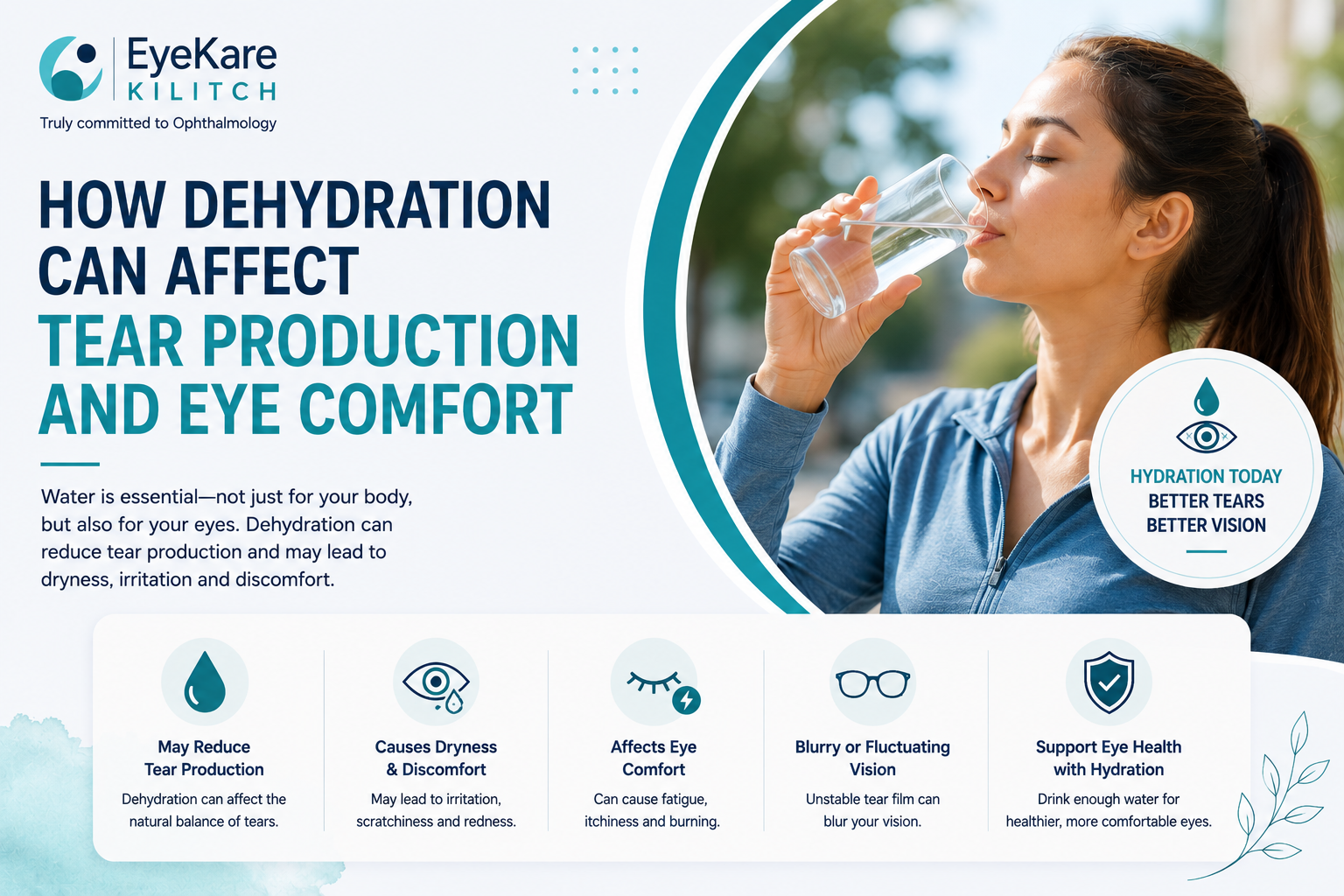
Water plays an important role in keeping the body functioning properly, and adequate hydration also supports the normal environment of the eyes. Tears help keep the eye surface moist, smooth and comfortable while also supporting clear vision and protecting the eyes from irritants.
When the body becomes dehydrated, some people may notice increased eye discomfort or symptoms associated with dryness. However, dehydration is only one possible factor. Dry eye can have many causes, including age, certain medicines, health conditions, environmental exposure and prolonged screen use.
Understanding how dehydration can affect tear production and eye comfort can help you recognise the importance of maintaining healthy hydration habits alongside regular eye care.
For people looking for information about ophthalmic healthcare, Eyekare Kilitch focuses on eye-care products and solutions across several ophthalmic therapeutic categories.
Why Are Tears Important for Your Eyes?
Tears do much more than simply keep the eyes wet. They form a thin protective layer called the tear film across the surface of the eye.
According to the National Eye Institute, tears help keep the eyes wet and smooth, support clear vision by helping focus light and protect the eyes from infections and irritating particles such as dust.
The tear film consists of three main layers.
The Oily Layer
The outer lipid layer helps prevent tears from evaporating too quickly and contributes to a smooth eye surface.
The Watery Layer
The middle aqueous layer contains mostly water along with proteins and other components. It helps keep the eye surface moist and supports the health of the eye.
The Mucus Layer
The innermost mucin layer helps the tear film remain attached to the surface of the eye.
Together, these layers help maintain a stable and comfortable ocular surface.
How Can Dehydration Affect Eye Comfort?
When the body does not receive enough fluids, hydration levels can become reduced. This may contribute to changes in the body’s fluid balance and potentially affect eye comfort.
Hydration status has been linked with ocular health, and dehydration may contribute to dry-eye symptoms in some individuals.
However, experiencing dry or uncomfortable eyes does not necessarily mean that dehydration is the cause. Dry eye is a multifactorial condition and can result from problems with tear production, tear quality or excessive tear evaporation.
For this reason, persistent symptoms should be discussed with an eye-care professional.
What Happens When Your Eyes Do Not Have Enough Tears?
The surface of the eye needs an adequate tear film to remain comfortable and function properly. If there are insufficient tears or the tear film becomes unstable, symptoms of dry eye can occur.
Common symptoms may include:
- Dry or scratchy sensations
- Burning or stinging
- Redness
- Light sensitivity
- Blurred or fluctuating vision
- A feeling that something is in the eye
- Excessive watering
Interestingly, dry eyes can sometimes cause watery eyes. Irritation from an unstable tear film can trigger reflex tearing, even when the normal tear film is not functioning properly.
Can Drinking Water Help With Dry Eyes?
Maintaining adequate hydration is a sensible part of general health and can support overall eye comfort. The National Eye Institute includes drinking plenty of water among lifestyle measures that may help people with dry-eye symptoms.
However, drinking more water is not a standalone treatment for every type of dry eye.
Dry eye can result from different factors, including reduced tear production, rapid tear evaporation, inflammation, medications, certain medical conditions and environmental factors.
If symptoms continue despite maintaining good hydration, an eye-care professional can help identify the underlying cause.
Signs That Your Eyes May Be Feeling Dry
Eye discomfort can appear in different ways. Some people experience obvious dryness, while others may notice watering or fluctuating vision instead.
Burning or Stinging
A burning or stinging sensation can occur when the eye surface becomes irritated or insufficiently lubricated.
Gritty Sensation
Some people describe dry eye as feeling like there is sand or a small particle in the eye.
Redness
Reduced tear-film stability and ocular surface irritation can contribute to eye redness.
Blurred Vision
An unstable tear film can temporarily affect the quality of vision. Blurred vision is one of the symptoms associated with dry eye.
If these symptoms occur regularly, they should not automatically be attributed to dehydration.
What Can Increase Eye Dryness Besides Dehydration?
Hydration is only one part of maintaining comfortable eyes. Several everyday habits and environmental factors can contribute to dryness.
Prolonged Screen Use
People often blink less frequently while looking at computers, tablets and smartphones. Reduced blinking can allow tears to evaporate more quickly.
Dry or Windy Environments
Wind, smoke and dry air can increase tear evaporation and contribute to dry-eye symptoms. Air conditioning can also make the environment less comfortable for people prone to dryness.
Contact Lens Wear
Contact lenses can be associated with dry-eye symptoms in some individuals. If discomfort develops while wearing lenses, discuss it with an eye-care professional.
Certain Medicines
Some medicines, including certain treatments for allergies, depression and high blood pressure, can contribute to dry-eye symptoms.
This is why identifying the actual cause of persistent symptoms is important.
How Can You Support Better Eye Hydration?
Simple daily habits can help support overall eye comfort.
Drink Enough Water
Make regular fluid intake part of your daily routine. The National Eye Institute recommends drinking plenty of water as one lifestyle measure for people experiencing dry-eye symptoms.
Individual fluid requirements can vary depending on factors such as activity, climate, health and other circumstances.
Take Screen Breaks
If you spend long periods looking at digital screens, take regular breaks and consciously blink more frequently.
Manage Your Environment
Try to avoid prolonged exposure to direct fans, air-conditioning airflow, smoke and very dry environments.
Get Enough Sleep
Adequate sleep can also contribute to overall comfort and wellbeing. If eye discomfort continues despite lifestyle changes, seek professional advice.
Can Artificial Tears Help With Eye Comfort?
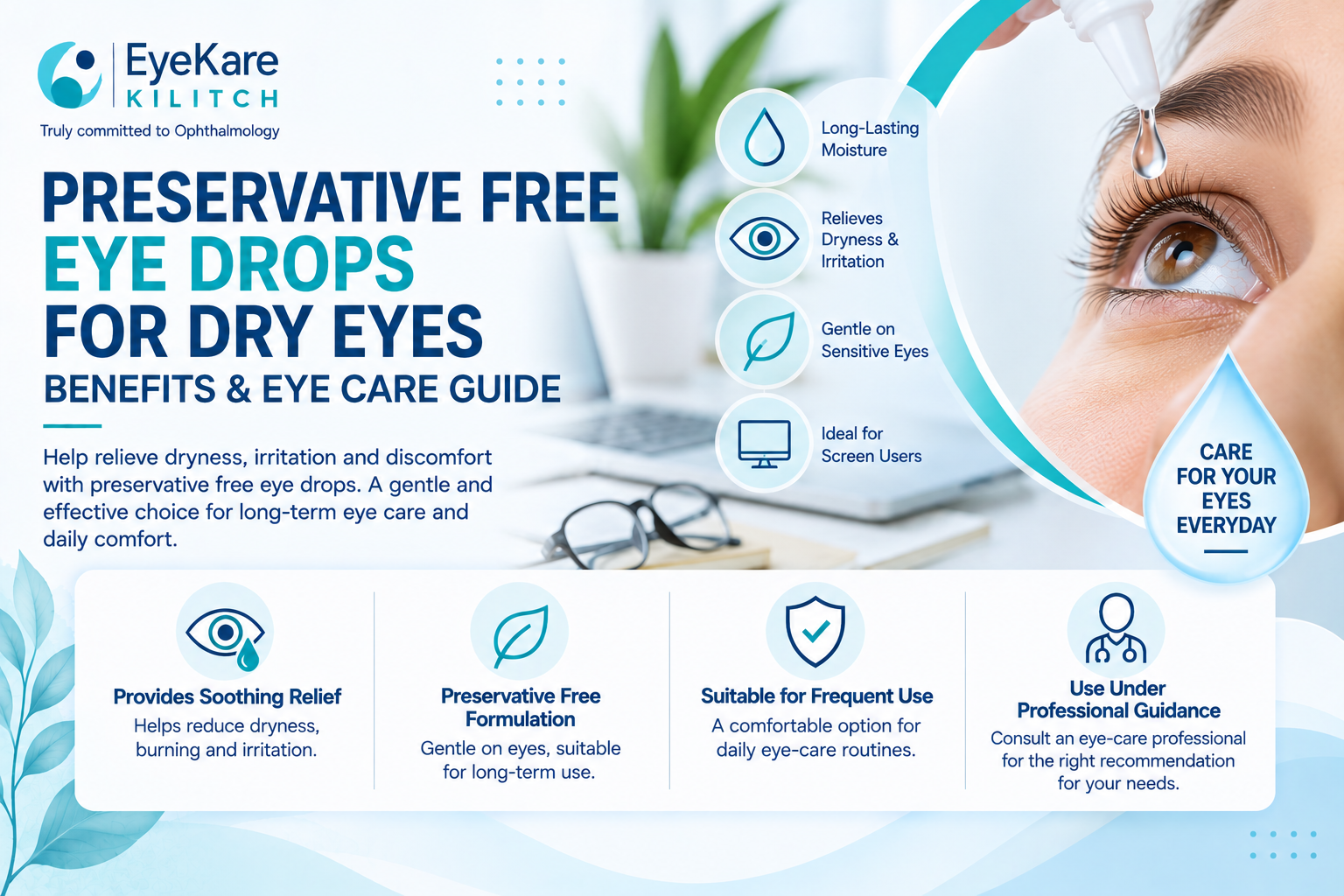
Artificial tears are commonly used to relieve mild dry-eye symptoms. The National Eye Institute identifies over-the-counter artificial tears as a common treatment for mild dry eye.
Artificial tears can help lubricate the eye surface, but the appropriate product depends on the individual’s symptoms and underlying cause.
Eyekare Kilitch offers ophthalmic products in areas including lubricants and other eye-care therapies. You can explore Eyekare Kilitch’s ophthalmic product range to learn more about its available formulations.
If you regularly need eye drops or your symptoms are not improving, an eye-care professional can determine whether further evaluation is appropriate.
When Should You See an Eye-Care Professional?
Occasional eye dryness may improve with simple lifestyle adjustments, but persistent or worsening symptoms should not be ignored.
Consider arranging an eye examination if you experience:
- Frequent burning or stinging
- Persistent eye dryness
- Recurring redness
- Ongoing blurred vision
- Increased sensitivity to light
- Persistent gritty or foreign-body sensations
- Eye discomfort that interferes with daily activities
An eye-care professional can assess tear production, tear stability and the condition of the eye surface. The National Eye Institute notes that dry-eye evaluation may include checking the amount of tears produced, how quickly tears dry and the structure of the eyelids.
Sudden vision changes, intense eye pain or very red, watery eyes require prompt medical attention.
Build Better Habits for Comfortable Eyes
Understanding how dehydration can affect tear production and eye comfort highlights the importance of maintaining healthy everyday habits. Adequate hydration can support the body’s normal fluid balance and may contribute to better eye comfort, but it is only one part of maintaining a healthy tear film.
Regular hydration, screen breaks, appropriate environmental conditions, adequate sleep and professional eye care can all contribute to a more comfortable visual experience.
It is also important to remember that dry eye has many potential causes. Persistent symptoms should be evaluated rather than simply treated as a sign of dehydration.
To learn more about the company and its focus on ophthalmic healthcare, learn more about Eyekare Kilitch. You can also explore Eyekare’s ophthalmic solutions to learn more about its range of eye-care products.
Taking care of your hydration and paying attention to changes in eye comfort can be simple but valuable steps toward supporting healthier eyes. When dryness or discomfort becomes persistent, professional evaluation can help identify the cause and guide appropriate care.