Eye Care for People with High Blood Pressure – Protect Your Vision
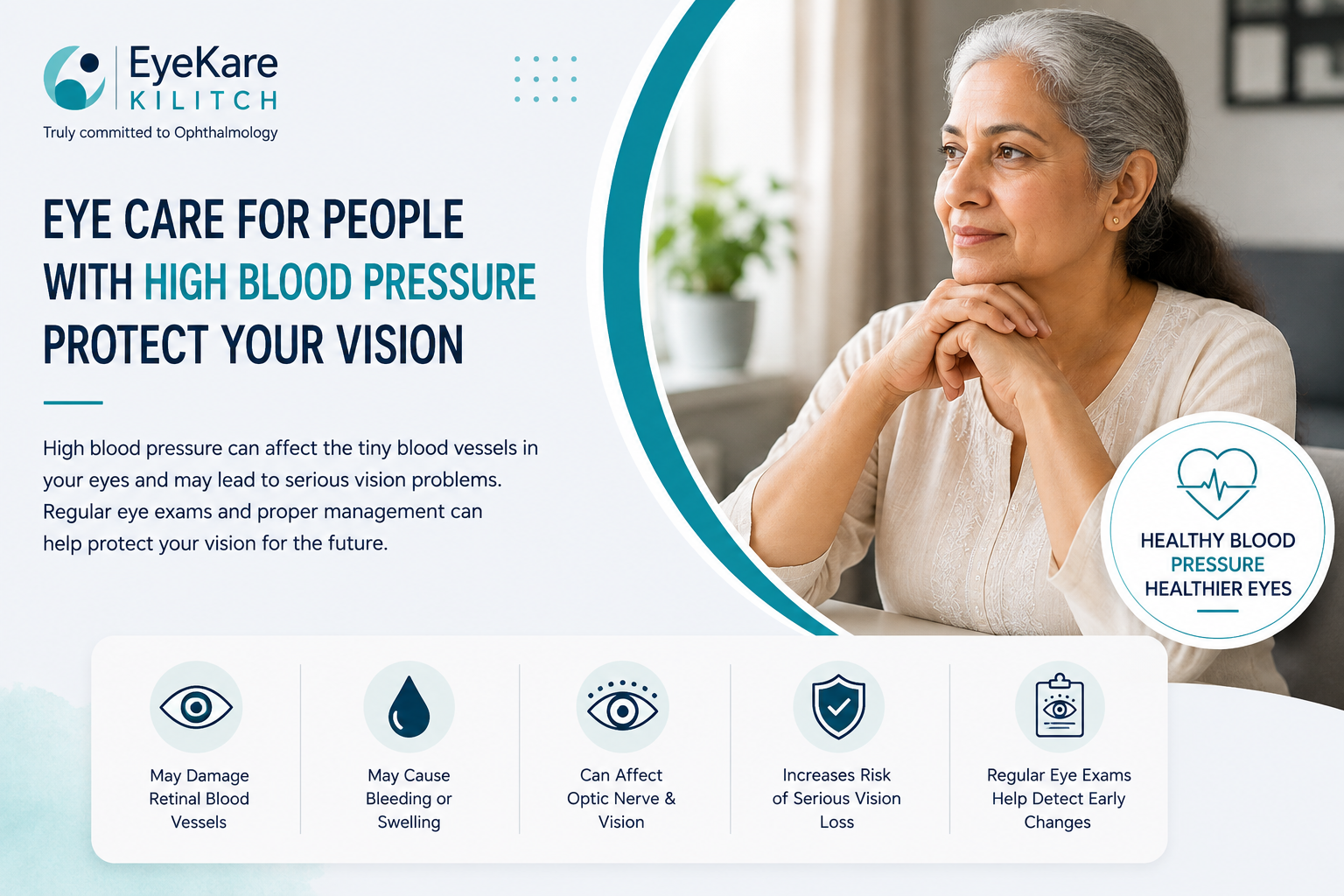
High blood pressure, also known as hypertension, is a common health condition that can affect different parts of the body when it remains uncontrolled. The eyes are among the organs that can be affected because they contain many small and delicate blood vessels. Over time, elevated blood pressure can damage these vessels and affect structures involved in vision.
Understanding Eye Care for People with High Blood Pressure is therefore an important part of maintaining overall eye health. Regular blood pressure monitoring, appropriate medical treatment and routine eye examinations can help identify potential problems before they lead to significant vision changes.
The American Heart Association notes that uncontrolled high blood pressure can damage blood vessels in the eyes and may contribute to vision loss.
How Does High Blood Pressure Affect the Eyes?
The retina, located at the back of the eye, contains a network of tiny blood vessels that supply it with oxygen and nutrients. Persistently elevated blood pressure can place stress on these vessels.
One condition associated with long-term high blood pressure is hypertensive retinopathy. Changes in the retinal blood vessels can occur as hypertension progresses, and severe cases may involve retinal swelling, bleeding or other damage.
High blood pressure may also contribute to other eye-related complications, including problems involving the optic nerve and retinal blood vessels.
What Is Hypertensive Retinopathy?
Hypertensive Retinopathy refers to damage or changes in the retina associated with high blood pressure. It can develop gradually, and some people may not notice symptoms during the early stages.
An eye specialist can examine the retina and look for changes in the retinal blood vessels. A dilated eye examination may be used to assess the retina and determine whether hypertension has affected the eye.
Possible retinal findings can include narrowing of retinal arteries, changes where blood vessels cross, retinal haemorrhages, cotton-wool spots and swelling in more severe cases.
This is why people with high blood pressure should not rely only on symptoms to determine whether their eyes are healthy.
Can High Blood Pressure Cause Blurry Vision?
Yes, uncontrolled high blood pressure can be associated with vision problems. The American Heart Association explains that damage to blood vessels supplying the retina can result in blurred vision or, in serious cases, vision loss.
However, blurry vision does not necessarily mean that high blood pressure is the cause. Dry eyes, refractive errors, diabetes, medications and several other eye conditions can also affect visual clarity.
If you experience persistent or unexplained changes in vision, an eye-care professional should assess the cause instead of assuming that blood pressure is responsible.
Why Blood Pressure Control Matters for Eye Health
Managing blood pressure is one of the most important steps people with hypertension can take to protect their overall health and reduce the risk of complications.
The American Heart Association recommends working with healthcare professionals to manage high blood pressure, taking prescribed medication as directed and making appropriate heart-healthy lifestyle changes.
For eye health, controlling the underlying blood pressure problem is particularly important because treatment of hypertensive retinal changes focuses primarily on managing the hypertension itself.
Eye drops should not be considered a substitute for blood pressure treatment.
Eye Care Tips for People with High Blood Pressure
1. Monitor Your Blood Pressure
Regular blood pressure monitoring can help you and your healthcare professional understand whether your blood pressure is being controlled effectively.
Follow your healthcare professional’s recommendations regarding monitoring, medication and follow-up appointments.
2. Schedule Regular Eye Examinations
A Regular Eye Examination can help detect changes that may not cause noticeable symptoms. During an eye examination, an eye-care professional can assess vision and examine structures of the eye, including the retina.
This becomes particularly important when a person has long-standing or poorly controlled hypertension or other risk factors for eye disease.
3. Take Prescribed Medication Consistently
If medication has been prescribed for high blood pressure, take it according to your healthcare professional’s instructions. Do not stop or change medication without medical advice.
Consistent management helps reduce the risk of complications associated with uncontrolled hypertension.
4. Maintain Healthy Lifestyle Habits
Lifestyle habits can support blood pressure management. Depending on individual medical needs, these may include maintaining a balanced diet, staying physically active, managing stress, avoiding tobacco and limiting alcohol.
Your doctor can provide recommendations appropriate for your health and circumstances.
5. Protect Your Eyes from Everyday Irritation
Blood pressure control is important, but everyday eye comfort also matters. Reduce prolonged screen exposure by taking regular breaks and blinking frequently. Protect your eyes from excessive dust, smoke and other environmental irritants.
If your eyes become dry or irritated, consult an eye-care professional about appropriate lubricating eye drops rather than choosing medication based only on symptoms.
High Blood Pressure and Eye Health: When to Seek Help
Understanding High Blood Pressure and Eye Health also means recognising when changes in vision require professional attention.
Contact an eye-care professional if you experience persistent blurry vision, reduced vision, recurring visual disturbances or other unexplained changes.
Sudden changes require greater urgency. If vision changes occur together with symptoms such as severe headache, weakness, numbness, difficulty speaking or chest pain, particularly when blood pressure is extremely high, immediate medical attention is required. The American Heart Association identifies vision changes among warning symptoms associated with severe hypertension.
Can Eye Drops Treat Eye Problems Related to High Blood Pressure?
Eye drops can be useful for certain eye conditions, but they do not treat high blood pressure itself.
EyeKare Kilitch’s product portfolio includes several ophthalmic categories, including lubricants, anti-glaucoma products, anti-allergy formulations and other specialised eye-care products.
For example, the company offers lubricating formulations such as Haloeye Hydra PF and Haloeye Ultra, while its portfolio also includes prescription anti-glaucoma products such as Dorzoeye-T, Timoeye and Travoprostin.
The appropriate product depends on the underlying eye condition. People should therefore avoid using prescription eye drops without appropriate medical guidance.
EyeKare Kilitch’s Approach to Eye Care
EyeKare Kilitch is the specialised ophthalmic division of Kilitch Healthcare India Ltd., focusing on ophthalmic solutions and eye-care innovation. The company offers a broad portfolio covering multiple therapeutic areas, including lubricants, anti-glaucoma products, antibiotics and other ophthalmic formulations.
EyeKare also focuses on preservative-free delivery technologies and ophthalmic product development. Its portfolio includes preservative-free formulations for specific eye-care requirements.
For people with hypertension, however, eye care should be considered alongside proper blood pressure management and regular medical supervision.
Conclusion
Eye Care for People with High Blood Pressure involves more than simply treating eye symptoms. Because uncontrolled hypertension can damage the blood vessels within the eye and contribute to vision problems, managing blood pressure is an important part of protecting long-term vision.
Regular blood pressure monitoring, taking prescribed medication, maintaining healthy lifestyle habits and scheduling routine eye examinations can all support better overall health.
People should also pay attention to changes such as persistent blurry vision, reduced vision or other unusual symptoms. Sudden vision changes accompanied by other serious symptoms require prompt medical attention.
EyeKare Kilitch provides a broad range of ophthalmic solutions for different eye-care needs, but the correct eye drop or treatment depends on the underlying condition. A qualified healthcare professional or eye specialist can help determine the appropriate approach for individual needs.