Walk into any pharmacy and ask for something for dry eyes, and you will probably be shown several boxes of lubricating eye drops. They may all say “artificial tears”, yet the ingredients on the back are quite different: carboxymethylcellulose, sodium hyaluronate, polyethylene glycol, hydroxypropyl methylcellulose, carbomer gels and more.
These ingredients are not interchangeable. Each one behaves differently on the eye, lasts a different length of time and suits different kinds of dryness. This guide explains the main types of lubricating eye drops in simple terms, so you can understand what your doctor or pharmacist recommends.
Why Do We Need Lubricating Eye Drops?
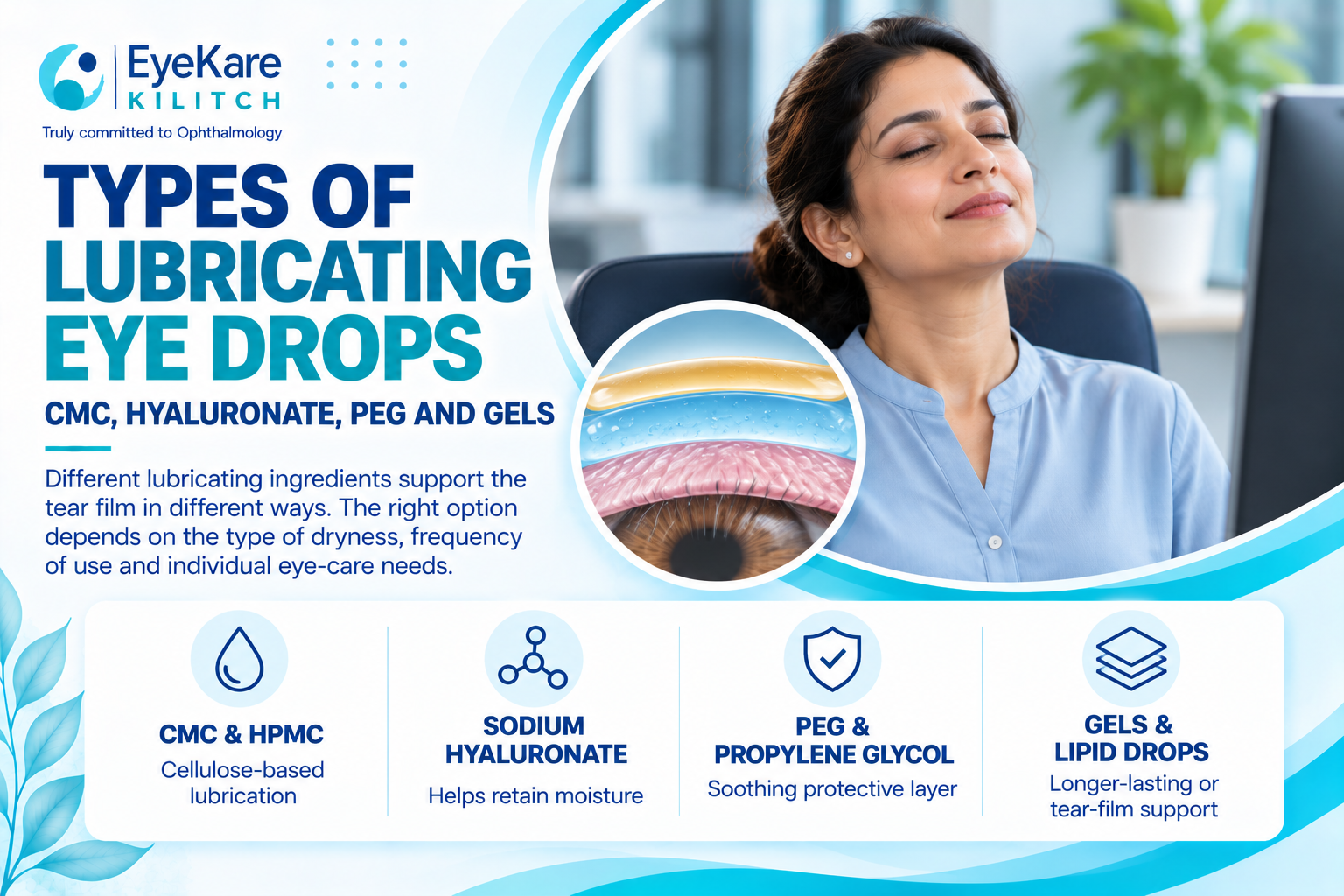
Healthy eyes are covered by a thin tear film that keeps them moist, smooth and comfortable. This tear film has three layers:
- An oily layer on the outside that slows evaporation
- A watery layer in the middle that hydrates and protects
- A mucus layer next to the eye that helps tears spread evenly
When any layer is disturbed, the eye can feel dry, gritty, burning or tired. Screen use, air conditioning, pollution, ageing, contact lenses and some medicines can all upset the tear film. Lubricating eye drops help by supplementing or stabilising it.
Learn more about how screen use is increasing dry eye problems.
Carboxymethylcellulose (CMC) Eye Drops
What It Is
Carboxymethylcellulose sodium, often shortened to CMC, is a cellulose-based ingredient that thickens tears slightly and helps them stay on the eye.
How It Helps
CMC forms a soothing, moisturising layer over the eye surface. It is one of the most widely used lubricating ingredients and is available in different strengths.
Best For
- Mild to moderate dry eye
- Everyday comfort for screen users
- People who want a familiar, widely available option
Sodium Hyaluronate (Hyaluronic Acid) Eye Drops
What It Is
Sodium hyaluronate is a form of hyaluronic acid, a substance found naturally in the body, including the eye. It is known for holding large amounts of water.
How It Helps
Hyaluronate has a special property: it becomes more fluid when you blink and thicker when your eye is open. This helps it spread smoothly during blinking and stay in place between blinks. It also supports the healing of the eye surface.
Best For
- Moderate dry eye
- Post-surgery comfort, such as after LASIK, when advised by a doctor
- Contact lens wearers, in suitable formulations
Read more about sodium hyaluronate eye drops.
Polyethylene Glycol (PEG) and Propylene Glycol Drops
What They Are
These are demulcents, ingredients that form a protective, soothing layer over the eye. They are often combined in a single product.
How They Help
PEG and propylene glycol help protect irritated surfaces and keep moisture in. Some formulations also include ingredients that thicken on the eye for longer comfort.
Best For
- Burning and irritation linked to dryness
- People who need long-lasting comfort through the day
Hydroxypropyl Methylcellulose (HPMC) Drops
HPMC is another cellulose-based ingredient similar to CMC. It adds viscosity and helps tears stay on the eye longer. It is commonly found in artificial tears and in some combination products.
Gels and Thicker Lubricants
What They Are
Lubricating gels contain higher concentrations of thickening agents, such as carbomer, making them more viscous than standard drops.
How They Help
Gels stay on the eye much longer, giving extended relief. Because they are thicker, they can temporarily blur vision.
Best For
- Moderate to severe dryness
- Night-time use before sleep
- People who wake up with dry, scratchy eyes
See our guide on choosing between gel and liquid eye drops.
Lipid-Based Drops
Some lubricating drops contain oils or lipids designed to support the outer oily layer of the tear film. These may help people whose dryness is caused by tears evaporating too quickly, often linked to meibomian gland problems.
Comparison Table
| Type | Feel | Duration | Typical use |
| CMC | Light to medium | Moderate | Everyday dryness, screen users |
| Sodium hyaluronate | Smooth, adapts with blinking | Moderate to long | Moderate dryness, surface healing support |
| PEG / propylene glycol | Soothing, protective | Moderate to long | Burning and irritation |
| HPMC | Light to medium | Moderate | General dryness |
| Gels | Thick | Long | Night-time, severe dryness |
| Lipid-based | Light | Moderate | Evaporative dry eye |
Preserved vs Preservative-Free Lubricating Drops
Many multi-dose bottles contain preservatives to stop bacteria growing after opening. For occasional use this is usually fine. However, people who use drops many times a day, have sensitive eyes or wear contact lenses may benefit from preservative-free options, available in single-use vials or special multi-dose bottles.
Learn more about preservative-free eye drops for dry eyes.
How to Choose the Right Lubricating Eye Drop
Ask yourself:
- How often do I need drops? Frequent use may favour preservative-free products.
- When are symptoms worst? Night-time dryness may need a gel.
- Do I wear contact lenses? Choose drops suitable for lens wearers.
- Is blurring a problem? Lighter drops cause less blurring than gels.
- Have I had eye surgery? Follow your surgeon’s recommendations.
If symptoms persist despite regular use of lubricating drops, see an eye doctor. Ongoing dryness can be a sign of an underlying condition that needs specific treatment.
How Often Should You Use Lubricating Drops?
This depends on the product and your symptoms. Some people need drops only occasionally, such as after long screen sessions. Others with moderate dryness may use them several times a day. Follow the label or your doctor’s advice. If you find yourself needing drops very frequently, mention it to your eye doctor, because it may be a sign that the underlying cause needs attention.
Lubricating Drops for Contact Lens Wearers
Contact lenses can make eyes feel drier, especially towards the end of the day. Some lubricating drops are specially labelled as suitable for use with contact lenses, while others require you to remove lenses first. Always check the label before using drops with lenses in. Preservative-free options are often preferred for lens wearers because some preservatives can build up in soft lenses.
Frequently Asked Questions
Are all lubricating eye drops the same?
No. They contain different ingredients that vary in thickness, how long they last and which type of dryness they suit best.
Can I use lubricating eye drops every day?
Many lubricating drops are designed for regular use. Preservative-free versions are often preferred for frequent daily use.
Is sodium hyaluronate better than CMC?
Both are effective. The right choice depends on your symptoms, comfort and your doctor’s advice.
Why do eye gels blur my vision?
Gels are thicker and spread across the eye surface, temporarily affecting how light passes through. This is why they are often used at night.
Can lubricating drops treat eye infections or allergies?
No. They soothe and moisten the eye but do not treat infections or allergic reactions.
Explore Eyekare Lubricating Solutions
Eyekare Kilitch manufactures a range of lubricating eye drops for different needs. Explore our products or contact us for more information.
This article is for general information only. Consult your eye doctor if dryness persists or worsens.