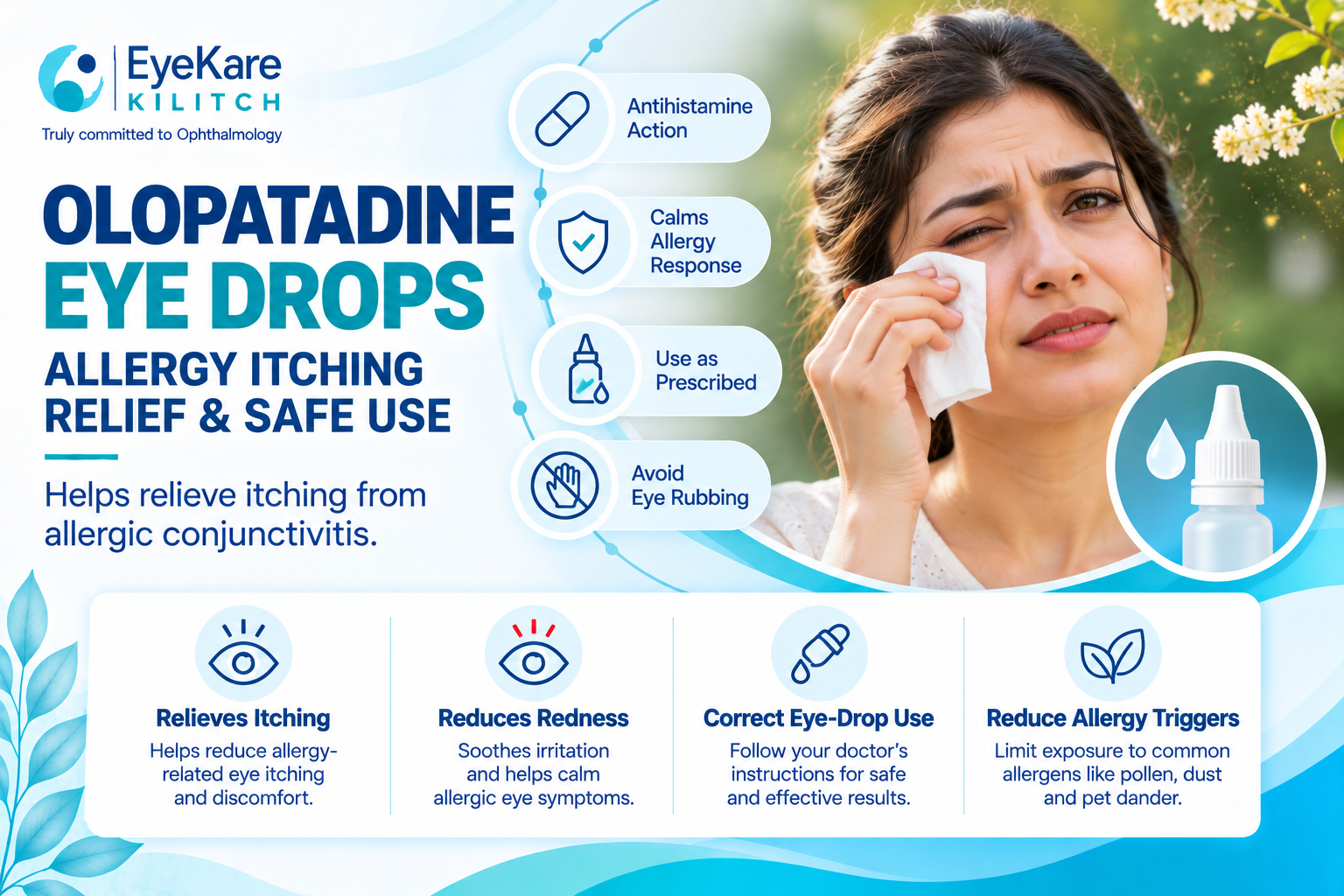
If you suffer from itchy, watery eyes during allergy season, you may have noticed that there are many different anti-allergy eye drops available. Some work in minutes, some take days to build up, some are used once a day and others several times. Olopatadine hydrochloride ophthalmic solution is one of the most commonly prescribed options, but it is not the only one.
This guide compares olopatadine with the other main types of anti-allergy eye drops, so you can understand why your doctor might recommend one over another. It is general information only. The right choice always depends on your symptoms, medical history and your eye doctor’s assessment.
Understanding Eye Allergy Treatment
Eye allergies, known medically as allergic conjunctivitis, happen when the immune system overreacts to harmless substances such as pollen, dust mites or pet dander. Cells in the eye release histamine and other chemicals, causing itching, redness, watering and swelling.
Anti-allergy eye drops work by interrupting this chain reaction at different points. Understanding these points makes it easier to see how the different drops compare.
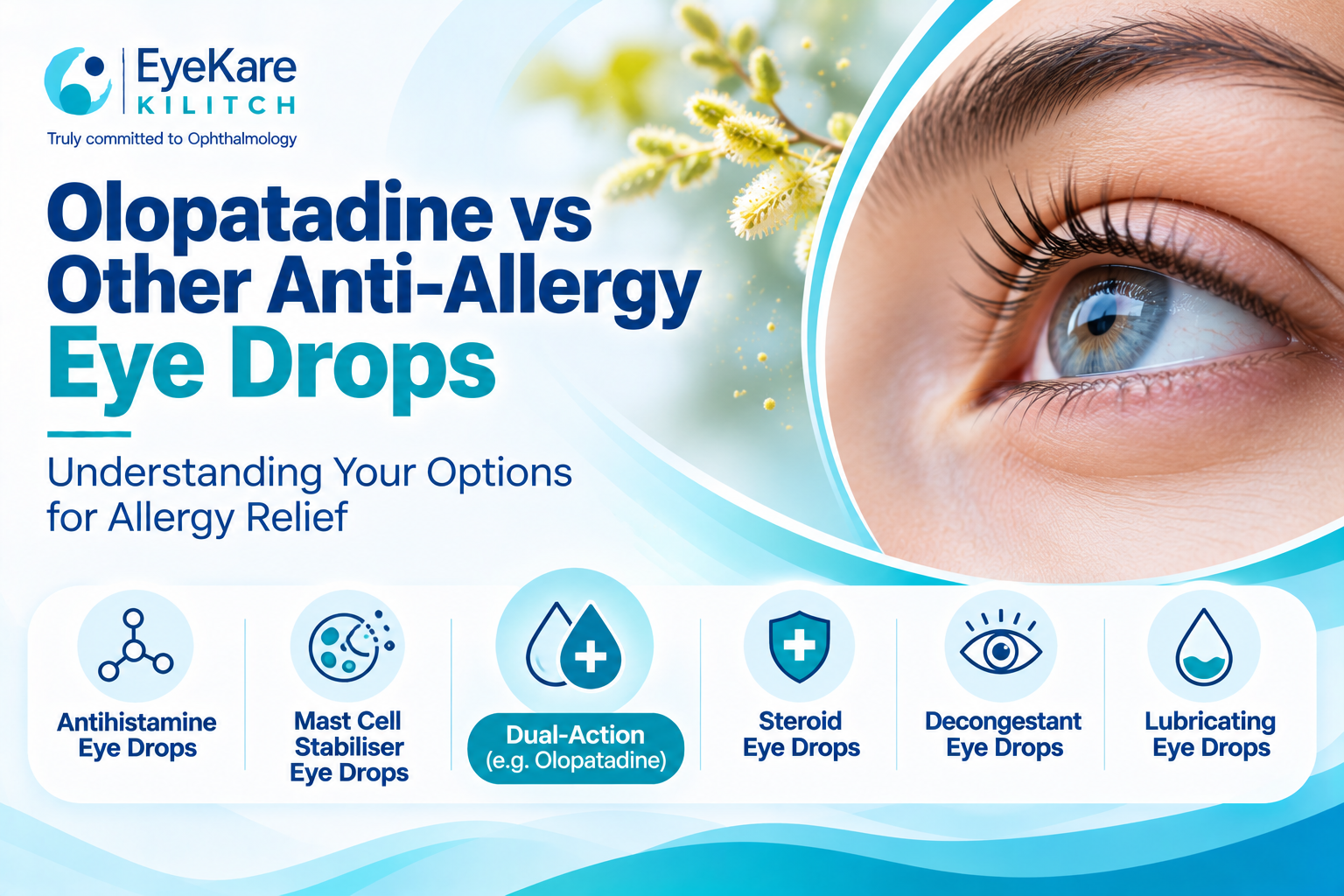
The Main Types of Anti-Allergy Eye Drops
1. Antihistamine Eye Drops
These drops block histamine from attaching to receptors in the eye. They act quickly and are useful for relieving symptoms that have already started.
Strengths: Fast relief from itching. Limitations: Some older antihistamine drops wear off quickly and need to be used several times a day.
2. Mast Cell Stabiliser Eye Drops
These drops calm mast cells so they release fewer allergy chemicals. They work more as a preventive treatment.
Strengths: Helpful for preventing symptoms when used regularly before and during allergy season. Limitations: They can take several days to reach full effect, so they are less useful for immediate relief.
3. Dual-Action Eye Drops
Dual-action drops combine antihistamine and mast cell stabilising effects in one medicine. Olopatadine belongs to this group, along with some other modern anti-allergy agents.
Strengths: Quick relief plus ongoing prevention, often with convenient dosing. Limitations: Like all medicines, they may cause mild stinging or other side effects in some people.
4. Steroid Eye Drops
Steroid eye drops reduce inflammation strongly and are sometimes used for severe allergic eye conditions.
Strengths: Powerful anti-inflammatory effect for serious cases. Limitations: Long-term use can increase the risk of raised eye pressure, cataracts and infection. They should only be used under close supervision by an eye doctor.
Read more in our guide to anti-inflammatory eye drops.
5. Decongestant Eye Drops
Decongestant drops shrink blood vessels to reduce redness.
Strengths: Quickly make the eye look less red. Limitations: They do not treat the underlying allergy, and frequent use can lead to rebound redness. They are generally not recommended for long-term use.
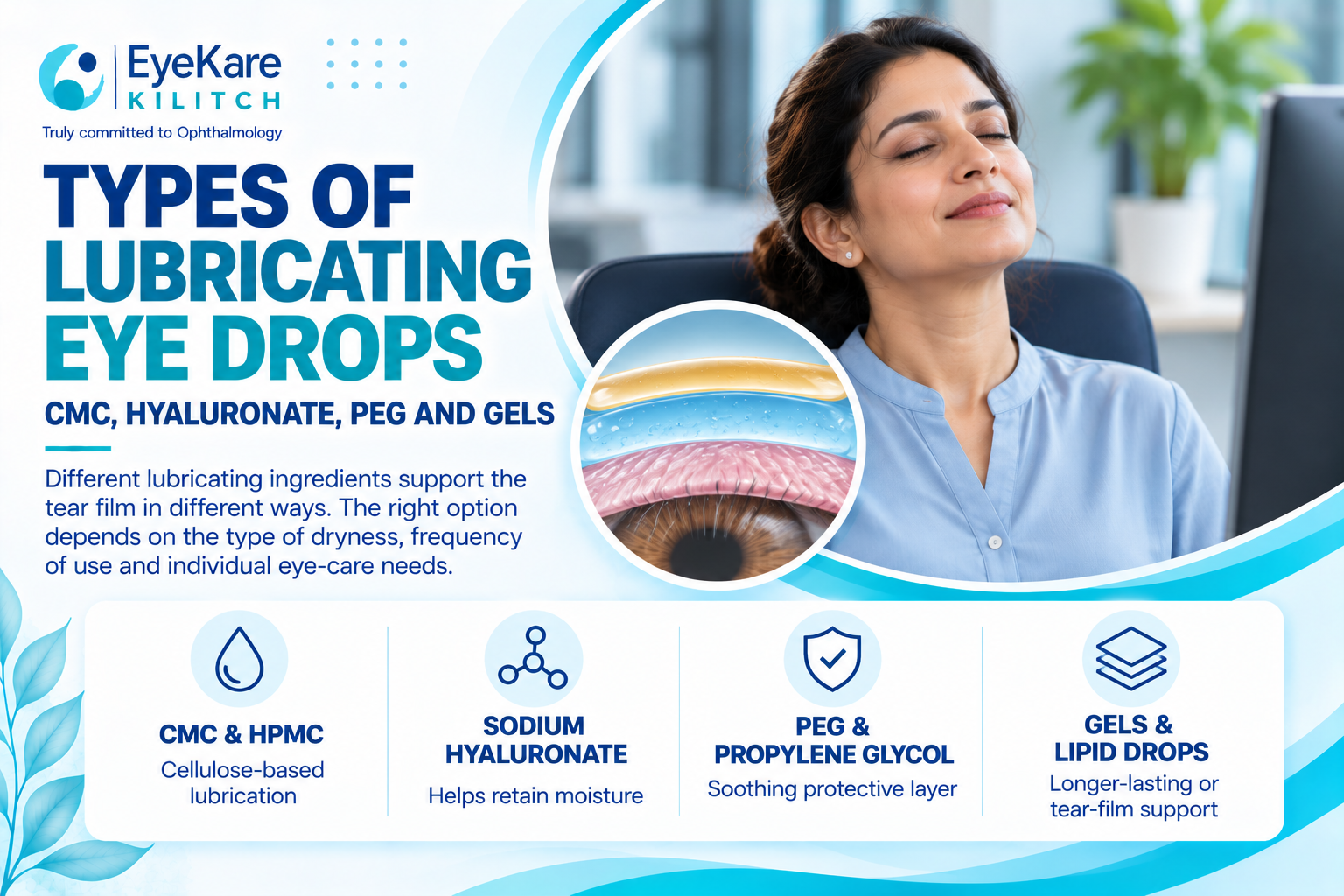
6. Lubricating Eye Drops
Artificial tears do not contain anti-allergy medicine, but they can rinse allergens from the eye surface and soothe irritation.
Strengths: Gentle and suitable for frequent use, especially preservative-free versions. Limitations: They do not stop the allergic reaction itself.
Comparison Table
| Type | How it works | Speed of relief | Best for |
| Antihistamine | Blocks histamine | Fast | Quick itch relief |
| Mast cell stabiliser | Prevents chemical release | Slow to build | Prevention through the season |
| Dual-action (e.g. olopatadine) | Blocks histamine and stabilises mast cells | Fast, with lasting control | Most cases of allergic conjunctivitis |
| Steroid | Reduces inflammation | Fast | Severe cases, short-term, under supervision |
| Decongestant | Narrows blood vessels | Very fast | Occasional cosmetic redness only |
| Lubricating | Rinses and soothes | Fast | Mild irritation, alongside other treatment |
Why Olopatadine Is Often Prescribed
Doctors frequently choose olopatadine because:
- It offers both quick relief and prevention in a single drop.
- It is usually well tolerated.
- It avoids the risks associated with long-term steroid use.
- Dosing is often convenient, which helps people use it consistently.
That said, every patient is different. Some people respond better to another antihistamine or need a short course of steroid drops for a severe flare.
Factors Your Doctor Will Consider
When choosing an anti-allergy eye drop, your doctor may think about:
- How severe your symptoms are. Mild symptoms may only need lubricating drops and allergen avoidance.
- How often symptoms occur. Seasonal sufferers may benefit from starting treatment before the season begins.
- Your age. Some products are approved only for certain age groups.
- Contact lens use. Some drops require you to remove lenses first.
- Other eye conditions, such as glaucoma or dry eye.
- Previous responses to allergy treatments.
Combining Treatments
Sometimes the best results come from combining approaches. For example, a doctor may recommend olopatadine for allergy control plus preservative-free lubricating drops to rinse allergens and ease dryness. Always ask your doctor how far apart to use different drops. Usually, a gap of several minutes between drops is recommended so the first one is not washed out.
Learn more about preservative-free eye drops for long-term eye care.
Mistakes to Avoid
- Using redness-relief drops every day for weeks
- Using leftover steroid drops without a doctor’s advice
- Rubbing itchy eyes, which worsens the allergic reaction
- Assuming every red eye is an allergy
- Sharing eye drops with family members
Preparing for Allergy Season
People with seasonal allergies often find that starting treatment early helps. If your symptoms return at the same time every year, speak to your eye doctor a few weeks before the season begins. They may suggest starting an anti-allergy drop such as olopatadine before symptoms build up, combined with practical steps to reduce exposure. Keeping a simple diary of when symptoms start and what seems to trigger them can help your doctor choose the most suitable drop and timing.
Anti-Allergy Eye Drops for Children
Children often suffer from eye allergies, especially if they also have hay fever, asthma or eczema. Not every anti-allergy drop is suitable for every age group, so a doctor should always choose the product for a child. Parents can help by teaching children not to rub their eyes, washing their hands and face after outdoor play, and keeping bedrooms as dust-free as possible.
Frequently Asked Questions
Is olopatadine better than other anti-allergy eye drops?
It is a popular, well-tolerated option with dual action, but the best choice depends on your individual symptoms and your doctor’s advice.
Can I use olopatadine with lubricating eye drops?
Often yes, but wait several minutes between drops and follow your doctor’s instructions.
Are steroid eye drops stronger than olopatadine?
Steroids have a stronger anti-inflammatory effect but carry more risks with long-term use, so they are generally reserved for specific situations under supervision.
Why do some allergy drops take days to work?
Mast cell stabilisers prevent the allergic reaction rather than relieving symptoms that have already started, so they build up their effect over time.
Do anti-allergy eye drops cure allergies?
No. They control symptoms. Reducing exposure to triggers remains important.
Quality Anti-Allergy Eye Care
Eyekare Kilitch has long experience in manufacturing sterile ophthalmic solutions. Read about our anti-allergy eye drops manufacturing or contact us.
This article is for general information only and does not replace medical advice. Always use eye drops as prescribed by your eye doctor.