Itchy, watery, red eyes can make the simplest tasks feel exhausting. For millions of people in India, these symptoms return every time the season changes, pollen levels rise, dust blows in or a pet comes close. Eye allergies are extremely common, and one of the medicines eye doctors most often prescribe to manage them is olopatadine.
This guide explains what olopatadine eye drops are, how they work, who they are usually prescribed for, how to use them correctly and what side effects to be aware of. It is written for general information only. Always follow the advice of your eye doctor and the instructions on your prescription.
What Are Olopatadine Eye Drops?
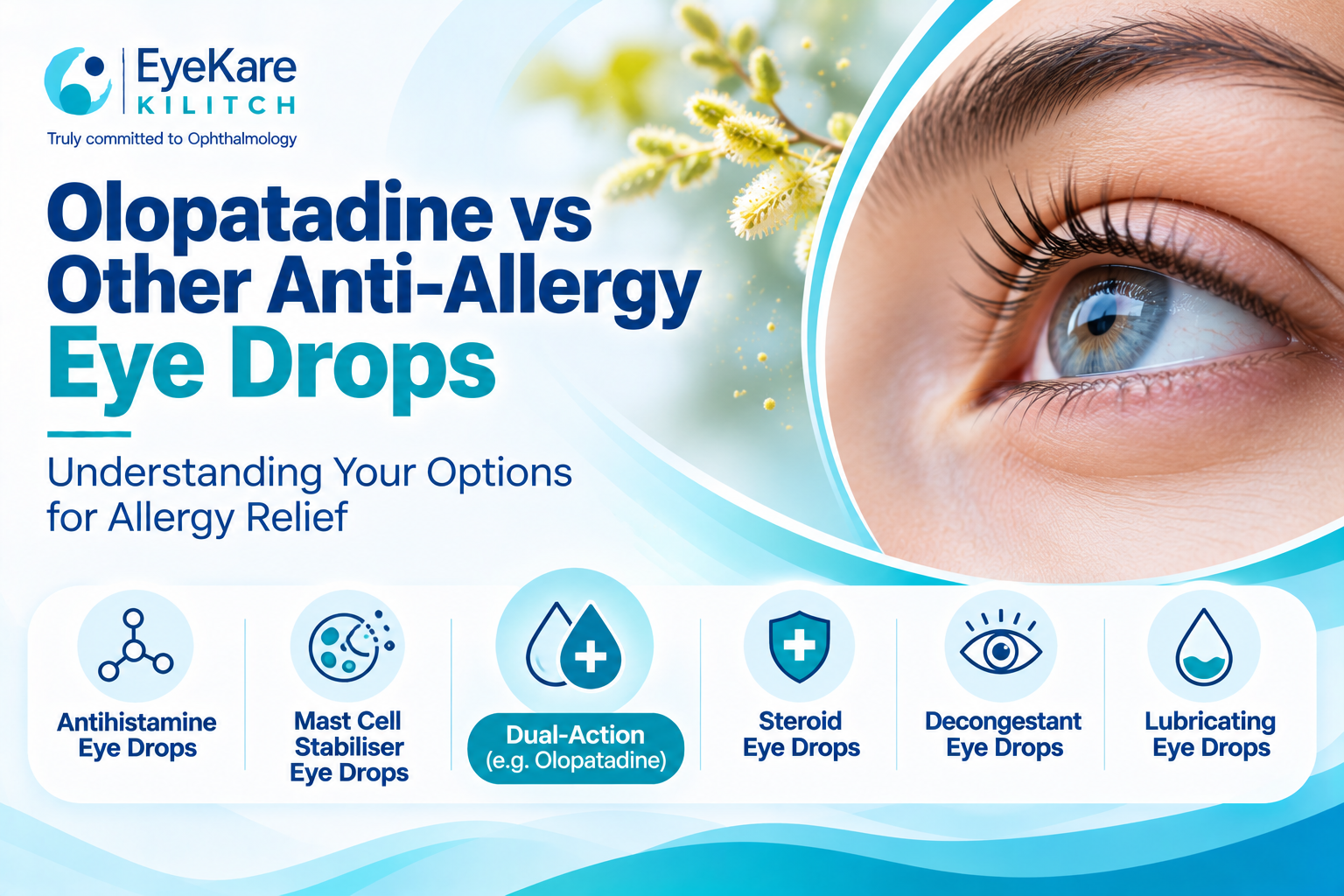
Olopatadine eye drops are a type of anti-allergy eye drop. The active ingredient, olopatadine hydrochloride, belongs to a group of medicines that work in two ways at once. It is both an antihistamine and a mast cell stabiliser.
You will often see it listed on packs as olopatadine hydrochloride ophthalmic solution. “Ophthalmic” simply means the medicine is made for use in the eye. Because it is applied directly to the eye, it acts where the symptoms are, rather than travelling through the whole body like many allergy tablets.
What Happens in the Eye During an Allergy?
To understand how olopatadine helps, it is useful to know what happens during an eye allergy.
When an allergen such as pollen, dust or animal dander lands on the surface of the eye, the immune system can overreact. Special cells in the eye tissue, called mast cells, release chemicals including histamine. Histamine causes the classic allergy symptoms:
- Intense itching
- Redness
- Watering
- Swelling of the eyelids
- A gritty or burning feeling
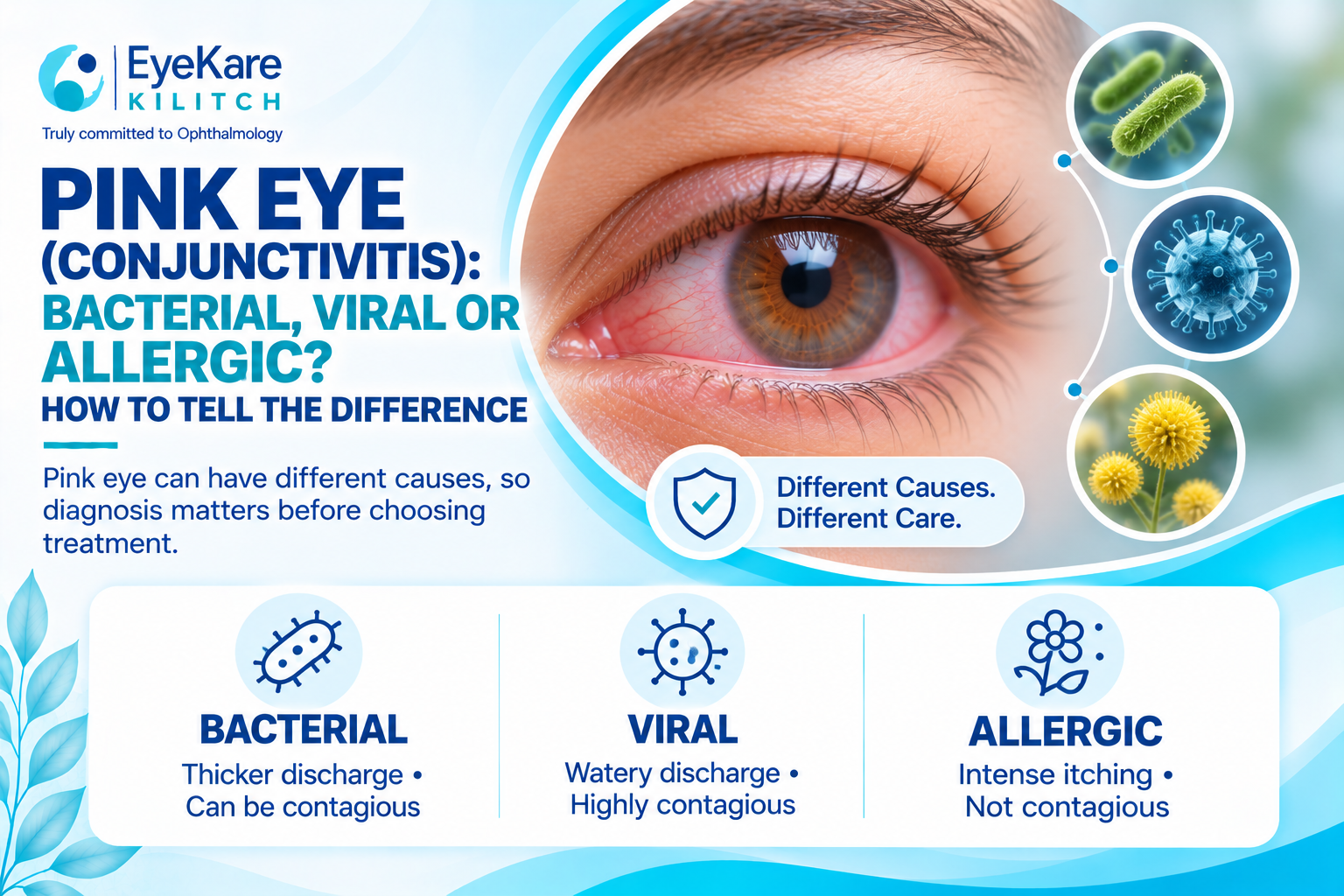
This condition is called allergic conjunctivitis. It is not contagious, but it can be very uncomfortable and can affect sleep, work and concentration.
How Olopatadine Works
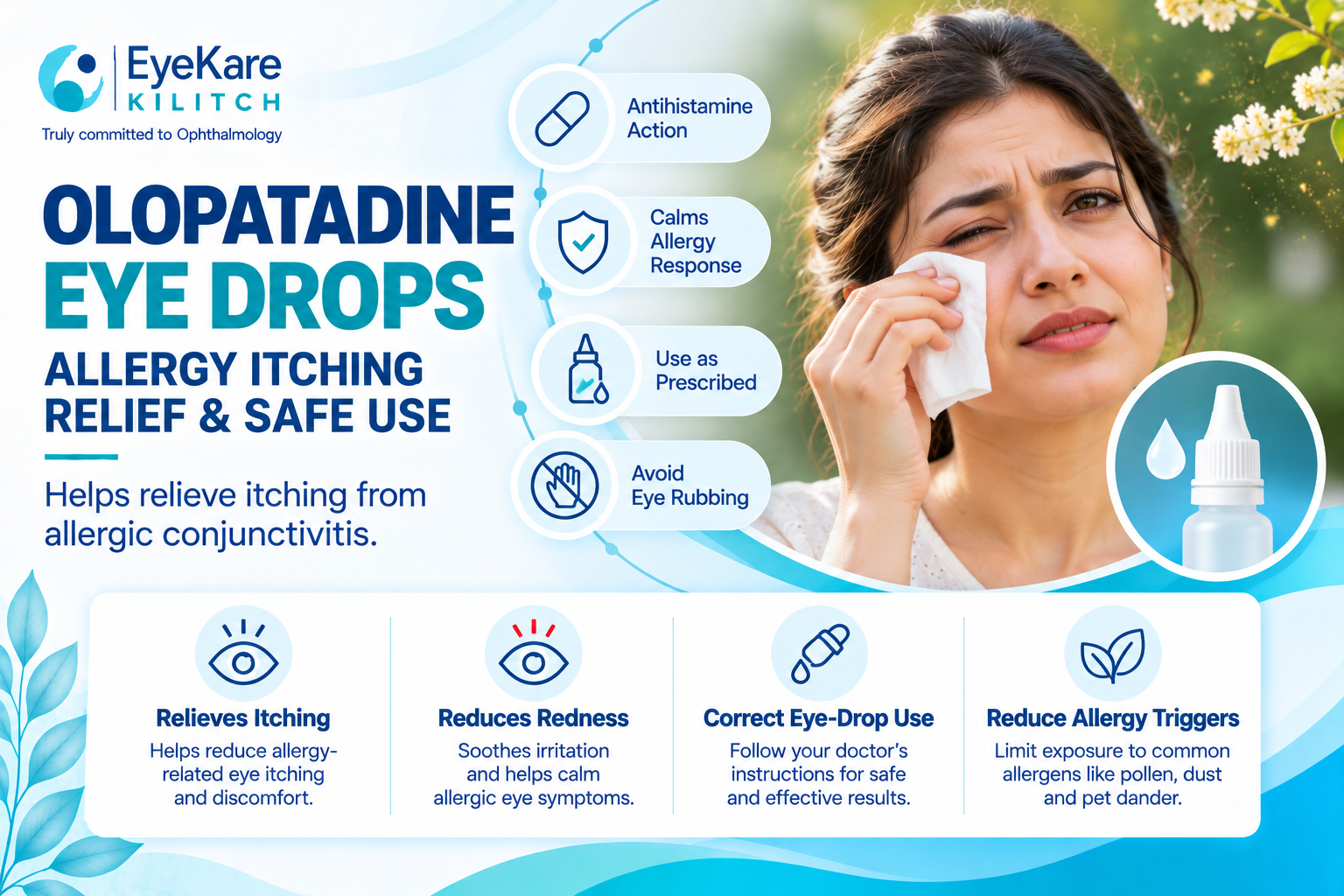
Olopatadine has a dual action:
1. Antihistamine Action
It blocks histamine receptors in the eye. This means that even if histamine is released, it cannot trigger itching and redness as strongly. This action helps relieve symptoms that have already started.
2. Mast Cell Stabilising Action
It helps calm the mast cells so they release fewer allergy chemicals in the first place. This action helps prevent symptoms from building up again.
This combination is why olopatadine is often valued for both quick relief and longer-lasting control of allergic itching.
When Do Doctors Prescribe Olopatadine Eye Drops?
Eye doctors may prescribe olopatadine for:
- Seasonal allergic conjunctivitis, linked to pollen and changing weather
- Perennial allergic conjunctivitis, linked to year-round triggers like dust mites and pet dander
- Itching associated with eye allergies in adults and, where appropriate, children
Your doctor will first make sure your symptoms are caused by an allergy rather than an infection or another eye condition. This matters because the treatments are very different. Read more in our guide to anti-allergy eye drops and how to choose them.
How to Use Olopatadine Eye Drops Correctly
Using eye drops properly helps the medicine work better and reduces the risk of contamination.
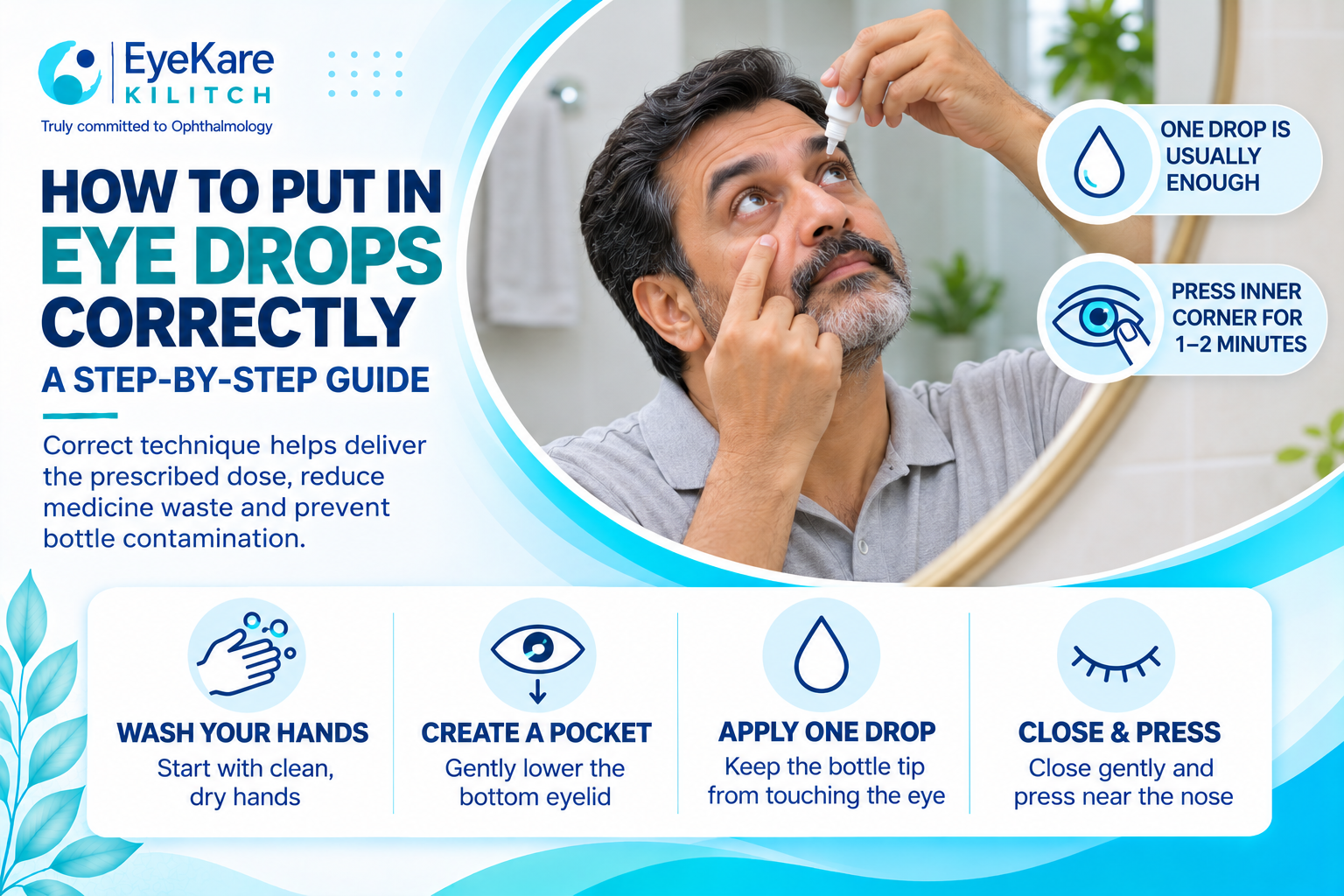
- Wash your hands with soap and water.
- Check the bottle. Make sure the seal is intact and the product has not passed its expiry or discard date.
- Tilt your head back and look up.
- Gently pull down your lower eyelid to create a small pocket.
- Squeeze one drop into the pocket without touching the tip to your eye, eyelashes or fingers.
- Close your eye gently for a minute or two. Pressing lightly on the inner corner of the eye can help keep the drop in place.
- Replace the cap straight away.
Always use the number of drops and the frequency your doctor has prescribed. Do not increase the dose on your own.
Contact Lens Wearers
Many eye drops contain a preservative that can be absorbed by soft contact lenses. Contact lens wearers are usually advised to remove their lenses before using the drops and wait a short time before putting them back in. It is also sensible to avoid wearing lenses while the eyes are red or inflamed. Ask your doctor or pharmacist for advice specific to your product.
Possible Side Effects
Most people use olopatadine without problems, but like all medicines it can cause side effects in some people. Commonly reported effects include:
- Mild stinging or burning for a short time after use
- Temporary blurred vision
- Dry eye feeling
- A mild headache
- An unusual taste in the mouth
Stop using the drops and contact your doctor if you notice severe eye pain, changes in vision, increasing redness or swelling, or signs of an allergic reaction to the drops themselves.
Tips to Reduce Eye Allergy Triggers
Olopatadine works best alongside simple steps that reduce your exposure to allergens:
- Keep windows closed on high-pollen or dusty days.
- Wear sunglasses outdoors to create a physical barrier.
- Wash your face and rinse your eyelids after coming indoors.
- Avoid rubbing your eyes, which releases more histamine and worsens itching.
- Wash pillowcases regularly and keep pets out of the bedroom if they trigger symptoms.
- Use a cool compress to soothe itchy eyes.
Learn more about how weather changes can trigger eye allergies.
When Itchy Eyes Are Not an Allergy
Not every red, itchy eye is caused by allergy. Bacterial and viral infections, dry eye, blepharitis and other conditions can look similar. Warning signs that need prompt medical attention include:
- Thick yellow or green discharge
- Pain rather than itching
- Sensitivity to light
- Blurred vision that does not clear with blinking
- Symptoms in only one eye that are getting worse
If you notice any of these, see an eye doctor rather than self-treating.
Storing Olopatadine Eye Drops
- Store the bottle as instructed on the label, usually at room temperature away from direct sunlight.
- Keep the cap tightly closed.
- Do not share your eye drops with anyone else.
- Discard the bottle after the period stated on the label once opened, even if some liquid remains.
Frequently Asked Questions
What are olopatadine eye drops used for?
They are used to relieve itching and other symptoms of allergic conjunctivitis, which is eye allergy caused by triggers such as pollen, dust and pet dander.
How quickly do olopatadine eye drops work?
Many people notice relief from itching fairly quickly after use, but how fast it works can vary from person to person.
Can I use olopatadine eye drops for an eye infection?
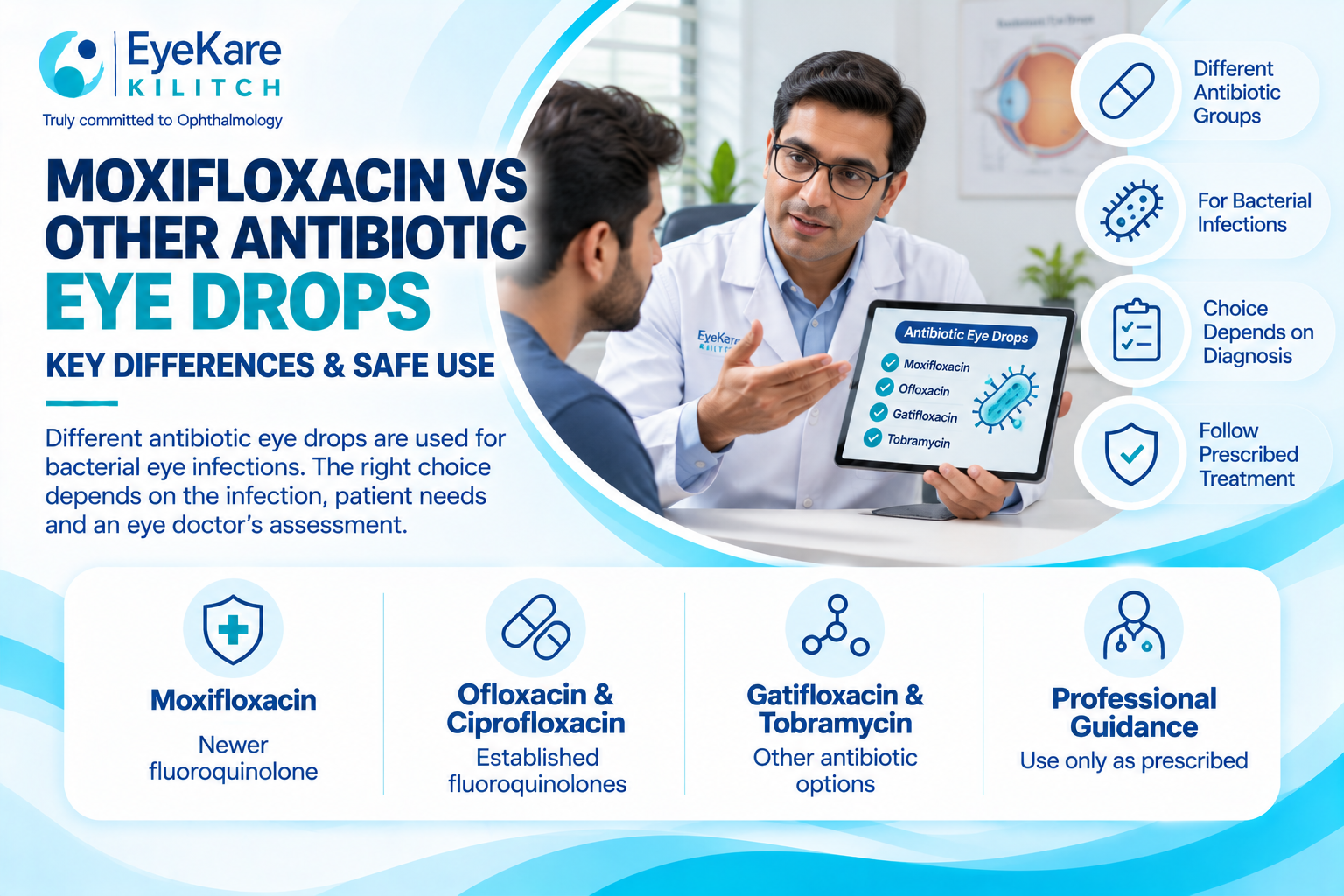
No. Olopatadine treats allergy, not infection. An eye infection needs a different treatment chosen by your doctor.
Can children use olopatadine eye drops?
Your doctor will decide whether olopatadine is suitable for a child and at what age, based on the specific product and the child’s condition.
Do I need a prescription for olopatadine eye drops?
Requirements depend on local regulations and the product. In India, it is best to use olopatadine under the guidance of an eye doctor.
Trusted Eye Care from Eyekare Kilitch
Eyekare Kilitch manufactures a range of sterile eye care products, including anti-allergy solutions, under strict quality standards. Explore our products or contact us to learn more.
This article is for general information only and is not a substitute for medical advice. Always use eye drops as prescribed and consult your eye doctor about your symptoms.