Why Sterile Manufacturing Matters for Ophthalmic Products
Ophthalmic products are designed for application to the eye, making control of product quality and contamination an important part of manufacturing. A sterile ophthalmic manufacturing process brings together controlled facilities, trained personnel, validated procedures, appropriate equipment and quality systems to consistently produce products that meet their defined requirements.
Sterility is not achieved through a single manufacturing step. It depends on a coordinated system covering materials, equipment, environmental conditions, processing, filling, packaging, testing and documentation. Each part of the process must be appropriately controlled for the product being manufactured.
What Is a Sterile Ophthalmic Manufacturing Company?
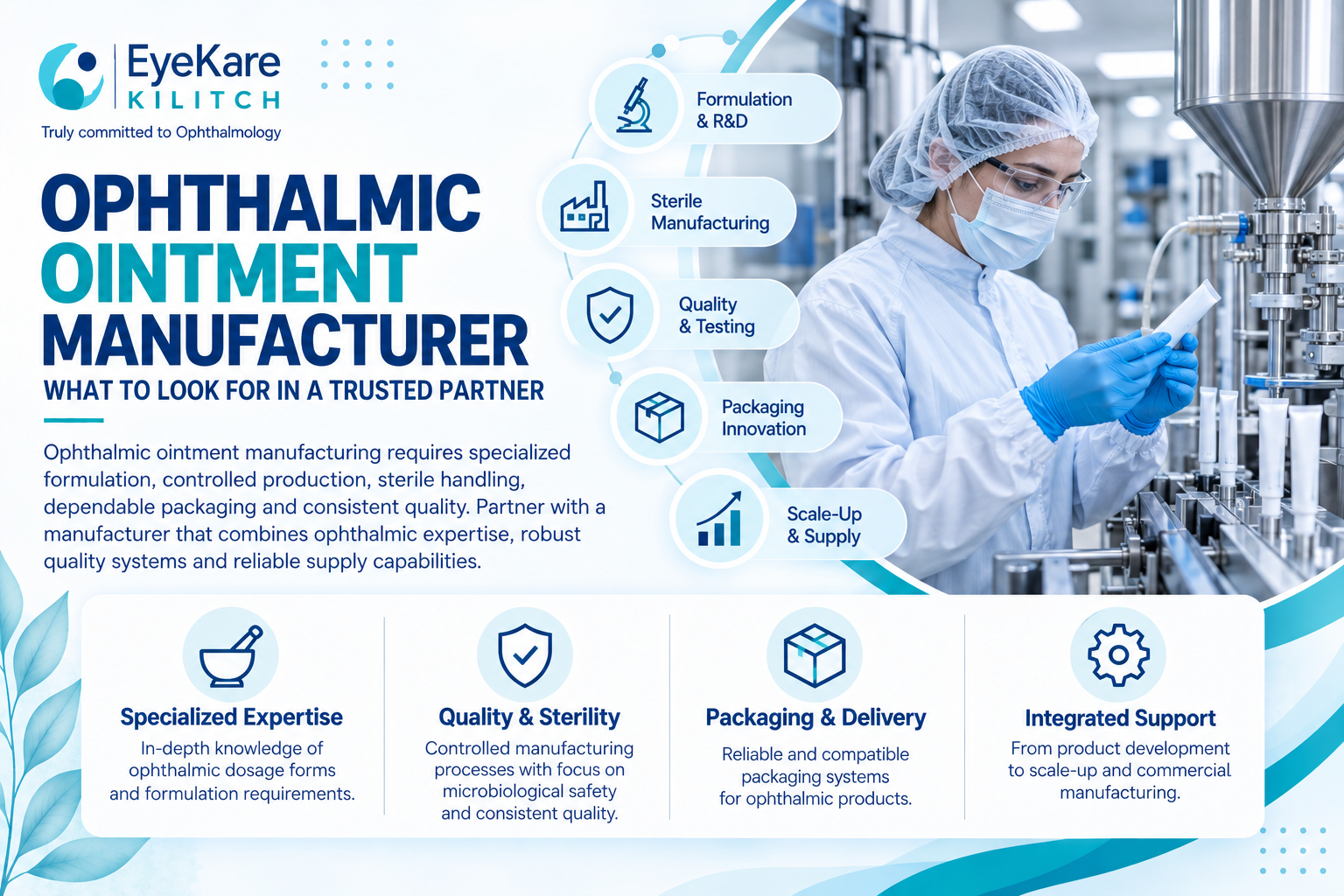
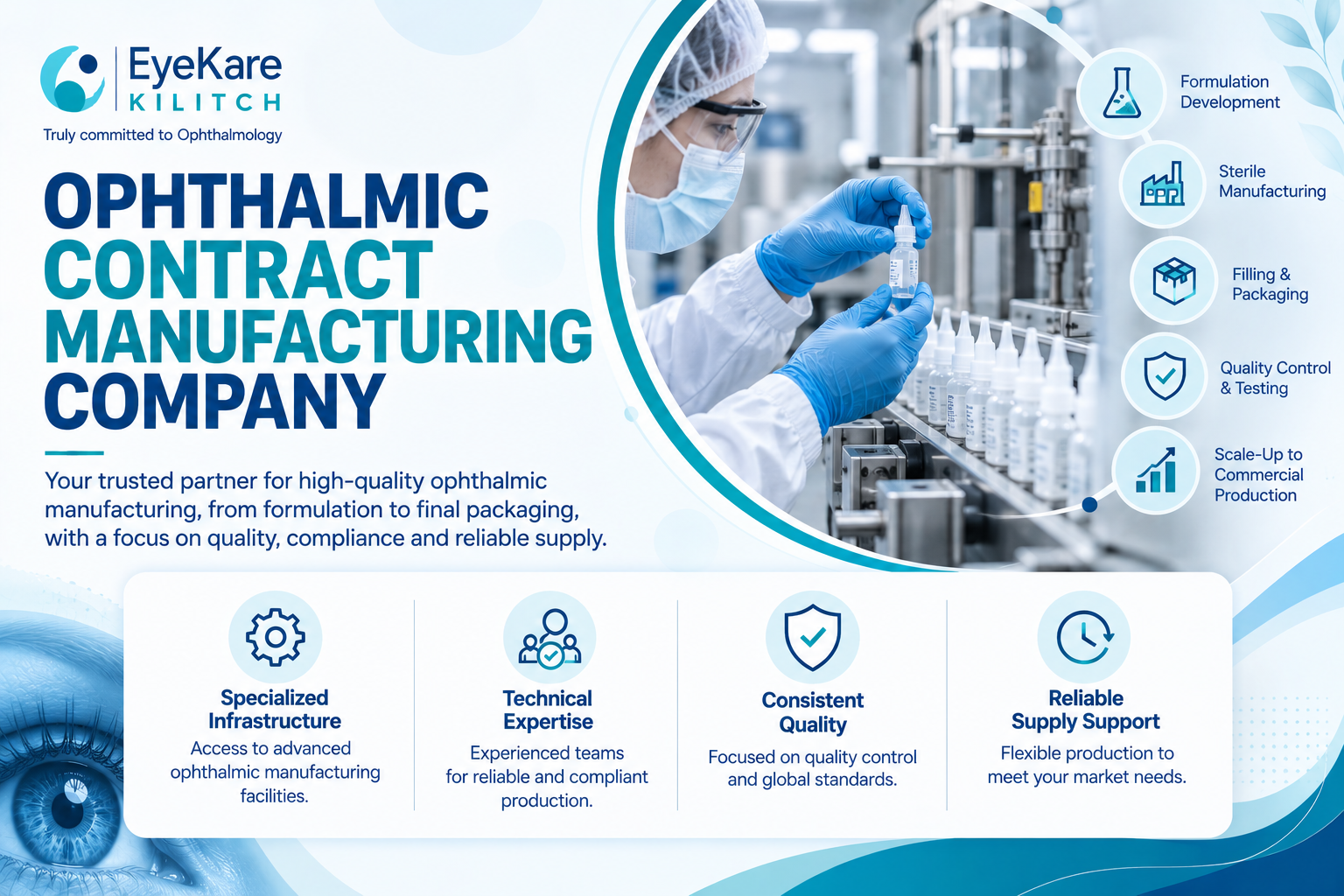
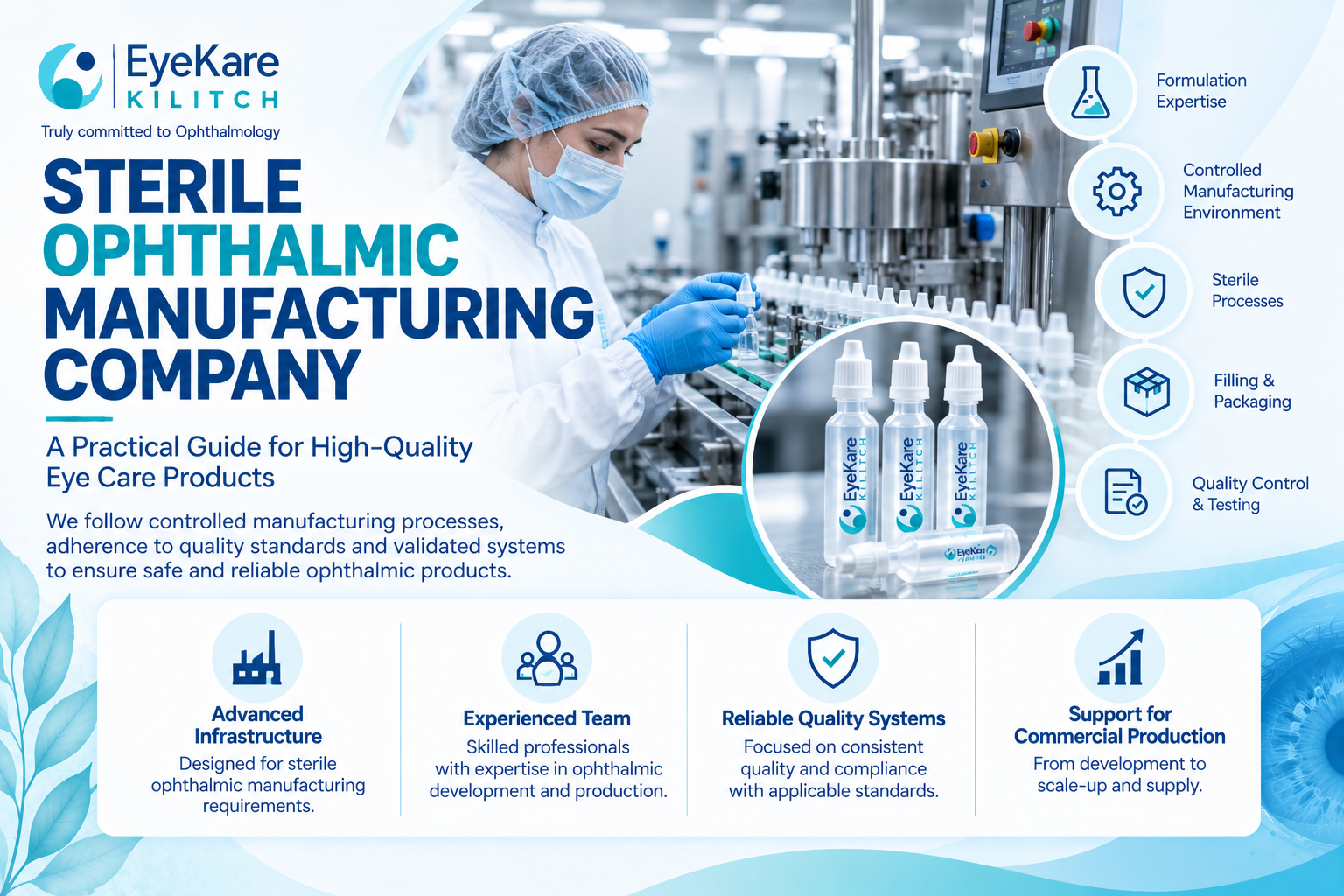
A sterile ophthalmic manufacturing company specializes in producing ophthalmic pharmaceutical products through manufacturing processes designed to maintain the required level of microbiological control and product quality. Its capabilities may cover formulation, sterile processing, filling, packaging, quality control and technical documentation.
The exact manufacturing approach depends on the formulation, dosage form, packaging system and process design. Some products may use aseptic processing, while others may involve validated sterilization approaches where suitable. The manufacturing strategy should always be established according to the specific product and its validated process.
For companies developing or commercializing ophthalmic products, the manufacturing partner’s infrastructure and quality systems are therefore important considerations alongside formulation and packaging capabilities.
Key Elements of Sterile Ophthalmic Manufacturing
Controlled Manufacturing Environment
Sterile production requires appropriately controlled areas and environmental conditions. Facility design, air handling, personnel practices, cleaning and environmental monitoring contribute to the overall contamination-control strategy.
Qualified Equipment
Manufacturing and filling equipment should be suitable for the product and process. Equipment qualification, calibration, cleaning and maintenance help support repeatable operation.
Trained Personnel
Personnel practices are an important part of contamination control. Staff involved in sterile manufacturing require appropriate training in procedures, hygiene, gowning and controlled-area practices.
Validated Processes
Critical manufacturing processes should be appropriately qualified and validated. Validation helps demonstrate that the established process can consistently deliver the intended outcome when operated within defined parameters.
Quality Documentation
Batch records, standard operating procedures, testing records, equipment records and change-control documentation provide traceability throughout manufacturing.
Formulation and Raw Material Control
Sterile manufacturing begins before the filling stage. Formulation components and raw materials must meet defined specifications and be appropriately controlled before they enter the manufacturing process.
The formulation should be developed with stability, compatibility, manufacturing feasibility and the intended packaging system in mind. Raw material controls help ensure that materials used in production consistently meet their established requirements.
Where formulation development and commercial manufacturing are handled by the same organization, technical knowledge can be carried through from development into routine production. Clear specifications and documented processes remain essential at every stage.
Sterile Filling and Packaging
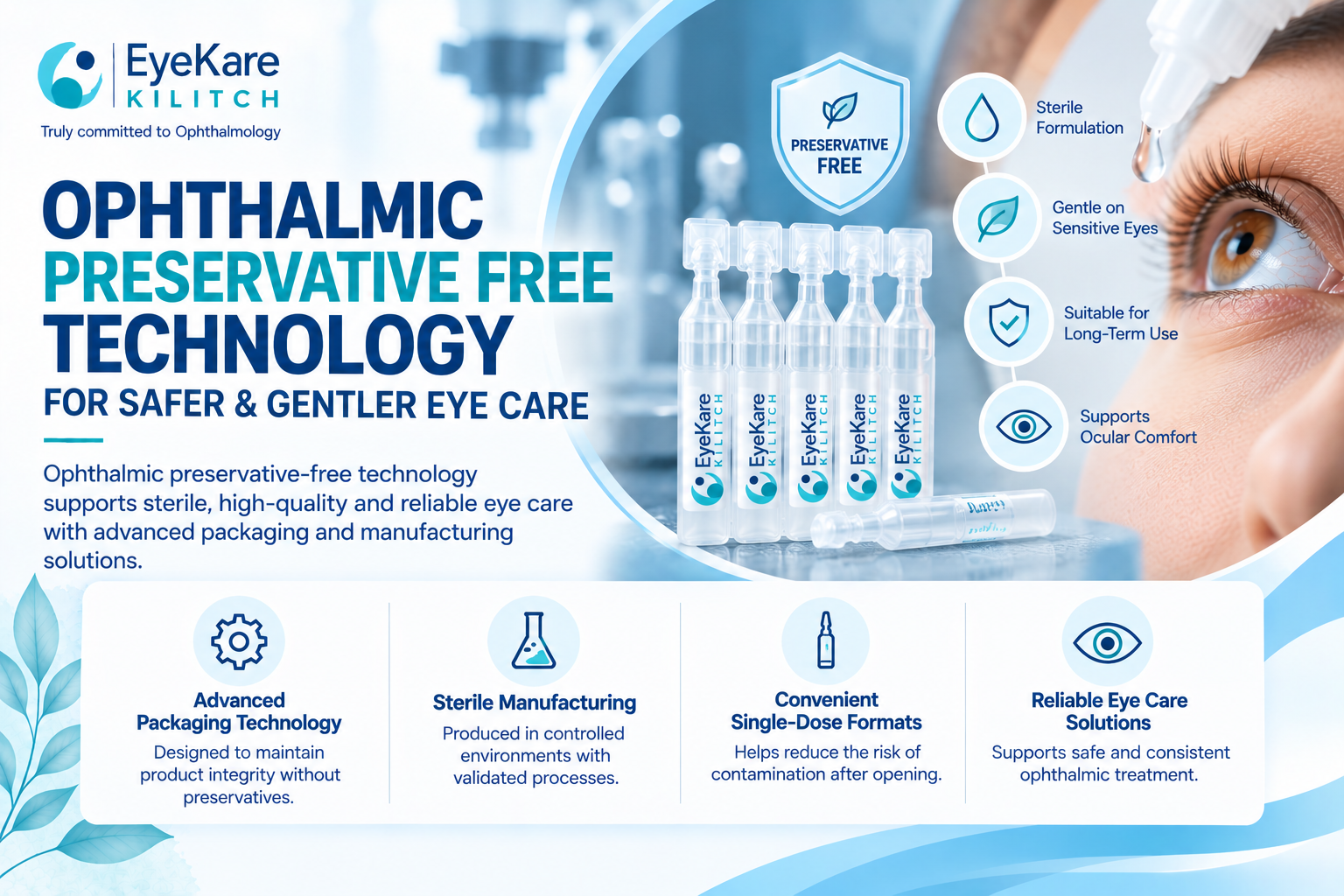
Filling and packaging are critical stages because the product must remain protected throughout the transition from bulk formulation to finished container. Suitable ophthalmic manufacturing technology can support controlled filling and packaging operations while maintaining defined process parameters.
The selected container should be compatible with the formulation and suitable for the intended product. Filling volume, container dimensions, closure or seal design, and product-contact materials may all require evaluation.
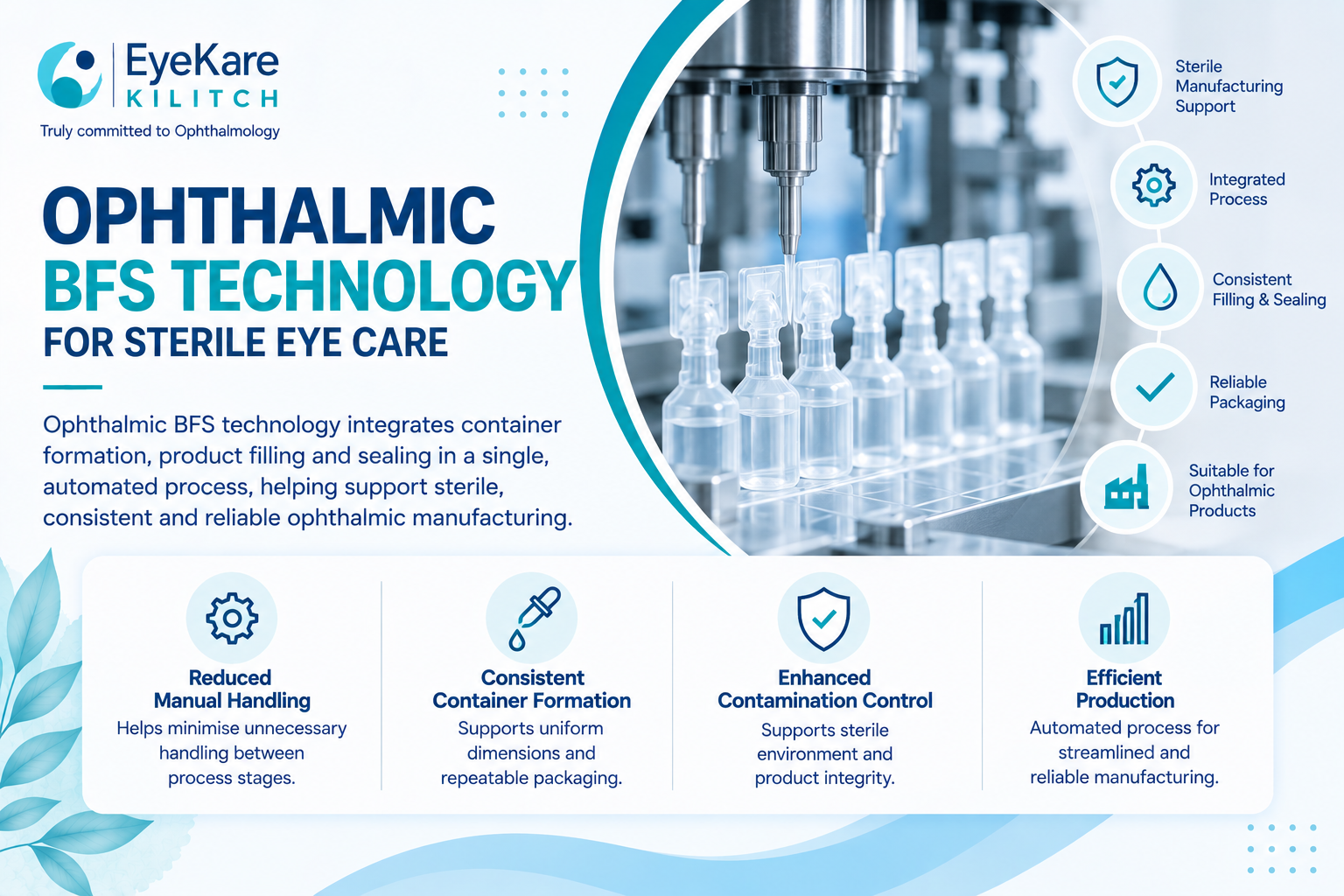
Integrated technologies such as Blow-Fill-Seal can be considered for suitable sterile liquid ophthalmic products. The technology selection should be based on product requirements, packaging compatibility and validated process performance rather than equipment capability alone.
Environmental and Contamination Control
Environmental Monitoring
Monitoring programs can provide information about conditions within controlled manufacturing areas. The scope and frequency of monitoring should be established according to the facility, process and quality requirements.
Cleaning and Disinfection
Defined cleaning and disinfection procedures help maintain controlled manufacturing areas. Procedures should specify responsibilities, materials, frequencies and verification requirements where applicable.
Personnel Controls
Movement, gowning and hygiene practices should be managed according to the requirements of the controlled area. Training and adherence to procedures are important parts of contamination control.
Material and Equipment Flow
The movement of materials, components and equipment should be designed and controlled to support the overall contamination-control strategy and reduce unnecessary exposure or handling.
Quality Control in Sterile Ophthalmic Manufacturing
Quality control supports the release and ongoing monitoring of ophthalmic products. Testing requirements depend on the product and applicable specifications, but may include physical, chemical, microbiological and other product-specific assessments.
In-process checks can help monitor important manufacturing attributes such as fill volume, appearance and process parameters. Finished-product testing provides additional information about whether the product meets its defined specifications.
Quality control is supported by a broader quality system that includes deviations, investigations, change control, documentation review, equipment records and other appropriate quality activities.
Process Validation and Batch Consistency
A sterile manufacturing process must be designed for consistency rather than relying on individual operator performance. Process validation helps establish that defined manufacturing steps can operate within established parameters and produce the intended results.
Validation may involve assessment of equipment, processes, cleaning, filling, packaging and other critical operations as applicable. Once a process is established, continued monitoring and documented review help identify changes that could affect performance.
Batch-to-batch consistency depends on maintaining control over materials, equipment, environment, process parameters and personnel practices. A structured quality system connects these elements throughout routine production.
How to Evaluate a Sterile Ophthalmic Manufacturing Company
Ophthalmic Experience
Evaluate whether the company has relevant experience with the intended ophthalmic dosage form and manufacturing process.
Facility and Equipment
Review whether the manufacturing infrastructure, filling systems and packaging capabilities are suitable for the proposed product.
Quality Systems
Assess procedures for quality control, documentation, deviations, change control, validation and batch review.
Technical Support
Consider the availability of formulation, process development, packaging and scale-up support where required.
Manufacturing Capacity
Confirm that the partner can support the required batch size, production frequency and future commercial requirements.
Why an Integrated Manufacturing Approach Matters
Sterile ophthalmic manufacturing involves multiple connected activities rather than one isolated production step. Formulation, raw material control, environmental management, filling, packaging, testing and documentation must work together.
For companies selecting a manufacturing partner, an integrated approach can simplify communication between technical and production teams and help maintain continuity from product development through commercial manufacturing. An experienced ophthalmic pharmaceutical manufacturing company should be evaluated on the complete set of capabilities required for the intended product.
Conclusion
A sterile ophthalmic manufacturing company plays a critical role in converting a validated product and process into consistent commercial production. Reliable sterile manufacturing depends on controlled environments, qualified equipment, trained personnel, validated processes, suitable packaging and a strong quality system.
For businesses seeking to develop or manufacture ophthalmic products, partner selection should therefore consider more than production capacity. Evaluating sterile infrastructure, technical expertise, quality control, validation capabilities and packaging experience can help identify a suitable ophthalmic manufacturing partner for long-term production requirements. A coordinated approach can support consistent product quality, reliable manufacturing performance and stronger control across the product life cycle.