Why Regular Eye Pressure Checks Matter for Eye Health
Regular eye examinations are an important part of maintaining healthy vision. While many people associate an eye checkup with testing eyesight or updating glasses, comprehensive eye examinations can also assess the health of the eyes and identify conditions that may not cause noticeable symptoms in their early stages.
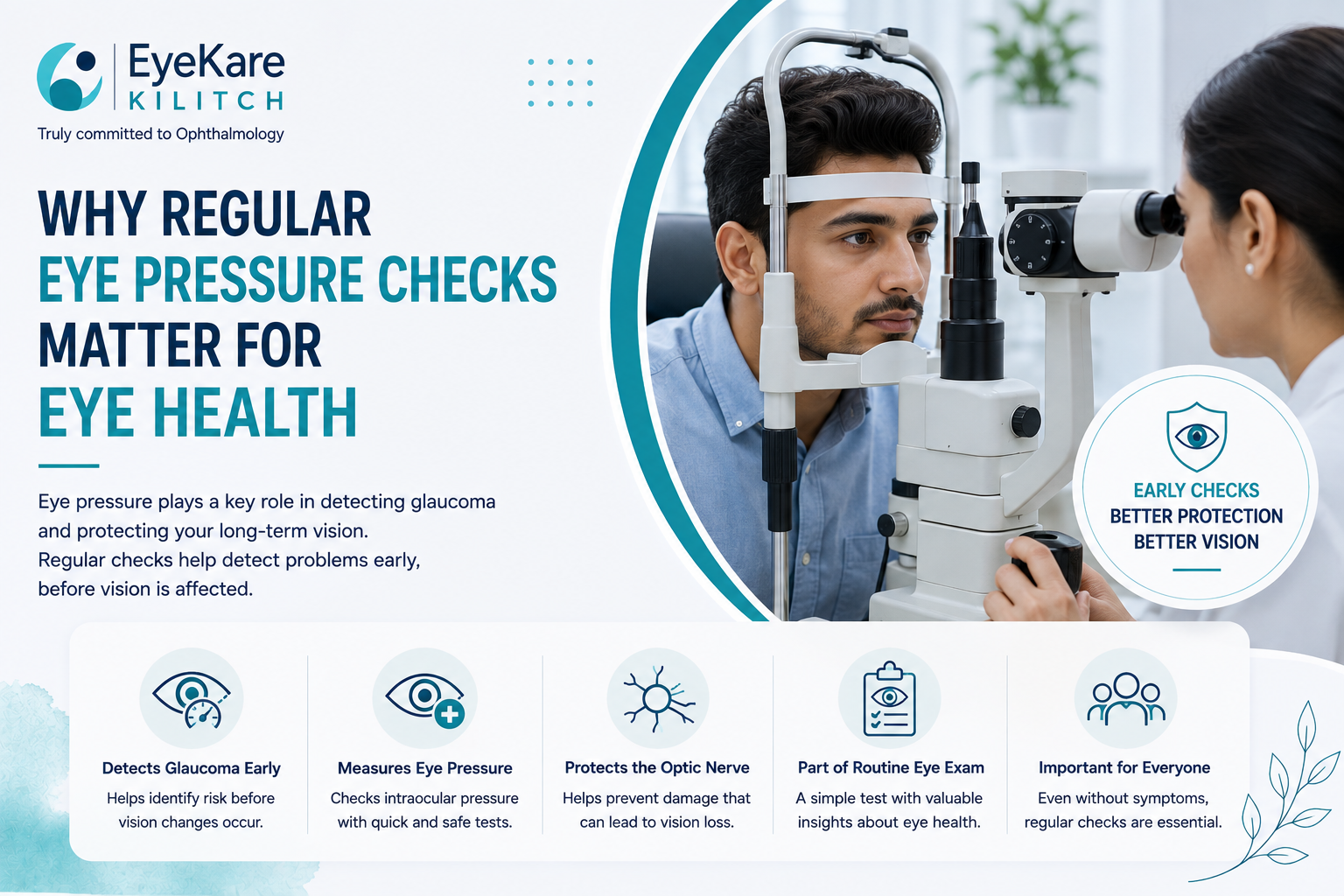
One measurement that may be included during an eye examination is intraocular pressure, commonly called eye pressure. Eye pressure is an important factor when assessing the risk of glaucoma, a group of eye diseases that can damage the optic nerve and lead to vision loss.
For people interested in maintaining their eye health, Eyekare Kilitch focuses on ophthalmic healthcare and offers a range of ophthalmic products across different therapeutic areas.
Understanding why regular eye pressure checks matter can help people recognise the importance of routine eye care and professional evaluation.
What Is Eye Pressure?
Eye pressure refers to the pressure created by the fluid inside the eye. This fluid, called aqueous humour, is continuously produced and normally drains through structures in the front part of the eye.
When fluid does not drain normally, pressure inside the eye can increase. Higher-than-normal intraocular pressure can increase the risk of glaucoma, although having high eye pressure does not necessarily mean that a person has glaucoma.
Eye pressure can vary between individuals, and what is considered normal for one person may not necessarily represent the same level of risk for another.
This is why eye pressure needs to be interpreted alongside other findings during a comprehensive eye examination.
Why Is Eye Pressure Important for Glaucoma?
Glaucoma is a group of eye diseases that can damage the optic nerve. The optic nerve carries visual information from the eye to the brain, making its health essential for normal vision.
Research shows that elevated eye pressure increases the risk of glaucoma. When pressure becomes too high for an individual’s optic nerve, it can contribute to optic nerve damage and vision loss.
However, eye pressure is only one part of glaucoma assessment. Some people with high eye pressure never develop glaucoma, while glaucoma can also occur in people whose eye pressure falls within a commonly accepted range.
Can High Eye Pressure Cause Vision Loss?
High eye pressure does not automatically cause vision loss. However, sustained pressure can increase the risk of damage to the optic nerve.
If glaucoma develops and remains untreated, progressive optic nerve damage can lead to loss of peripheral vision and, in advanced cases, severe vision impairment.
One challenge is that glaucoma can develop without obvious symptoms during its early stages. The National Eye Institute notes that many people with glaucoma do not know they have it because there may be no early warning signs.
Regular eye examinations can therefore help identify potential problems before significant vision loss occurs.
What Happens During an Eye Pressure Test?
An eye pressure test is commonly performed using a technique called tonometry. During the examination, an eye-care professional measures the pressure inside the eye using an appropriate instrument.
Air-Puff Tonometry
One method uses a brief puff of air directed toward the eye. The response of the eye is measured to estimate intraocular pressure.
Contact Tonometry
Another method uses a specialised instrument that gently contacts the eye after appropriate preparation. The measurement helps the eye-care professional assess intraocular pressure.
The test is generally quick, and your eye-care professional can explain which method is appropriate for you.
The National Eye Institute includes tonometry as part of comprehensive eye examinations and describes it as a test used to measure pressure inside the eyes.
Why Is One Eye Pressure Reading Not Enough?
It can be tempting to think that one pressure measurement can determine whether someone has glaucoma. In reality, glaucoma assessment is more comprehensive.
The National Eye Institute states that tonometry alone is not sufficient to accurately diagnose glaucoma because individuals can have different levels of eye pressure and some people with glaucoma may have normal pressure readings.
Optic Nerve Examination
An eye-care professional may examine the optic nerve for signs of damage or structural changes.
Visual Field Testing
A visual field test can assess peripheral vision and identify changes that may not be noticeable during everyday activities.
Comprehensive Eye Examination
A comprehensive examination allows the eye-care professional to consider eye pressure together with other findings rather than relying on one measurement.
This broader approach is important for identifying glaucoma and other eye conditions.
Who May Be at Higher Risk?
Glaucoma can affect anyone, but certain people have a higher risk. Risk factors can include age, family history and certain demographic or medical factors.
The National Eye Institute identifies older adults and people with a family history of glaucoma among groups that may require particular attention to regular eye examinations.
People with certain health conditions may also need more frequent eye examinations.
Family History
Having a close family member with glaucoma can increase your risk. Tell your eye-care professional about any known family history.
Age
The risk of glaucoma generally increases with age, making regular eye examinations increasingly important as people get older.
Existing Health Conditions
Certain health conditions can influence eye health and glaucoma risk. Your eye-care professional can consider your overall medical history when recommending an examination schedule.
How Often Should You Check Your Eye Pressure?
There is no single testing schedule that applies to everyone. The appropriate frequency depends on factors such as age, family history, existing eye conditions and overall health.
People at higher risk may be advised to have comprehensive eye examinations more frequently. The National Eye Institute states that people at increased risk of glaucoma who do not have the disease may need examinations every one to two years, while eye-care professionals may recommend more frequent examinations for some individuals.
Rather than waiting for symptoms, discuss your individual risk factors with an eye-care professional.
What Happens If Eye Pressure Is High?
A high eye-pressure reading does not automatically mean that you have glaucoma. Your eye-care professional may recommend additional testing or monitoring depending on your individual situation.
Further assessment may include examination of the optic nerve, visual field testing and other diagnostic procedures.
If glaucoma or ocular hypertension is identified, your eye-care professional can recommend an appropriate management plan.
Treatment for glaucoma may involve prescription medicines, laser procedures or surgery depending on the type and severity of the condition. Lowering eye pressure can help slow or prevent further vision loss in people with glaucoma.
Can Glaucoma Develop With Normal Eye Pressure?
Yes. This is an important reason why eye pressure should not be considered a standalone glaucoma test.
Some people develop a form of glaucoma known as normal-tension glaucoma even when their measured eye pressure is within a commonly accepted range.
This means that a normal eye-pressure reading does not guarantee that the optic nerve is healthy.
A comprehensive examination allows an eye-care professional to evaluate multiple aspects of eye health rather than relying solely on pressure.
Why Regular Eye Examinations Matter
Eye pressure checks are most useful when they form part of regular, comprehensive eye care. Many eye diseases can develop before noticeable symptoms appear, which means waiting until vision changes occur may delay detection.
The National Eye Institute describes comprehensive dilated eye examinations as an important way to detect eye diseases early, before they cause vision loss.
Regular examinations can help eye-care professionals monitor changes over time and determine whether additional testing or treatment is needed.
For people with existing eye conditions, following the examination schedule recommended by their eye-care professional is particularly important.
How Can You Support Better Eye Health?
Regular eye examinations are one part of maintaining healthy vision. Lifestyle and general health can also influence overall eye health.
Manage Existing Health Conditions
Conditions such as diabetes and high blood pressure can affect the eyes. Follow your healthcare professional’s advice for managing these conditions.
Know Your Family History
Tell your eye-care professional if glaucoma or other eye diseases run in your family.
Follow Recommended Checkups
Do not wait for noticeable symptoms before seeking an eye examination if you have been advised to attend regular monitoring.
Follow Your Treatment Plan
If you have been diagnosed with an eye condition, use prescribed medicines and attend follow-up appointments as recommended.
Eyekare Kilitch provides ophthalmic products across several therapeutic categories, supporting different aspects of ophthalmic healthcare. You can explore Eyekare’s ophthalmic product range to learn more about its available products.
When Should You See an Eye-Care Professional?
Regular checkups are important, but certain symptoms may require prompt professional attention.
Contact an eye-care professional if you experience:
- Persistent blurred vision
- New changes in peripheral vision
- Difficulty seeing in low-light conditions
- Eye pain or significant discomfort
- Sudden changes in vision
- New visual disturbances
- Unexplained changes in colour perception
Sudden vision loss, severe eye pain, flashes of light, a sudden increase in floaters or a curtain-like shadow across your vision require urgent medical assessment.
Do not rely on an eye-pressure reading alone to determine whether your eyes are healthy.
Make Regular Eye Pressure Checks Part of Your Eye Care
Understanding why regular eye pressure checks matter for eye health can help you take a more proactive approach to vision care. Eye pressure is an important risk factor for glaucoma, but a pressure measurement alone cannot diagnose the disease.
A comprehensive eye examination can bring together eye pressure measurements, optic nerve assessment, visual field testing and other evaluations to provide a clearer picture of overall eye health.
Regular examinations are particularly important for people who have higher risk factors, including increasing age or a family history of glaucoma.
For more information about Eyekare Kilitch and its ophthalmic healthcare focus, learn more about Eyekare Kilitch. You can also explore its complete ophthalmic product portfolio to learn more about its range of eye-care solutions.
Taking the time to monitor your eye health today can help support early detection and appropriate management of potential problems, helping you protect your vision for the future.