How Smoking Can Affect Your Eyes and Long-Term Vision
Smoking is commonly associated with respiratory and cardiovascular problems, but its effects can extend to eye health as well. Tobacco smoke contains chemicals that can contribute to oxidative stress, inflammation and changes in the body’s blood vessels. These effects can also influence tissues involved in maintaining healthy vision.
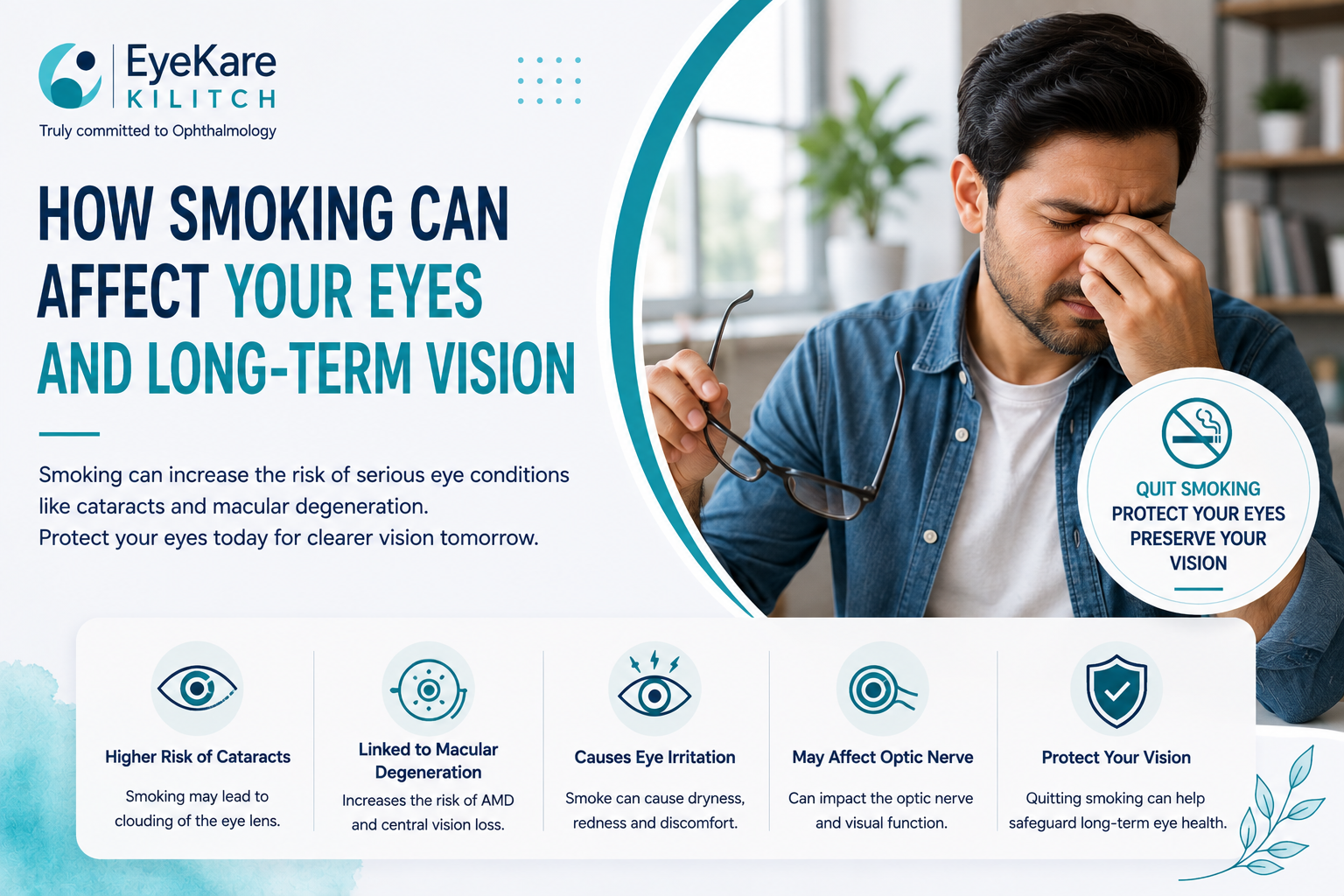
Research has associated smoking with an increased risk of several eye conditions, particularly cataracts and age-related macular degeneration. Understanding how smoking can affect your eyes and long-term vision can help people recognise potential risks and make informed decisions about their eye health.
For people interested in maintaining better vision, Eyekare Kilitch focuses exclusively on ophthalmology and provides a broad range of ophthalmic products across different therapeutic areas.
Smoking does not affect every person’s eyes in exactly the same way. Age, genetics, existing health conditions, lifestyle and the duration and amount of tobacco exposure can all influence individual risk.
How Does Smoking Affect Eye Health?
Healthy eyes require an adequate supply of oxygen and nutrients. Tobacco smoke exposes the body to substances that can contribute to oxidative stress and may affect blood circulation.
The eyes can also be exposed directly to smoke, which may irritate the ocular surface. People exposed to tobacco smoke may experience symptoms such as dryness, redness, burning or general discomfort.
However, eye irritation is different from long-term eye disease. Persistent or worsening symptoms should be evaluated by an eye-care professional rather than assumed to be caused by smoking alone.
Smoking and Cataracts
A cataract develops when the normally clear lens inside the eye becomes cloudy. As the lens becomes less transparent, light cannot pass through it as effectively, potentially affecting the clarity of vision.
Smoking is recognised as one of the risk factors associated with cataract development.
How Smoking May Contribute
Tobacco smoke can increase oxidative stress in the body. The eye’s lens contains proteins that need to maintain their structure and transparency for clear vision.
Over time, oxidative damage may contribute to changes in these proteins and other components of the lens.
Possible Vision Changes
People with cataracts may experience:
- Blurred or cloudy vision
- Increased sensitivity to glare
- Difficulty seeing at night
- Faded or less vivid colours
- Halos around lights
- Frequent changes in spectacle prescription
Cataracts generally develop gradually, so early changes may not always be obvious.
Smoking and Age-Related Macular Degeneration
Age-related macular degeneration, commonly known as AMD, affects the macula, the central part of the retina responsible for detailed central vision.
Smoking is an established risk factor for AMD. The condition can affect the ability to read, recognise faces and see fine details.
Why the Macula Matters
The macula is responsible for much of the detailed central vision people use for everyday activities. Damage to this area can therefore have a significant effect on visual function.
Smoking and AMD Risk
Smoking can contribute to oxidative stress and vascular changes that may affect retinal health. Research has established an association between smoking and increased AMD risk.
Quitting smoking is one of the modifiable steps people can take to reduce their risk. However, other factors, including age and genetics, also influence AMD development.
Can Smoking Affect the Optic Nerve?
The optic nerve carries visual information from the retina to the brain. Although relatively uncommon, tobacco-related optic neuropathy has been described in medical literature.
It can involve changes in vision and colour perception. Because optic nerve problems can have several different causes, symptoms should be assessed by an eye-care professional.
Changes such as unexplained colour-vision problems, reduced visual clarity or progressive vision loss should not simply be attributed to smoking.
Early assessment can help identify the underlying cause and determine whether further investigation or treatment is required.
Does Smoking Cause Dry and Irritated Eyes?
Tobacco smoke can irritate the ocular surface. Direct exposure to smoke may contribute to symptoms such as burning, redness, watering and dryness.
People who already experience dry-eye symptoms may find environmental smoke particularly uncomfortable.
Common Symptoms
Smoke exposure may be associated with:
- Dryness
- Burning or stinging
- Redness
- Watery eyes
- Foreign-body sensation
- General eye discomfort
These symptoms can have many causes, including prolonged screen use, allergies, environmental pollution and reduced tear production.
Eyekare Kilitch offers a range of lubricating and preservative-free ophthalmic products for different eye-care requirements. Its product portfolio includes sodium hyaluronate, carboxymethylcellulose and other ophthalmic formulations.
Any eye drop should be used according to its intended use and professional advice where appropriate.
Smoking and Other Eye Conditions
Researchers have also examined possible relationships between smoking and conditions such as glaucoma, diabetic eye disease and other retinal disorders.
However, the strength of evidence varies between conditions. Smoking should therefore not automatically be described as the direct cause of every eye disease.
What is clear is that tobacco exposure can contribute to oxidative stress and vascular effects that may be relevant to overall eye health.
People with existing eye conditions should discuss smoking and other lifestyle factors with their ophthalmologist or eye-care professional.
How Can Smoking Affect Long-Term Vision?
The effects of smoking on vision can develop over a long period. Some eye diseases may have few noticeable symptoms during their early stages, which means a person may not realise that changes are occurring.
For example, early age-related macular degeneration may not immediately produce obvious vision problems.
As certain eye conditions progress, people may notice:
Reduced Visual Clarity
Objects may appear blurred, hazy or less sharp.
Difficulty With Night Vision
Some eye conditions, including cataracts, can make seeing in low-light conditions more difficult.
Changes in Central Vision
Problems affecting the macula can interfere with reading, recognising faces and seeing fine details.
Changes in Colour Perception
Some conditions affecting the optic nerve can alter the way colours are perceived.
Any new or unexplained vision change deserves professional evaluation.
Can Quitting Smoking Protect Your Eyes?
Stopping smoking can provide significant benefits for overall health, and it can also reduce certain eye-health risks.
Quitting does not guarantee that someone will never develop cataracts, AMD or another eye condition. Eye health is influenced by multiple factors, including age, genetics, diabetes, blood pressure and lifestyle.
However, avoiding tobacco removes an important preventable risk factor.
For people who smoke and want to quit, professional cessation support can make the process more manageable. A doctor or qualified healthcare professional can help identify appropriate strategies.
How Can You Protect Your Long-Term Vision?
Protecting your vision involves more than avoiding smoking. Regular eye care and healthy lifestyle choices can also play an important role.
Schedule Regular Eye Examinations
Eye examinations can help detect certain eye conditions before significant symptoms appear. The appropriate frequency depends on factors such as age, medical history and individual risk.
Avoid Tobacco Smoke
If you smoke, consider seeking professional support to quit. Avoiding secondhand smoke can also reduce exposure.
Manage Existing Health Conditions
Conditions such as diabetes and high blood pressure can affect eye health. Following your healthcare professional’s advice for managing these conditions can help protect your overall health.
Protect Your Eyes Outdoors
Excessive ultraviolet exposure can contribute to certain eye problems. Sunglasses that provide appropriate UV protection can help reduce exposure when outdoors.
Eyekare Kilitch’s focus is on ophthalmic healthcare, with its product portfolio covering areas including lubricants, anti-glaucoma treatments, NSAIDs and other ophthalmic therapies.
When Should You See an Eye-Care Professional?
Changes in vision should not be ignored, particularly when they are new, persistent or getting worse.
Consider arranging an eye examination if you experience:
- Persistent blurred vision
- Difficulty seeing at night
- New changes in central vision
- Increasing sensitivity to light
- Changes in colour perception
- Persistent eye discomfort
- New visual distortions
Sudden vision loss, flashes of light, a sudden increase in floaters or a curtain-like shadow across your vision require prompt medical attention.
An ophthalmologist or qualified eye-care professional can examine your eyes and determine whether your symptoms are related to smoking, another eye condition or a different health issue.
Protect Your Eyes for the Future
Understanding how smoking can affect your eyes and long-term vision highlights the importance of including eye health in your overall approach to wellness. Smoking is associated with important eye conditions such as cataracts and age-related macular degeneration, while tobacco smoke can also contribute to oxidative stress and ocular irritation.
The good news is that some risk factors can be changed. Avoiding tobacco, maintaining good overall health and attending appropriate eye examinations can all contribute to better long-term eye care.
Eye health is highly individual, so anyone experiencing changes in vision should seek advice from a qualified eye-care professional rather than relying on general information alone.
To learn more about Eyekare Kilitch and its focus on ophthalmic healthcare, explore the company’s About Us page. You can also explore Eyekare’s ophthalmic product range to learn more about the company’s eye-care solutions.
Taking care of your eyes today, including reducing preventable risks such as tobacco exposure, can help support healthier vision for the years ahead.