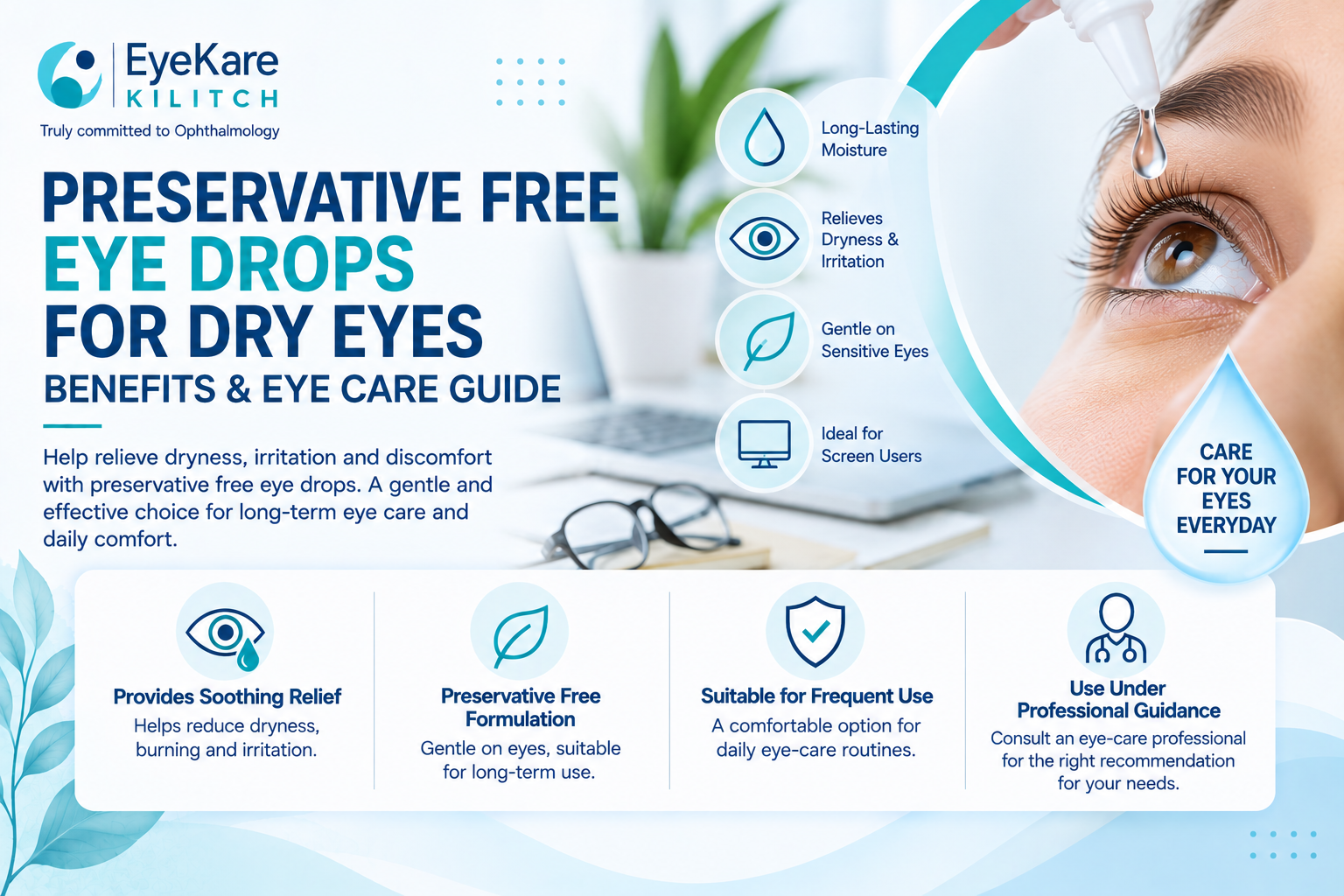
Modern lifestyles place significant demands on eye health. Long hours spent in front of digital screens, exposure to air-conditioned environments, pollution, and aging-related changes can all contribute to eye discomfort. As a result, many individuals rely on eye drops to help manage symptoms such as dryness, irritation, burning, or visual fatigue.
In recent years, Preservative Free Eye Drops have gained increasing attention among eye-care professionals and patients alike. While preservatives have traditionally played an important role in ophthalmic formulations, preservative-free technologies are becoming an important innovation in modern eye care.
Understanding the role of preservatives, their purpose, and the benefits of preservative-free alternatives can help patients make more informed eye-care decisions.
What Are Preservative Free Eye Drops?
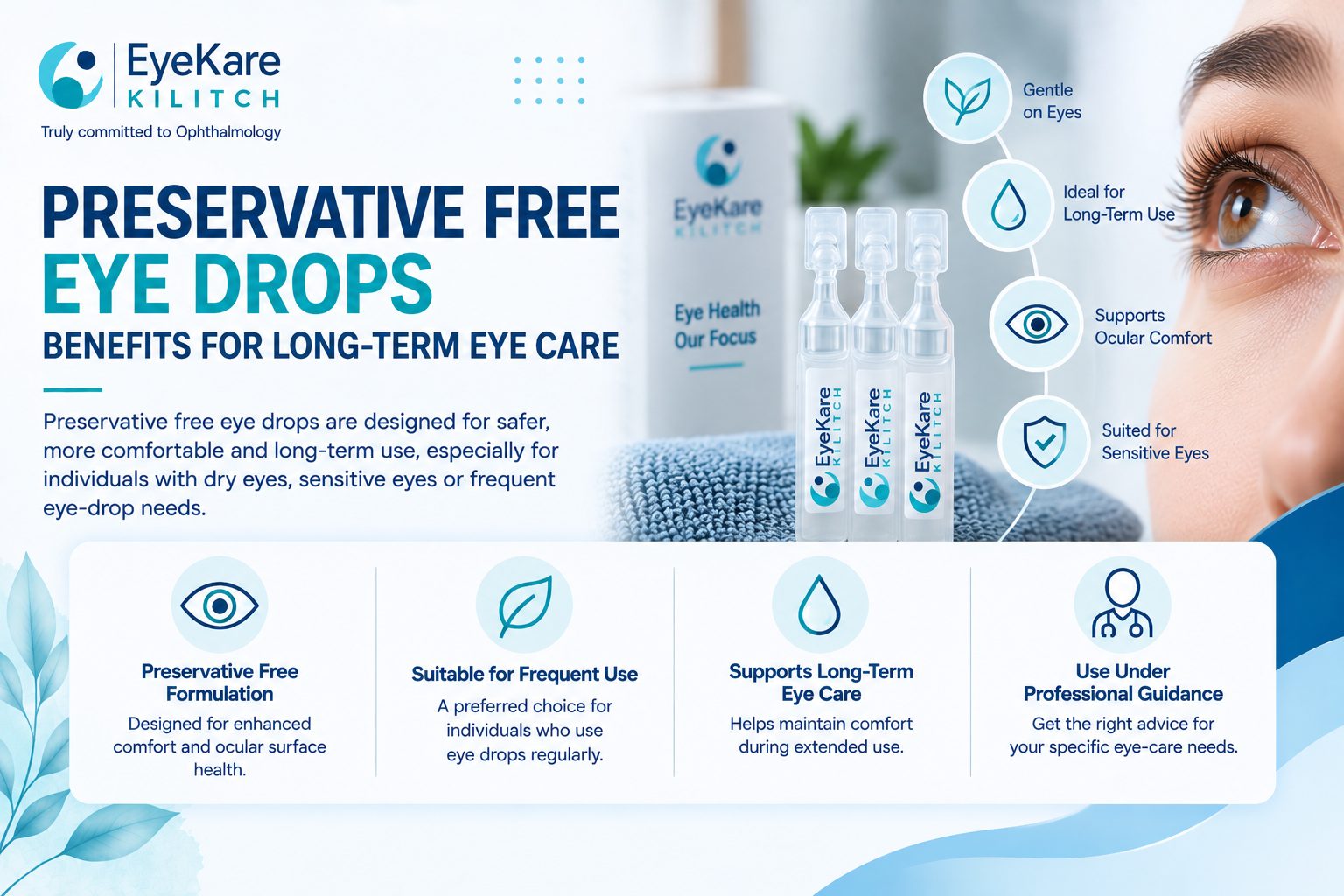
Preservative Free Eye Drops are ophthalmic formulations that do not contain chemical preservatives commonly used in multidose eye-drop bottles.
Preservatives are added to many ophthalmic products to help prevent microbial contamination after a bottle has been opened. These ingredients contribute to product stability and safety during use.
However, advances in packaging technology and ophthalmic drug-delivery systems have enabled the development of preservative-free alternatives that maintain sterility without relying on traditional preservatives.
Today, preservative-free formulations are available across several ophthalmic categories, including lubrication, glaucoma management, allergy care, and post-procedure eye care.
Why Are Preservatives Used in Eye Drops?
To understand the significance of preservative-free formulations, it is helpful to understand why preservatives are used in the first place.
Once an eye-drop bottle is opened, it may be exposed to environmental microorganisms during regular use.
Preservatives help:
- Prevent microbial growth
- Maintain product safety
- Extend usability after opening
- Protect multidose formulations from contamination
These functions have made preservatives a standard component of many ophthalmic products for decades.
However, long-term and frequent exposure has prompted increased interest in preservative-free alternatives, particularly for patients requiring chronic therapy.
Why Are Preservative Free Eye Drops Becoming More Popular?
The growing popularity of Preservative Free Eye Drops is closely linked to increasing awareness of ocular surface health.
Patients today often use eye drops more frequently than in previous generations due to:
- Digital screen exposure
- Dry indoor environments
- Contact lens use
- Aging populations
- Chronic ophthalmic conditions
As eye-care professionals place greater emphasis on maintaining a healthy ocular surface, preservative-free options have become increasingly relevant.
Modern ophthalmology is no longer focused solely on symptom relief; it also considers long-term comfort and ocular surface preservation.
Who May Benefit from Preservative Free Eye Drops?
Not every patient requires preservative-free formulations. However, certain groups may particularly benefit from them.
Frequent Eye-Drop Users
Individuals who use eye drops multiple times per day may prefer preservative-free options as part of their long-term eye-care strategy.
Patients with Sensitive Eyes
Some individuals report increased sensitivity to certain ophthalmic ingredients. Preservative-free formulations may be considered depending on professional recommendations.
Contact Lens Wearers
Contact lens users often pay close attention to ocular comfort and surface health. Eye-care professionals may recommend preservative-free products in certain situations.
Patients with Chronic Eye Conditions
People managing long-term ophthalmic conditions sometimes require ongoing treatment over months or years. Preservative-free technologies can be particularly relevant in chronic-care settings.
Preservative Free Eye Drops and Digital Eye Strain
Digital lifestyles have transformed how people use their eyes.
Working professionals, students, and frequent smartphone users often spend many hours focusing on screens each day.
Reduced blink rates during screen use can contribute to:
- Eye fatigue
- Dryness
- Irritation
- Temporary visual discomfort
Many individuals seek lubricating eye drops to support ocular comfort during prolonged screen exposure.
As awareness of long-term ocular wellness grows, preservative-free lubrication has become an increasingly discussed topic in digital eye care.
The Role of Preservative-Free Technology in Dry-Eye Management
Dry eye is one of the most common reasons people use ophthalmic lubricants.
While treatment plans vary depending on the cause and severity of symptoms, preserving ocular surface health remains an important goal.
Many modern Preservative Free Eye Drops are designed with advanced delivery systems that allow repeated use while maintaining sterility.
These innovations help provide flexibility for individuals who require ongoing lubrication throughout the day.
Advances in Ophthalmic Packaging Technology
One of the reasons preservative-free formulations have become more widely available is the development of specialized packaging systems.
Modern ophthalmic packaging may include:
- Single-dose units
- Advanced multidose delivery systems
- Sterility-protection mechanisms
- Precision dispensing technologies
These innovations help manufacturers maintain product integrity without relying on traditional preservatives.
The result is a growing range of preservative-free ophthalmic solutions across multiple therapeutic categories.
Why Manufacturing Quality Matters
Because ophthalmic products come into direct contact with the eye, manufacturing quality remains critical.
Important considerations include:
- Sterile production environments
- Quality-control systems
- Formulation stability
- Packaging integrity
- Regulatory compliance
- Consistent manufacturing practices
An experienced Eye Drops Manufacturer in India focuses on maintaining high-quality standards throughout the product lifecycle.
For preservative-free formulations, manufacturing precision becomes even more important because product sterility must be maintained through advanced packaging and delivery technologies.
The Growing Importance of Ophthalmic Innovation
The ophthalmic industry continues to evolve in response to changing patient needs.
Today’s patients increasingly seek:
- Long-term comfort
- Improved ocular-surface care
- Convenient dosing
- Advanced formulations
- Reliable quality standards
As a specialized Ophthalmic Pharma Company, EyeKare Kilitch focuses on ophthalmic innovation across multiple therapeutic categories.
The company highlights its commitment to preservative-free technologies, specialized ophthalmic development, and eye-care solutions designed to support modern patient needs.
Choosing a Trusted Eye Care Brand
Selecting ophthalmic products often involves more than evaluating a single formulation.
A Trusted Eye Care Brand is typically associated with:
- Specialized ophthalmic expertise
- Quality-focused manufacturing
- Product innovation
- Regulatory compliance
- Consistent patient support
These factors contribute to confidence in ophthalmic products used for everyday eye care and long-term treatment plans.
Final Thoughts
Preservative Free Eye Drops represent an important advancement in modern ophthalmology. As awareness of ocular surface health continues to grow, preservative-free technologies are becoming increasingly relevant across a wide range of eye-care applications.
Whether used for lubrication, long-term therapy, contact-lens support, or chronic ophthalmic management, preservative-free formulations offer an approach focused on maintaining comfort while supporting modern eye-care needs.
As ophthalmic science and packaging technologies continue to evolve, preservative-free solutions are likely to remain an important part of the future of eye care.