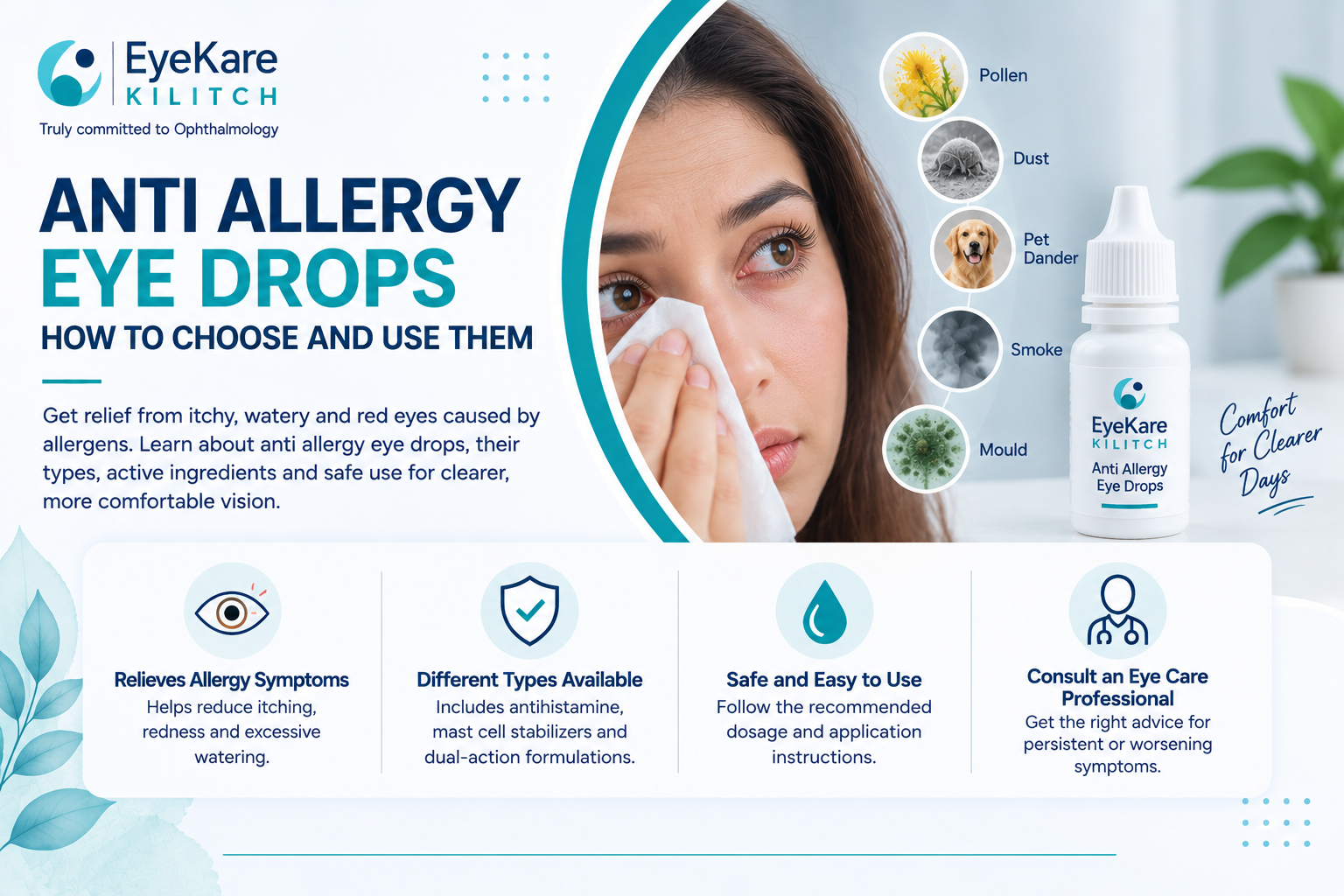
Itchy eyes, excessive watering, redness, and irritation can make everyday activities uncomfortable. These symptoms are particularly common when the eyes come into contact with allergens such as pollen, dust, pet dander, smoke, or other environmental irritants. When the immune system reacts to these triggers, it can lead to allergic inflammation of the eye.
Anti Allergy Eye Drops are formulated to help manage eye-related allergy symptoms. However, not every eye drop works in the same way, and choosing a suitable formulation depends on the cause and severity of symptoms.
Understanding the available options, active ingredients, application practices, and precautions can help support better eye-care decisions.
What Causes Eye Allergies?
Eye allergies occur when the immune system reacts to an allergen. During this response, substances such as histamine are released, leading to inflammation of the ocular surface.
Common triggers include:
- Pollen and seasonal allergens
- Household dust and dust mites
- Pet dander
- Smoke and air pollutants
- Mould
- Certain cosmetics or personal-care products
- Other environmental irritants
Allergic eye symptoms commonly include itching, redness, watering, burning, and swollen eyelids. One of the distinguishing symptoms is eye itching, which is particularly common with allergic conjunctivitis.
However, similar symptoms can occur with dry eye, infections, contact-lens irritation, and other eye conditions. Identifying the underlying cause is therefore important before selecting an eye drop.
How Do Anti Allergy Eye Drops Work?
Different Anti Allergy Eye Drops use different mechanisms to control allergy-related symptoms.
Some formulations contain antihistamine ingredients that reduce the effects of histamine released during an allergic response. Others can help stabilize mast cells, reducing the release of inflammatory mediators.
Certain ophthalmic formulations combine antihistamine and mast-cell-stabilizing activity. This dual approach can help address symptoms such as itching and redness associated with allergic conjunctivitis.
The active ingredient, concentration, dosing instructions, and formulation characteristics can vary between products. Therefore, users should follow the directions provided with the specific ophthalmic product rather than assuming that all allergy eye drops can be used in the same way.
Common Ingredients Used in Allergy Eye Care
Several types of ingredients may be used in ophthalmic allergy management.
Antihistamines
Antihistamine ingredients work by blocking the action of histamine at specific receptors. Since histamine plays an important role in allergy symptoms, antihistamine-based formulations can help reduce itching and other associated symptoms.
Mast Cell Stabilizers
Mast-cell stabilizing ingredients work by helping prevent the release of inflammatory substances from mast cells. They may be used for longer-term management of certain allergic eye conditions.
Dual-Action Formulations
Some modern formulations combine antihistamine and mast-cell-stabilizing properties. Olopatadine Eye Drops, for example, are used in the management of ocular allergy symptoms and have both antihistamine and mast-cell-stabilizing activity.
The appropriate formulation should depend on the individual’s symptoms and the advice of an eye-care professional.
Anti Allergy Eye Drops vs. Lubricating Eye Drops
It is easy to confuse allergy eye drops with Lubricating Eye Drops, but they serve different purposes.
Lubricating drops are generally formulated to provide moisture and temporary relief from symptoms associated with ocular dryness or irritation. Anti-allergy formulations, in contrast, are designed to act on mechanisms involved in allergic eye symptoms.
Some individuals may experience both allergies and dry-eye symptoms. In such cases, an eye-care professional may recommend different approaches depending on the underlying causes.
Choosing an eye drop based only on the presence of redness or irritation may therefore not address the actual problem.
How to Use Anti Allergy Eye Drops Correctly
Correct application is an important part of ophthalmic care.
Before applying eye drops:
- Wash your hands thoroughly.
- Check the product label and expiry information.
- Avoid touching the dropper tip to your eye, eyelids, or fingers.
- Tilt your head back and gently pull down the lower eyelid.
- Apply the prescribed number of drops.
- Close the eye gently without squeezing it tightly.
- Replace the cap securely after use.
If multiple ophthalmic products are being used, there may need to be an appropriate interval between different eye drops. Follow the instructions provided by your healthcare professional or product information.
Do not share eye-drop bottles with other people, as this can increase the risk of contamination.
What About Contact Lens Wearers?
Contact-lens users should pay particular attention to the instructions supplied with their eye drops.
Some ophthalmic products contain preservatives or other ingredients that may interact with contact lenses. Depending on the formulation, lenses may need to be removed before application and replaced only after the recommended interval.
If you regularly wear contact lenses and experience persistent redness, discomfort, watering, or pain, it is advisable to consult an eye-care professional rather than repeatedly using eye drops without determining the cause.
When Should You Seek Professional Advice?
Not every red or watery eye is caused by an allergy.
You should seek professional evaluation if symptoms are severe, persistent, recurrent, or accompanied by warning signs such as:
- Significant eye pain
- Sudden or unexplained vision changes
- Severe sensitivity to light
- Marked swelling
- Persistent redness
- Symptoms following an eye injury
- Symptoms that continue despite appropriate care
These symptoms can sometimes indicate conditions that require a different form of treatment.
In particular, prescription ophthalmic medicines should be used according to professional advice and the approved product instructions.
Why Ophthalmic Formulation Quality Matters
Eye drops are applied directly to the ocular surface, making formulation quality an important consideration. Factors such as sterility, formulation stability, packaging, preservative selection, and appropriate manufacturing controls can all be relevant to ophthalmic products.
For pharmaceutical companies developing ophthalmic formulations, maintaining consistent manufacturing processes and quality standards is essential.
EyeKare Kilitch focuses specifically on ophthalmic healthcare and has a portfolio covering therapeutic categories including anti-allergy, lubrication, glaucoma, and other eye-care formulations. Its product portfolio includes OLOEYE, an olopatadine hydrochloride ophthalmic formulation.
The company also highlights its focus on ophthalmic development, manufacturing capabilities, and preservative-free delivery technologies.
Tips for Managing Allergy-Related Eye Symptoms
Eye drops are only one part of managing ocular allergies. Reducing exposure to known triggers can also help.
Some practical measures include:
- Avoid rubbing the eyes.
- Wash your face after spending time outdoors during high-allergen periods.
- Keep living spaces free from excessive dust.
- Use sunglasses outdoors when appropriate.
- Keep hands clean before touching the eyes.
- Follow prescribed eye-drop schedules consistently.
- Avoid using someone else’s eye drops.
- Replace eye products according to their recommended usage and storage instructions.
Identifying personal allergy triggers can also make it easier to reduce repeated exposure.
Final Thoughts
Anti Allergy Eye Drops can help manage symptoms associated with ocular allergies, including itching, redness, and watering. However, different eye drops contain different active ingredients and are intended for different purposes.
Understanding the difference between allergy medications and lubricating formulations, using eye drops correctly, and following professional guidance can support safer and more appropriate eye care.
If symptoms are severe, persistent, or associated with pain or changes in vision, professional evaluation is important rather than relying solely on over-the-counter or previously used eye drops.
For pharmaceutical companies developing ophthalmic products, consistent formulation quality, appropriate manufacturing controls, and patient-focused delivery remain important aspects of modern eye care.